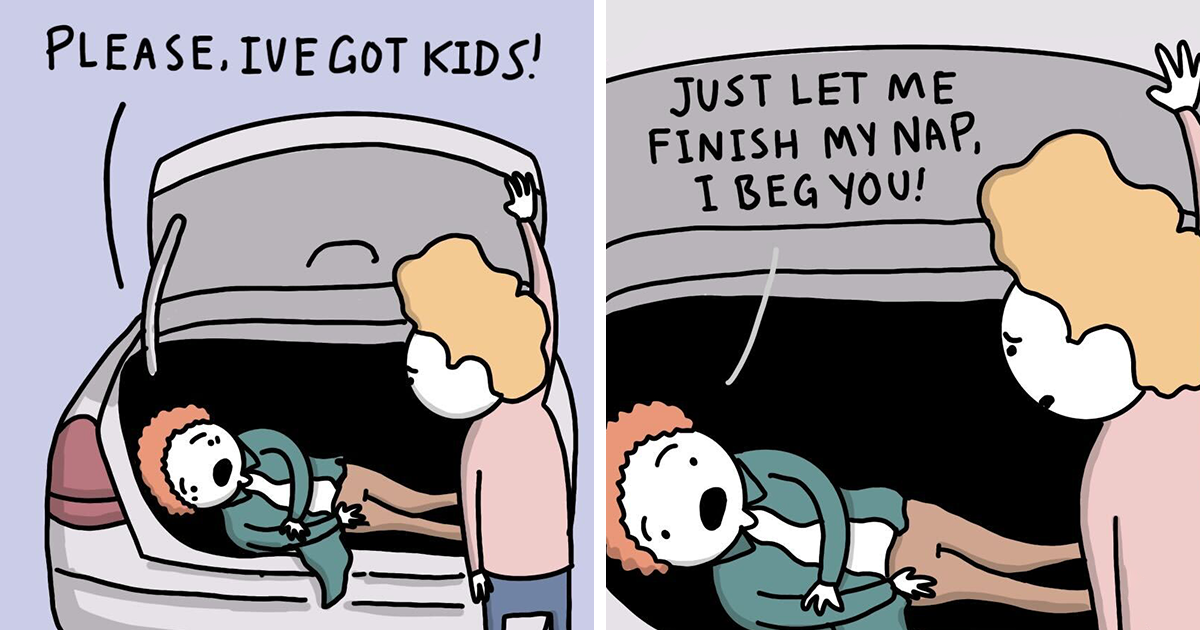
Some comics politely tell a joke. Cameron Spires’ Goat to Self comics kick down the door, steal the punch bowl, and somehow leave you thanking them for the chaos. If you enjoy funny webcomics with unexpected endings, absurd humor, sharp wordplay, and the occasional emotional jump scare disguised as a doodle, this collection of 25 hilariously unhinged comics is exactly the kind of delightful nonsense your day ordered.
Spires, a Canadian copywriter, creative director, baby-book author, and creator of Goat to Self, has built a distinctive corner of internet comedy around short, strange, highly shareable comics. His strips often look simple at first glance: clean panels, expressive characters, ordinary conversations, and setups that feel familiar. Then the ending arrives. Suddenly, a casual phrase becomes dangerously literal, a social situation turns into a miniature disaster, or a tiny misunderstanding grows legs and runs directly into traffic.
That is the magic of Cameron Spires comics. They do not merely aim for a chuckle. They aim for the exact moment when your brain says, “Wait, absolutely not,” while your mouth is already laughing.
Who Is Cameron Spires?
Cameron Spires is the creator behind Goat to Self, a popular online comic series known for absurd situations, twist endings, and deceptively simple humor. His professional background in advertising and copywriting shows up clearly in his comics: every word has a job, every setup is economical, and every final panel is built like a tiny comedy trap.
Unlike long-form graphic novels or dense editorial cartoons, Goat to Self usually works in a compact format. Many strips use four panels, which gives Spires just enough room to establish a situation, nudge readers toward one expectation, and then shove that expectation into a cartoon canyon. The result is fast, clean, and perfect for online reading.
Why These Comics Feel So Unhingedin the Best Way
1. The Endings Weaponize Misdirection
The title promises surprise endings, and Spires delivers. A common pattern in Goat to Self is a normal phrase being interpreted in the most chaotic way possible. A joke about a “dad bod” may not be about exercise at all. A conversation about illness may suddenly become a joke about podcast culture. A sweet little comment may reveal a situation that is much darker, weirder, or more literal than expected.
This is why the comics are so addictive. The reader knows a twist is coming but rarely knows where it will land. It is like watching a magician pull a rabbit out of a hat, except the rabbit is wearing sunglasses and asking about your tax documents.
2. The Humor Starts With Everyday Life
The best absurd humor often begins with something recognizable. Spires understands this perfectly. His comics often start with chores, relationships, parenting, anxiety, awkward conversations, health myths, workplace logic, or social habits. These are normal ingredients. Then he adds one tablespoon of panic, two cups of wordplay, and a final panel that should probably be supervised by an adult.
That balance makes the comics relatable without becoming predictable. Readers recognize the setup, then enjoy the comedic betrayal. The joke works because the first panels feel ordinary enough to trust.
3. The Art Style Leaves Room for the Joke
Spires’ drawings are intentionally approachable. The characters are expressive but not overdesigned. The backgrounds are simple. The faces are often blank enough to make the absurdity even funnier. This minimalism keeps the reader’s attention on timing, dialogue, and the final reveal.
In comedy, too much visual detail can slow the joke down. Goat to Self moves quickly. The art does not fight the punchline; it quietly escorts it to the stage, then watches it detonate.
A Closer Look at the 25 Comic Moments
This set of 25 Cameron Spires comics works because each strip uses a slightly different flavor of chaos. Some rely on puns. Others rely on misunderstandings. A few walk right up to dark humor, ring the doorbell, and pretend they were invited. Together, they create a reading experience that feels unpredictable without becoming random.
Common Types of Jokes in the Collection
- Literal idiom jokes: Everyday expressions are interpreted in the most absurdly physical way possible.
- Social awkwardness: A normal conversation slowly reveals that nobody involved should be trusted with dialogue.
- Dark twists: The setup appears innocent, but the ending casually opens a trapdoor.
- Wordplay with consequences: A pun is not just a pun; it becomes the whole disaster.
- Overthinking humor: Insecurity, anxiety, and self-doubt become visible cartoon events.
- Animal logic: Creatures behave almost like people, which somehow makes them worse.
- Parenting absurdity: Domestic life becomes a comedy laboratory with no safety goggles.
- Workplace nonsense: Professional language gets twisted into something bizarrely literal.
- Pop-culture parody: Familiar modern habits, like podcasts or trends, are pushed past reason.
- Existential punchlines: A silly scene suddenly asks a question nobody wanted before lunch.
- Reverse expectations: The person who seems normal is not normal at all.
- Visual gags: The final image delivers the joke faster than the dialogue could.
- Polite chaos: Characters behave calmly while the situation becomes increasingly alarming.
- Unexpected sincerity: A comic may briefly feel sweet before swerving into weirdness.
- Absurd problem-solving: Someone technically solves a problem in the worst possible way.
- Misunderstood motives: A character’s intention is revealed too late for comfort.
- Miniature horror: The comic borrows horror structure but uses it for laughs.
- Deadpan delivery: Characters react to madness as if discussing office printer paper.
- Phrase reversal: A familiar sentence gains an entirely different meaning by the last panel.
- Cartoon physics: Reality bends politely, then snaps.
- Awkward honesty: Characters say the quiet part loudly and sometimes graphically.
- Modern anxiety: Everyday stress becomes visible, silly, and weirdly comforting.
- Escalation: A tiny problem becomes a huge problem in three panels or fewer.
- Character stupidity: Not cruel stupiditybeautiful, concentrated comic stupidity.
- Final-panel whiplash: The ending makes you reread the beginning with suspicion.
Why the Four-Panel Format Works So Well
The four-panel comic is a tiny machine. Panel one introduces the premise. Panel two builds expectation. Panel three tightens the rhythm. Panel four breaks the pattern. Spires uses this structure with impressive efficiency. There is rarely wasted dialogue. A single strange phrase can carry the reader from normality to absurdity before they have time to put down their coffee.
This format is especially powerful online. Readers scrolling through social media do not always want a long setup. They want a joke that lands quickly but still feels clever. Spires gives them both speed and surprise. His comics are short enough to consume instantly but layered enough to reward a second look.
Why Readers Love Unexpected Endings
Comedy often depends on incongruity: the gap between what we expect and what actually happens. Cameron Spires’ comics live in that gap. The setup invites readers to make a prediction, then the ending replaces that prediction with something funnier, stranger, and usually less socially acceptable.
That is why these comics work even when the subject is ridiculous. The humor is not only in the absurd idea itself; it is in the sudden shift. The reader’s brain takes a sharp turn, and laughter is the skid mark.
The Secret Ingredient: Relatable Absurdity
Many internet comics focus on relatability. Spires does that too, but he rarely stops there. A comic about procrastination may become a joke about total moral collapse. A comic about insecurity may turn into a literal security breach. A comic about language may become a full-blown misunderstanding with consequences nobody in the room deserves.
This is what separates Goat to Self from generic funny comics. The comics begin in shared human experience, then take a surreal exit ramp. Readers laugh because the beginning feels familiar and the ending feels impossible, yet somehow emotionally accurate.
Experience Notes: Reading These Comics Feels Like Being Ambushed by a Friendly Goblin
The experience of reading 25 hilariously unhinged Cameron Spires comics in one sitting is strangely energizing. At first, you think you understand the rules. A character says something odd. Another character responds. You prepare for a pun, maybe a sarcastic observation, perhaps a harmless little twist. Then the comic ends in a place so unexpected that you immediately scroll back up to check whether you missed a warning sign.
That rereading is part of the fun. Spires’ best endings do not feel random after the fact. They feel planted. The clue was there, sitting in the setup, pretending to be innocent. Once you know the ending, the first panels become funnier. The comic turns into a little puzzle box, except the prize inside is a joke wearing a fake mustache.
There is also a satisfying rhythm to the collection. Some strips are pure wordplay. Others are darker, stranger, or more visually driven. That variety keeps the experience fresh. You are not reading the same joke 25 times. You are watching one comic mind test how many different ways a normal situation can be pushed into glorious nonsense.
Another enjoyable part is how calm the characters often seem. In many comics, the most absurd moment is delivered with complete seriousness. Nobody overexplains the joke. Nobody turns to the reader and says, “Do you get it?” The comic trusts the audience to make the leap. That trust makes the punchlines feel sharper.
Reading these comics also reminds you why short-form webcomics remain so powerful. A great strip can do in a few seconds what a long essay sometimes struggles to do in several pages: capture a feeling, twist it, and make it memorable. Whether the topic is anxiety, chores, language, relationships, or modern habits, Spires finds the weird little nerve inside the situation and presses it with cartoon fingers.
The best way to enjoy the collection is not to rush too much. Yes, the comics are quick reads, but the endings hit harder when you let each setup breathe. Give the first panels a second. Make your prediction. Be confidently wrong. That is where the joy lives.
By the end, you may feel as if your sense of humor has been lightly rearranged. Normal phrases sound suspicious. Ordinary conversations feel like they might be hiding a punchline. Even a harmless household object may seem capable of betrayal. That is the aftertaste of Goat to Self: funny, strange, and just unhinged enough to make the real world seem slightly more cartoonish.
Conclusion
25 Hilariously Unhinged Comics By Cameron Spires That May Surprise You With Their Endings is more than a gallery of funny drawings. It is a showcase of compact comic timing, clever misdirection, and absurd humor that understands how internet readers laugh. Cameron Spires has a gift for turning ordinary language into ridiculous outcomes, making his Goat to Self comics both accessible and unpredictable.
Whether you are a longtime webcomic fan or simply need a quick escape from reality, these comics offer the perfect mix of silly, sharp, dark, and delightfully strange. Come for the jokes. Stay for the endings. Leave with a healthy distrust of everyday phrases.