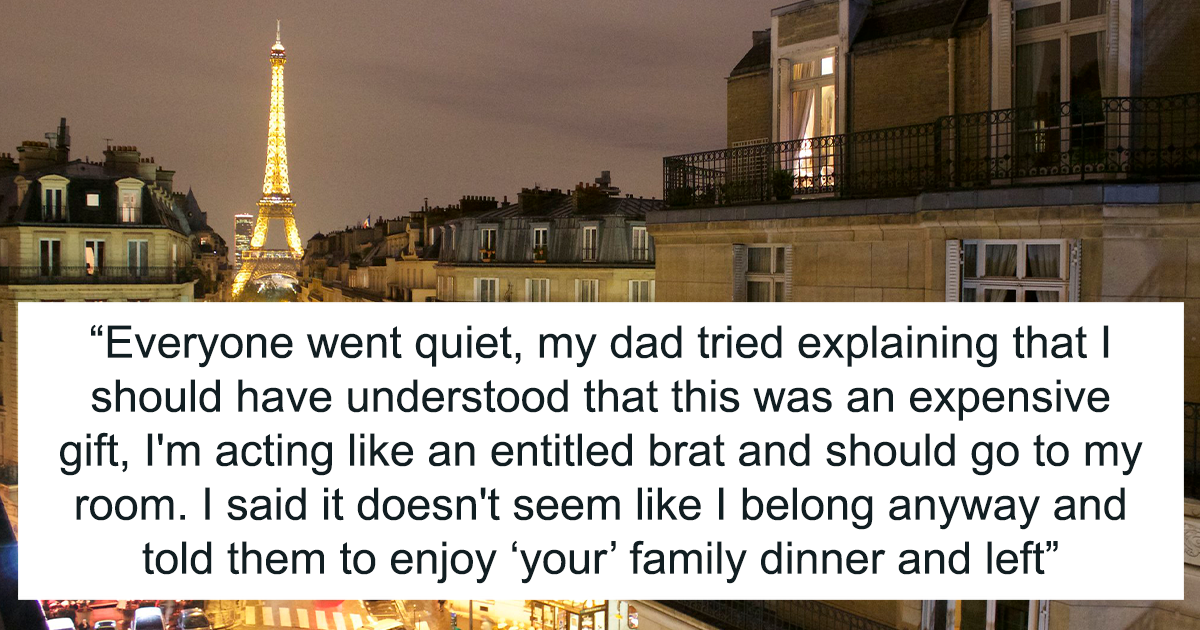
A family vacation to Paris should sound like a dream: croissants, Eiffel Tower photos, and at least one person dramatically pretending they understand French menus. But for one 16-year-old girl, her father’s Paris trip with his new family became less “bonjour” and more “betrayal with a boarding pass.”
The story, which gained attention online, centers on a teenager who discovered that her dad, his wife, and their two sons had gone on a Paris vacation without inviting her. She did not hear about it through a thoughtful conversation, a difficult but honest phone call, or even a clumsy text. She found out through social media. That detail matters. In modern family drama, TikTok is basically the town crier wearing lip gloss and holding a ring light.
At first glance, this may look like a simple argument over a trip. But underneath the suitcase stickers and hurt feelings is a much deeper issue: what happens when a child from a previous relationship starts feeling like an optional guest in her own father’s life?
The Viral Family Vacation Drama: What Happened?
According to the online story, the 16-year-old girl lives primarily with her mother while her father has remarried and has two sons with his new wife. One day, the teen saw posts showing that her father’s new household was enjoying a vacation in Paris. She was shocked because nobody had invited her, warned her, or apparently considered how painful it might be for her to discover the trip online.
When she contacted her dad, he reportedly said he wished she could have come too. That response did not exactly soothe the wound. For a teenager already feeling excluded, “wish you were here” can sound less like affection and more like the emotional equivalent of a souvenir keychain: small, shiny, and not very useful.
After the family returned, the daughter confronted him. Her father explained that his wife’s parents paid for the vacation and that he was not the one controlling the invitation list. He said the trip was expensive and that adding one more person was not realistic. The daughter felt he still should have made an effort, whether by paying for her himself, asking earlier, or at least telling her before the internet did.
The tension grew when the teen later argued with her stepmother’s parents. The grandmother tried to explain the money issue, but the girl, feeling hurt and cornered, told her to leave her room. The adults called her rude and entitled. Many commenters, however, focused on the father’s role, arguing that the core problem was not the grandparents’ wallet but the father’s failure to protect his daughter from feeling replaced.
Why This Story Hit Such a Nerve Online
The internet can be dramatic, yes. It can turn a minor dinner-table disagreement into a courtroom drama where everyone has a gavel and nobody has read the evidence. But this particular story struck a nerve because many readers recognized the emotional pattern.
Blended families are common in the United States, and many children grow up moving between households, step-relatives, half-siblings, different traditions, and different expectations. That does not automatically mean disaster. Plenty of blended families are loving, stable, and wonderfully chaotic in the normal “who used all the hot water?” way. But when one child feels left out, especially by a biological parent, the pain can be sharp.
For a teenager, family inclusion is not just about luxury vacations. It is about belonging. Paris may have been the backdrop, but the real question was: “Dad, am I still part of your family?”
Was the Daughter Entitled, or Was She Hurt?
This is where the debate gets interesting. Some people argued that the teen had no right to demand a vacation paid for by her stepmother’s parents. Technically, that is true. Nobody is automatically entitled to someone else’s money, even if that someone is rich enough to make a Paris trip look like a grocery run.
But emotional pain does not always follow technical rules. The daughter’s reaction was not only about plane tickets, hotel rooms, or museum passes. She was hurt because her father seemed to participate in a “family” event where she was not treated as family.
That distinction is important. A teenager may not have the most polished delivery when expressing pain. At 16, feelings often arrive with fireworks, subtitles, and a questionable soundtrack. But poor delivery does not erase the message. The girl’s rudeness toward the grandmother may have crossed a line, yet the adults still needed to look at the larger pattern: a daughter felt excluded from her father’s new life.
The Father’s Biggest Mistake Was Not Just the Vacation
The father’s biggest mistake may not have been failing to buy an extra ticket. It was failing to communicate. If the trip truly was controlled by his in-laws, he still could have talked to his daughter before the vacation happened. He could have said, “I want you to hear this from me. We’re going on a trip that I didn’t plan or pay for, and I know it may hurt that you aren’t included. I’m sorry. I want to plan something with you soon.”
Would that have fixed everything? Probably not. Teenagers are not vending machines where you insert one apology and receive emotional peace. But it would have shown respect. It would have told his daughter that her feelings mattered before she had to discover the truth through vacation posts.
In co-parenting and blended family situations, small communication choices can carry huge emotional weight. A child who lives in another household may already feel like an outsider. When big family events happen without warning, it can confirm their worst fear: “They have moved on without me.”
Why Social Media Made the Pain Worse
Finding out through social media added gasoline to the emotional campfire. Social platforms do not show the boring parts of vacation: airport delays, cranky siblings, overpriced sandwiches, and someone losing a charger. They show smiling photos, beautiful landmarks, and captions that make life look suspiciously perfect.
For the daughter, those posts likely looked like evidence. Her father was not just away. He was publicly enjoying a family experience without her. That is a hard thing to see when you are 16 and still figuring out your place in the world.
Parents in blended families should be especially careful about what children may discover online. If a child will be excluded from an event for financial, custody, scheduling, or logistical reasons, the child should hear it from the parent first. Otherwise, Instagram becomes the messenger, and Instagram has the emotional sensitivity of a glitter cannon.
Blended Families Need More Than Good Intentions
Blended families can be beautiful, but they are not instant soup. You cannot add one remarriage, two kids, a shared calendar, and a holiday card, then expect everyone to blend smoothly in three minutes. Relationships take time, especially when children are adjusting to divorce, remarriage, new siblings, and new family rules.
Experts on stepfamily dynamics often emphasize that trust must be built slowly. Children may accept a parent’s new partner politely long before they feel emotionally safe in the new family structure. That is normal. Adults may be excited about a fresh start, but children may still be grieving the old family structure or wondering where they fit in the new one.
In this case, the father appeared to underestimate how symbolically powerful the Paris vacation would be. To him, perhaps it was a trip paid for by in-laws. To his daughter, it looked like a family portrait with her face cropped out.
What the Stepmother’s Parents Could and Could Not Control
The stepmother’s parents were not legally or morally required to pay for the teen’s vacation. That may sound harsh, but it is true. Grandparents on one side of a blended family may choose to spend money on their biological grandchildren. Financial boundaries can be complicated, and no outside relative should be forced into a role they did not choose.
However, adults can be “technically right” and still handle things poorly. If the grandparents knew the father had another daughter, they could have considered how the trip might appear. They could have encouraged the father to talk to her. They could have avoided framing the vacation as a neat little family unit if one child was missing from the picture.
Still, the main responsibility belonged to the father. He is the bridge between his daughter and his new household. If that bridge is shaky, everyone ends up standing on opposite sides yelling over the river.
How the Father Could Repair the Relationship
Repair is possible, but it requires more than “let’s move on.” Parents sometimes want children to stop being upset because the adult feels guilty, embarrassed, or tired. But healing does not work like clearing browser history. The event happened, and the daughter needs her father to acknowledge the emotional impact.
1. He should apologize without excuses
A strong apology would sound like: “I should have told you before the trip. I understand why finding out online hurt you. I’m sorry I made you feel excluded.” Notice what is missing? A courtroom defense about ticket prices. Explanations can come later, but the first step is validating the hurt.
2. He should make concrete plans with her
Not every repair requires a Paris-level vacation. A weekend trip, a father-daughter day, a monthly dinner, or a shared tradition can help rebuild connection. The key is consistency. One grand gesture is nice, but dependable attention is what tells a child, “You matter all the time, not just when I feel guilty.”
3. He should include her in future family conversations
If future vacations, holidays, or major events involve his new family, he should discuss them with her early. She may not always be able to attend. Custody schedules, school, money, and logistics are real. But being informed is different from being ignored.
4. He should not punish honesty
The teen may have been rude in how she spoke to the grandmother, and that can be addressed. But grounding her “until further notice” without addressing the exclusion may teach the wrong lesson. It tells her that expressing pain is more punishable than causing it.
What the Daughter Could Learn From This Too
The daughter’s hurt is understandable. Her reaction toward the grandmother, however, shows how pain can spill onto the wrong person. She was angry at her father, but the grandmother became the nearest emotional punching bag. That is common in family conflict, but it rarely helps.
At 16, learning to say “I’m hurt” instead of “get out” is a powerful skill. It does not mean swallowing her feelings. It means aiming them where they belong. She could say, “I understand you paid for the trip, but I need my dad to understand how excluded I felt.” That sentence is much harder to dismiss than an insult.
She can also learn an uncomfortable truth: people may disappoint her even when she is right to expect better. Her father’s choices may reveal limitations in his parenting. That is painful, but it can also help her decide what boundaries she needs.
Why Inclusion Matters More Than Equal Spending
In blended families, fairness does not always mean every child gets the exact same thing at the exact same time. One child may have different grandparents, schedules, schools, or financial support. But fairness does mean every child should feel considered.
A child can usually survive missing a trip. What hurts is feeling like nobody noticed she was missing.
Parents sometimes get stuck on the math: flights cost this much, hotels cost that much, and adding another person was impossible. But children often focus on the meaning: “You went as a family, and I was not invited.” Both realities can exist. Money can be tight, and the child can still be hurt. A good parent does not need to deny one truth to address the other.
The Bigger Lesson for Parents in New Relationships
When a parent remarries or starts a new family, the child from the previous relationship should not have to audition for belonging. They should not have to remind their parent, “Hey, remember me? The original kid? The one from before the reboot?”
Parents can love their new spouse and children while still protecting the emotional bond with their older child. In fact, they must. Love is not a pie chart. A father does not need to subtract from his sons to add to his daughter. He simply needs to show all of his children that they are part of his life, not separate chapters he reads depending on the day.
Related Experiences: When a Vacation Becomes a Family Test
Stories like this feel familiar because many families have their own version of the “Paris vacation.” It might not involve France, passports, or scenic photos. Sometimes it is a beach weekend, a birthday dinner, a holiday card, or a casual barbecue where one child realizes they were not included. The event itself may look small to outsiders, but to the person excluded, it can feel enormous.
Imagine a teen scrolling through photos and seeing her father smiling beside his new family at a theme park. She is not jealous of the roller coaster. She is hurt that nobody asked whether she wanted to come. She wonders whether her absence made the day easier. That question is the real sting.
Another common experience happens around holidays. A parent may assume the child is “busy with the other household” and stop inviting them. Over time, the child receives fewer calls, fewer updates, and fewer chances to participate. Eventually, the child starts acting distant, and the parent says, “I don’t know why we aren’t close anymore.” The answer is often built out of dozens of small exclusions.
There are also situations where money genuinely limits what a family can do. A parent may not be able to afford extra travel costs, especially with blended households and complicated budgets. But even then, communication matters. A child can understand “I can’t afford it” much better than “I didn’t think to tell you.” The first is a limitation. The second feels like rejection.
Some adults assume teenagers are too old to need reassurance. That is a mistake. Teens may act independent, sarcastic, or allergic to family photos, but they still need to know they belong. A 16-year-old may roll her eyes at a dad joke with Olympic-level skill, yet still secretly want her father to save her a seat at the table.
Many people who grew up in blended families remember the moments when adults made them feel included. It could be a stepmother asking what dessert they liked, a father calling before a trip to explain the plan, or a grandparent saying, “We want you there next time.” These gestures may not solve every tension, but they help build emotional safety.
On the other hand, people also remember being left out. They remember seeing matching vacation shirts without one in their size. They remember hearing about “family plans” after the plans were already over. They remember adults telling them not to be dramatic when their heart was doing exactly what hearts do when they feel abandoned.
The experience related to this story is not really about Paris. Paris just made the exclusion sparkle under better lighting. The deeper experience is the ache of wondering whether a parent’s new life has room for you. That is why so many readers sided with the daughter even if they disagreed with how she spoke. They recognized that her anger was sitting on top of sadness.
For parents, the lesson is simple but not always easy: do not let your child discover their place in your life by accident. Tell them. Show them. Invite them when possible. Explain when not possible. And if you mess up, apologize like a grown-up instead of hiding behind logistics.
For teens, the lesson is also important: your feelings are valid, but your delivery still matters. Saying “I felt forgotten” will usually take you further than attacking people who may not be the main cause of the pain. Strong boundaries and respectful honesty can exist in the same sentence.
In the end, a family vacation should not become a loyalty test. But when it does, the adults have the greater responsibility to slow down, listen, and repair. Because long after the Paris photos stop getting likes, the child will remember whether her father made her feel like family.
Conclusion
The story of the 16-year-old daughter left out of her father’s new family vacation is not just another online argument about who was wrong. It is a clear example of how blended family conflict often grows from silence, assumptions, and emotional blind spots. The father may not have controlled every financial detail of the trip, but he did control how he communicated with his daughter. That is where he failed.
The teen’s hurt was understandable, even if her reaction toward the grandmother was not perfect. In families shaped by divorce, remarriage, and new siblings, children need reassurance that they still matter. They need honesty before social media reveals the truth. They need parents who understand that inclusion is not always about money; sometimes it is simply about being seen.
Paris may be known as the City of Light, but in this case, it shined a spotlight on a father-daughter relationship that needed serious repair. The good news? Repair is possible when adults stop defending, start listening, and make room for every child in the family picture.
Note: This article is an original rewrite and analysis based on the public family-vacation story and synthesized guidance on blended families, teen emotions, co-parenting, and parent-child communication.