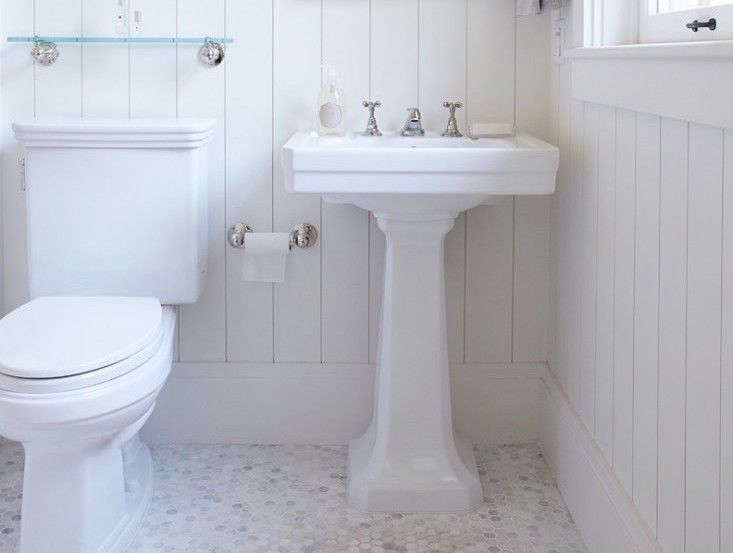
Traditional pedestal sinks are the bathroom equivalent of a well-tailored white shirt: simple, elegant, surprisingly versatile, and somehow still appropriate after more than a century of design trends throwing elbows in the hallway. While floating vanities, vessel basins, and furniture-style cabinets all have their fans, the classic pedestal sink keeps winning hearts in powder rooms, guest baths, vintage homes, cottage renovations, and compact bathrooms where every square inch has to behave itself.
The appeal is easy to understand. A traditional pedestal sink opens up floor space, gives a bathroom a lighter look, hides much of the plumbing, and adds architectural shape without demanding a giant vanity cabinet. It can make a tiny room feel gracious instead of cramped. It can also make a builder-basic bathroom look as though someone had a plan beyond “install white rectangle here.” That is a decorating miracle worthy of applause and possibly a tiny brass plaque.
Of course, pedestal sinks are not perfect. They do not offer the storage of a vanity, and installation can be more involved than simply dropping a sink into a countertop. The wall may need proper support, the floor and wall may need touch-ups after an old vanity is removed, and the plumbing should line up cleanly so the finished look feels intentional. But when chosen well, a pedestal sink gives a bathroom instant character, especially in homes with traditional, transitional, farmhouse, coastal, cottage, colonial, Victorian, or early-20th-century style.
Why Traditional Pedestal Sinks Still Work
A traditional pedestal sink usually combines a basin with a slim pedestal base. The basin may be rectangular, oval, rounded, or subtly sculpted. The pedestal supports the visual composition and often conceals the drain and supply lines. Compared with a vanity, it occupies less visual mass, so the room feels more open. That makes it especially useful in small bathrooms, narrow powder rooms, and guest spaces where storage is not the main priority.
The key word is “traditional,” but that does not mean old-fashioned in a dusty, lace-curtain way. Traditional pedestal sinks often borrow details from classic architecture: beveled rims, crown-molding edges, fluted columns, stepped bases, raised ledges, generous backsplashes, and porcelain or fireclay finishes. These details help the sink look finished even when the rest of the room is simple.
They also pair beautifully with classic bathroom hardware. Think polished nickel cross-handle faucets, chrome widespread faucets, oil-rubbed bronze accents, white subway tile, marble mosaic floors, beadboard walls, framed mirrors, glass sconces, and vintage-style towel rings. A traditional pedestal sink does not need much drama around it. It already has the good manners to stand there looking composed.
How to Choose a Traditional Pedestal Sink
Measure Before Falling in Love
Pedestal sinks can look delicate in photos, but dimensions matter. Measure the width, depth, and height of your available space. Also check door swing, toilet clearance, towel-bar placement, and whether the faucet handles will be comfortable to use. A sink that is perfect in a showroom can become a porcelain traffic cone in a narrow bathroom if the room is not measured carefully.
Match the Faucet Configuration
Pedestal sinks commonly come with single-hole, 4-inch centerset, or 8-inch widespread faucet holes. Traditional designs often look especially handsome with an 8-inch widespread faucet, but a single-hole faucet can save deck space on a small basin. Decide early because faucet compatibility is not something you want to discover after the box is open and everyone is holding a wrench.
Think About Storage Honestly
A pedestal sink is elegant because it is not a cabinet. Unfortunately, that also means it is not a cabinet. If this is your only bathroom and you own seventeen hair tools, six backup moisturizers, and a heroic collection of “just in case” toiletries, you will need a storage plan. Consider a recessed medicine cabinet, wall shelves, a slim linen tower, a rolling cart, a nearby basket, or a sink skirt in a traditional fabric.
Choose Materials for Real Life
Most traditional pedestal sinks are made from vitreous china, porcelain, ceramic, or fireclay. These materials are popular because they offer a smooth, classic white surface that is relatively easy to clean and works with many bathroom styles. Fireclay often has a substantial, heritage feel, while vitreous china remains a dependable standard for everyday bathrooms.
10 Easy Pieces: Traditional Pedestal Sinks to Consider
The following ten pedestal sink ideas are based on real product categories and well-known manufacturers. Availability, pricing, finishes, and exact configurations can change, so treat this as a design-minded guide rather than a shopping cart carved into stone.
1. Kohler Archer Pedestal Sink
The Kohler Archer is a strong choice for homeowners who want traditional style without going overly ornate. Its rectangular basin and beveled edges give it a tailored look that works well in classic, transitional, and updated cottage bathrooms. At roughly 24 inches wide, it fits many powder rooms while still offering a basin that feels practical.
Why it works: the Archer has enough detail to avoid looking plain, but not so much that it demands a clawfoot tub, a chandelier, and a house built in 1898. Pair it with polished chrome or brushed nickel hardware, a simple framed mirror, and white subway tile for a crisp bathroom that feels timeless.
2. Kohler Devonshire Pedestal Sink
The Kohler Devonshire has a more decorative personality, with an oval basin and a shaped deck that feels at home in traditional interiors. It is especially suited to bathrooms that already include curved details, framed cabinetry, classic lighting, or warm wall colors.
Why it works: the Devonshire brings softness. In a bathroom full of straight tile lines and squared-off walls, that curved bowl can make the space feel friendlier. It is a good match for homes that lean toward English cottage, traditional suburban, or vintage-inspired decor.
3. Kohler Memoirs Classic Pedestal Sink
The Kohler Memoirs Classic pedestal sink is one of the most recognizable traditional options because of its crown-molding-inspired edges. It looks architectural without being fussy, and it can hold its own in a bathroom with wainscoting, marble flooring, or polished hardware.
Why it works: this is the sink for people who like structure. The rectangular basin, refined rim, and strong pedestal create a confident focal point. It feels appropriate in a renovated older home, but it can also add instant charm to newer construction that needs a little soul.
4. Kohler Memoirs Stately Pedestal Sink
The Memoirs Stately design has a slightly grander profile than the Classic version. It is still traditional, but it carries more presence, making it a good fit for larger powder rooms or guest bathrooms where the sink is meant to be a visual anchor.
Why it works: the name “Stately” is not shy, and neither is the design. It gives a bathroom a formal edge without requiring a room the size of a hotel lobby. Use it with a widespread faucet, a tall mirror, and sconces mounted at eye level for a balanced, polished look.
5. American Standard Retrospect Pedestal Sink
The American Standard Retrospect is a classic fireclay pedestal sink with a generous deck area and turn-of-the-century character. It is a great candidate for bathrooms that need both vintage appeal and everyday usability. The broad ledge gives you a bit more room for soap, a toothbrush tumbler, or a tiny vase of flowers trying its best.
Why it works: many pedestal sinks are beautiful but stingy with surface space. Retrospect offers more room around the faucet area, which makes it practical in a guest bath or daily-use powder room. Its traditional profile pairs nicely with subway tile, penny tile, or a black-and-white floor.
6. American Standard Townsend Pedestal Sink
The American Standard Townsend line offers crisp rectangular styling with a classic architectural feel. It is a strong option for homeowners who want a traditional pedestal sink that feels slightly cleaner and more transitional than heavily ornamented designs.
Why it works: Townsend bridges the gap between old and new. It can sit comfortably in a traditional home, but it also looks fresh with matte black hardware, a modern mirror, or a soft neutral paint palette. That flexibility is valuable if you want a bathroom that will age gracefully.
7. American Standard Town Square S Pedestal Sink
The Town Square S collection leans into classic American architecture with crown-molding details and a substantial basin. It is the kind of sink that makes a bathroom feel designed, even before you add the wallpaper, the framed art, or the towel your guests are apparently afraid to use.
Why it works: this sink is ideal when you want visual weight. In a larger powder room, a tiny basin can look apologetic. Town Square S has enough size and structure to balance taller ceilings, bold wall treatments, and traditional trim.
8. TOTO Promenade Pedestal Sink
The TOTO Promenade pedestal sink is known for its traditionally elegant lines, spacious basin, and classic presence. It is often a good fit for homeowners who want a pedestal sink that feels durable, straightforward, and refined.
Why it works: Promenade is not trying to be trendy. That is its superpower. It looks right in homes where the bathroom design goal is “clean, classic, and never embarrassing in ten years.” Pair it with chrome fixtures, a beveled mirror, and a simple tile floor for a quietly handsome result.
9. Signature Hardware Lanken Mini Pedestal Sink
The Signature Hardware Lanken Mini is a compact pedestal sink that works beautifully in small powder rooms, half baths, and tight spaces where a standard-width basin would feel like a grand piano in an elevator. Its smaller footprint makes it useful when clearance is the top priority.
Why it works: small bathrooms deserve real design too. The Lanken Mini gives you the elegance of a pedestal sink in a size that respects the room. Add a wall-mounted soap dispenser, a narrow mirror, and a small towel ring to keep the surrounding area uncluttered.
10. Barclay Washington Pedestal Lavatory
The Barclay Washington pedestal lavatory brings traditional charm in a compact, vitreous china form. Its classic silhouette and smaller scale make it a strong option for historic-style renovations, cottages, and powder rooms where a modest footprint is essential.
Why it works: the Washington design feels old-house friendly. It has enough traditional character to suit a vintage-inspired bathroom, but its clean white finish keeps it from feeling heavy. It is especially attractive with cross-handle faucets, simple wall tile, and warm brass or polished nickel accents.
Best Rooms for a Traditional Pedestal Sink
Powder Rooms
Pedestal sinks shine in powder rooms because storage needs are usually minimal. Guests need soap, a towel, a mirror, and perhaps a candle that smells like someone has their life together. A pedestal sink keeps the room open and lets decorative elements such as wallpaper, tile, lighting, and mirrors take center stage.
Guest Bathrooms
In a guest bath, a pedestal sink can work beautifully if there is backup storage nearby. Add a medicine cabinet, a shelf over the toilet, or a small freestanding cabinet for extra towels and toiletries. The sink keeps the room light while the supplemental storage handles practical needs.
Historic and Cottage-Style Homes
Traditional pedestal sinks look especially natural in older homes. They suit bathrooms with original trim, beadboard, hex tile, clawfoot tubs, or vintage-inspired fixtures. Even in a new build, they can help create the feeling of a bathroom that evolved over time rather than one ordered entirely from a single showroom display.
Design Tips for Making a Pedestal Sink Look Expensive
Upgrade the Faucet
A pedestal sink is visually simple, so the faucet gets noticed. A high-quality faucet in polished nickel, chrome, brass, or matte black can dramatically change the look. Cross handles feel vintage, lever handles feel transitional, and bridge-style faucets can lean charmingly old-world.
Add a Statement Mirror
Because pedestal sinks do not include cabinetry, the wall above them becomes more important. A shapely mirror, medicine cabinet, or vintage-style framed mirror can give the sink area a finished composition. The mirror should be proportionate to the sink, not so tiny that it looks lost or so large that it appears to be supervising the room.
Use Wall Storage Carefully
Floating shelves, recessed medicine cabinets, and slim wall cabinets can solve storage problems without ruining the open look. Keep visible shelves edited. A few folded towels, a ceramic cup, a small plant, or a glass jar can look charming. A chaotic lineup of razors, toothpaste, and mystery bottles will look like the sink lost a fight with a drugstore aisle.
Consider a Sink Skirt
A traditional sink skirt can add softness and hidden storage. It works particularly well in cottage, farmhouse, English country, and vintage-inspired bathrooms. Choose a washable fabric, use a tailored pleat or gathered style, and keep the pattern coordinated with the room. Behind the skirt, use baskets or bins so the storage stays organized.
Installation Considerations Before You Buy
Installing a pedestal sink can be more complex than it looks. Many models require secure wall mounting, precise drain alignment, and careful leveling. Some sinks need blocking or a support board behind the wall. If you are removing an old vanity, you may also discover unfinished flooring, unpainted wall sections, or plumbing lines that were never meant to be seen by civilized society.
Before purchasing, check the manufacturer’s installation guide. Confirm rough-in dimensions, faucet-hole configuration, drain location, pedestal footprint, and whether mounting hardware is included. If plumbing needs to be moved, hiring a professional is usually wise. Pedestal sinks are beautiful, but they are not known for forgiving sloppy measurements.
Traditional Pedestal Sink Pros and Cons
Pros
Traditional pedestal sinks save visual space, suit small bathrooms, add classic character, and work with many design styles. They are easier to clean around than bulky vanities because more floor area is exposed. They can also make a powder room feel more elegant, especially when paired with wallpaper, tile, and good lighting.
Cons
The biggest drawback is storage. There is no built-in cabinet for toiletries, cleaning products, extra toilet paper, or the tiny items that multiply in bathrooms when no one is watching. Installation can also be tricky because the plumbing must align neatly with the pedestal and wall. Finally, some models offer limited counter space, so choosing the right basin shape matters.
My Experience Notes: Living With Traditional Pedestal Sinks
After spending time around traditional pedestal sinks in real bathrooms, one lesson becomes clear: they reward people who plan the whole room, not just the sink. A pedestal sink can look absolutely beautiful on day one, but the success of the space depends on what happens around it. Where does the hand soap go? Where do guests place a small toiletry bag? Where do extra towels live? These are not glamorous questions, but bathrooms are practical rooms. Ignore the practical side and even the prettiest sink will start giving you side-eye.
In a small powder room, a pedestal sink often feels like the smartest possible choice. It lets more floor show, which makes the room feel larger. It also gives you more freedom to use patterned wallpaper, decorative tile, or a dramatic mirror because the sink itself does not add visual clutter. I have seen tiny half baths transformed simply by replacing a bulky vanity with a white pedestal sink, a brass faucet, and a wall-mounted mirror. The room suddenly looked intentional, as if it had put on a blazer.
In a full bathroom, the experience is more nuanced. A pedestal sink can still work, especially in a guest bath or vintage-style renovation, but storage has to be solved elsewhere. A recessed medicine cabinet is one of the best companions because it provides hidden storage without adding bulk. A narrow cabinet beside the sink can also work if the room allows it. For a softer look, a sink skirt can be surprisingly practical, especially when paired with baskets behind the fabric. It is not for every style, but in the right cottage or traditional bathroom, it feels charming rather than improvised.
Cleaning is another advantage. Pedestal sinks expose more floor than vanities, so sweeping and mopping around them is easier. The tradeoff is that the pedestal and plumbing area can collect dust, especially if the base has decorative curves or tight corners. A microfiber cloth and a little routine attention solve most of that. The basin itself is usually straightforward to clean if the surface is smooth and the faucet area is not overcrowded.
The most common mistake is choosing a sink that is too small for daily life or too large for the room. A mini pedestal sink is wonderful in a powder room, but it can be annoying in a main bath if water splashes constantly or there is nowhere to set a toothbrush. On the other hand, a broad traditional pedestal sink can overpower a tight room and make movement awkward. The best choice balances beauty, clearance, basin depth, deck space, and faucet style.
My favorite approach is to treat the pedestal sink as part of a complete vignette. Start with the sink, then add a faucet that suits the period, a mirror that matches the scale, wall lighting that flatters the space, and storage that feels deliberate. When those pieces work together, a traditional pedestal sink does what it has always done best: it makes a bathroom feel simple, graceful, and quietly permanent.
Conclusion
Traditional pedestal sinks remain popular because they solve a design problem with elegance. They make small bathrooms feel more open, give powder rooms instant personality, and bring classic architectural detail into spaces that might otherwise feel plain. They are not the right answer for every bathroom, especially where heavy storage is needed, but in the right room they are hard to beat.
The best traditional pedestal sink is not simply the prettiest one. It is the one that fits your room, works with your faucet, suits your storage habits, and complements the architecture of your home. Whether you choose the tailored lines of Kohler Archer, the vintage charm of American Standard Retrospect, the compact practicality of Signature Hardware Lanken Mini, or the old-house appeal of Barclay Washington, the result can be both practical and beautiful. In other words, the pedestal sink is not just standing there. It is doing design work.