Note: This article synthesizes publicly available information and commentary from reputable U.S. entertainment, business, lifestyle, and reference sources, including Netflix/Tudum, Variety, Vogue, The Hollywood Reporter, Food & Wine, People, Entertainment Weekly, TIME, Business Insider, Investopedia, Britannica, Common Sense Media, ABC News, and Martha Stewart’s official blog.
Martha Stewart has spent decades teaching America how to fold a napkin, roast a turkey, arrange hydrangeas, and make a cheese board look like it has its own trust fund. But Netflix’s documentary Martha, directed by R.J. Cutler, is not really about napkins, turkeys, or hydrangeas. It is about control, ambition, reinvention, punishment, taste, power, and the strange cultural habit of admiring successful women while also wanting them to apologize for being successful.
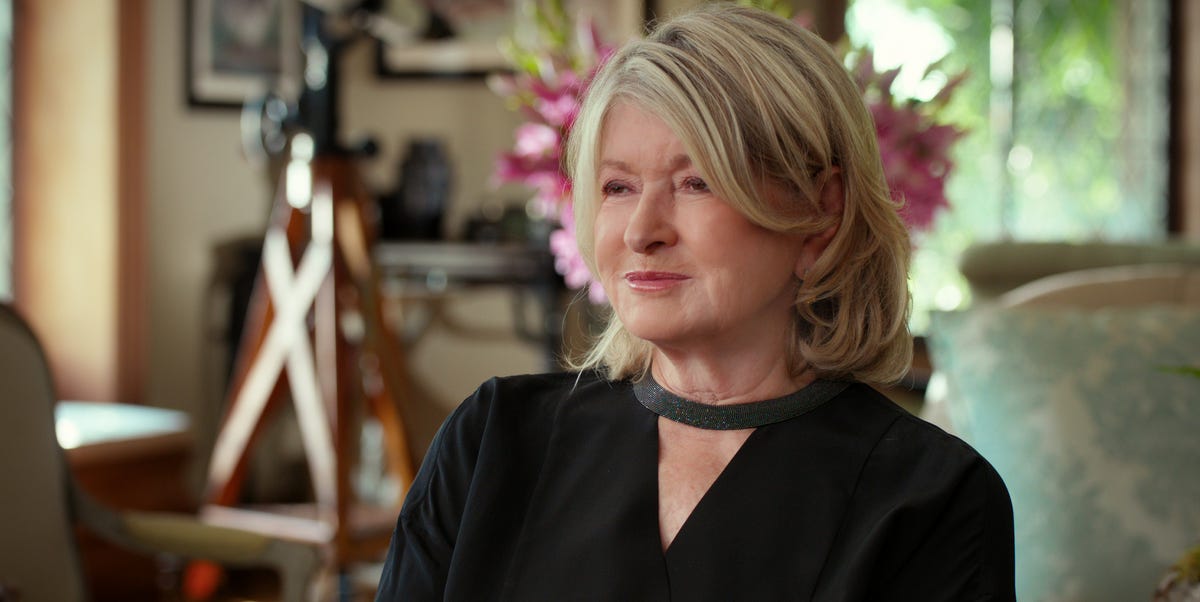
The documentary, released on Netflix in 2024, tells the story of Martha Stewart in her own words, using interviews, personal letters, private archives, and footage from her long public life. It follows her from a working-class childhood in New Jersey to modeling, Wall Street, catering, publishing, television, billionaire status, legal disgrace, prison, comeback, and pop-culture immortality. That is a lot for one film. Most people need a spreadsheet to organize Thanksgiving. Martha needed a documentary to organize 80-plus years of dominance.
What makes Martha fascinating is that it does not flatten her into a cozy grandmother of casseroles or a cold business machine. Instead, it shows a woman who is brilliant, demanding, funny, guarded, wounded, proud, and sometimes difficult. In other words: a person. Here are seven things I learned from Martha Stewart’s new documentary, plus a longer reflection on why her story still feels surprisingly relevant in the age of personal branding, social media perfection, and burnout disguised as “having it all.”
1. Martha Stewart Was an Influencer Before Influencing Had Ring Lights
Before “content creator” became a career path and before everyone’s sourdough starter got its own Instagram account, Martha Stewart was building an entire lifestyle universe. She did not simply sell recipes or decorating tips. She sold a worldview: life could be more beautiful, more orderly, more intentional, and yes, more photogenic if you were willing to learn the right way to do things.
The documentary makes a strong case that Martha was one of America’s original influencers. Her magazines, books, television shows, product lines, and brand partnerships created a template that modern lifestyle creators still use today. The difference is that Martha did it before the internet made everyone a publisher. She had to build distribution through traditional media, retail partnerships, and relentless personal authority.
Her genius was not just that she knew how to make a pie crust. Plenty of people can make pie crust; some even do it without crying into the flour. Martha’s real genius was turning domestic knowledge into a media empire. She understood that cooking, gardening, decorating, and entertaining were not small subjects. They were daily life. They were aspiration. They were identity. She saw value where many businesspeople saw “women’s work,” and she monetized it with precision.
2. Perfection Was Her Product, But Discipline Was Her Engine
One of the biggest lessons from the Martha Stewart documentary is that her perfectionism did not appear out of nowhere. The film traces her discipline back to childhood, family expectations, and the practical skills she learned early. Gardening, cooking, sewing, cleaning, and entertaining were not hobbies in her world. They were standards. They were proof that you cared enough to do things properly.
That is why Martha’s brand always felt both inspiring and slightly terrifying. She made a hand-tied wreath look easy, but the unspoken message was clear: if your wreath looked like a raccoon fought a pine tree, that was between you and your conscience.
Still, the documentary helps reframe her perfectionism. It was not only about appearance. It was about competence. Martha believed knowledge gave people power. If you knew how to plant, cook, mend, host, and manage a home, you were not helpless. You were capable. Her exacting standards could be intimidating, but they also elevated domestic labor into something intelligent, creative, and valuable.
That is one reason her work mattered. She treated household skills as worthy of expertise. She took the private, unpaid, often dismissed work of home life and gave it vocabulary, structure, and prestige. Whether you love that or roll your eyes at it, the cultural impact is hard to deny.
3. Her Career Was Built on Reinvention, Not Luck
The documentary reminds viewers that Martha Stewart’s career was never a straight line. She modeled as a young woman, worked as a stockbroker, built a catering business, became an author, expanded into magazines, moved into television, created Martha Stewart Living Omnimedia, and eventually became the first self-made female billionaire in the United States after her company went public in 1999.
That path was not accidental. Martha repeatedly identified where culture was going and then positioned herself slightly ahead of it. Before “elevated everyday living” became a retail category, she made it a business. Before personal brands became standard, she turned her own name into a commercial ecosystem. Before audiences expected lifestyle experts to be everywhere at once, she was already in books, magazines, TV, stores, and kitchens across the country.
The film also shows how much resistance she faced. Martha’s ambition was often treated as suspicious, even when male entrepreneurs with similar intensity were praised as visionaries. She was expected to be gracious, warm, and perfectly polished while also running a serious company. That is a nearly impossible performance: be powerful, but not too powerful; be exacting, but not harsh; be rich, but somehow still relatable; teach us how to make a centerpiece, but please do not remind us you own the table.
Her career teaches that reinvention is not a cute inspirational slogan. It is work. It requires timing, risk, stubbornness, and the willingness to be misunderstood while building something other people cannot yet see.
4. The Documentary Shows the Mess Behind the Brand
For decades, Martha Stewart’s public image was associated with order. The linens were pressed. The pies were centered. The gardens behaved better than most adults. But Martha spends significant time showing the disorder behind that image, especially in her personal life.
The film explores her marriage to Andrew Stewart, their eventual divorce, and the emotional complexity of betrayal, ambition, and distance. It also touches on Martha’s own admitted mistakes. These sections are striking because they complicate the tidy myth of Martha Stewart. The woman who taught America how to set a table was also navigating heartbreak, anger, loneliness, and disappointment.
That contrast is important. Public figures, especially women, are often forced into symbolic roles. Martha became “domestic perfection,” which made it easy for people to forget that no amount of polished silver protects anyone from ordinary human pain. The documentary reveals that the same drive that made her successful may have made intimacy difficult. It also suggests that building an empire can come with personal costs that do not show up in magazine spreads.
In a strange way, the mess makes her more interesting. A flawless Martha would be a brand mascot. A complicated Martha is a story. And honestly, after years of being told to separate egg whites with calm elegance, it is refreshing to see that even Martha Stewart has had emotional moments that could not be fixed with a glue gun.
5. The Legal Scandal Was Huge, But It Was Not the Whole Story
No documentary about Martha Stewart can avoid her 2004 conviction and prison sentence. The Netflix film covers the investigation connected to her sale of ImClone stock, her conviction for charges including obstruction of justice and making false statements, and her five-month prison term. It also shows how deeply she resented the prosecution and how strongly she felt the punishment became a public spectacle.
This part of the documentary is uncomfortable because it revisits the moment when Martha Stewart became a national punchline. For years, her name was reduced to scandal, late-night jokes, and prison references. The film does not erase the seriousness of the case, but it does place it inside a longer life story. That context matters.
What I learned is that the scandal damaged Martha Stewart, but it did not define her permanently. Many public figures collapse after reputational disaster. Martha did not. She returned to television, rebuilt business relationships, embraced new audiences, and eventually became beloved by younger viewers who knew her as much for her dry humor and friendship with Snoop Dogg as for her legal history.
Her comeback was not soft or sentimental. It was practical. She kept working. That may be the most Martha Stewart response imaginable: the house burned down, so she labeled the ashes, replanted the garden, and found a better container for the lemons.
6. Martha Understands Pop Culture Better Than People Think
One of the funniest surprises in Martha Stewart’s later career is how naturally she moved from domestic authority to pop-culture icon. Her friendship and television chemistry with Snoop Dogg became one of those unlikely celebrity pairings that sounds fake until you see it and think, “Actually, this makes perfect sense.”
The documentary helps explain why that reinvention worked. Martha has always understood performance. She knows how to present an image, control a room, deliver a line, and turn contrast into attention. Pairing her polished, exacting persona with Snoop’s relaxed charisma created instant comedic tension, but it also revealed something warm and playful in her brand.
That matters because Martha could have remained frozen in her old image: the stern high priestess of pie crust. Instead, she allowed herself to become funny, meme-able, and self-aware. She appeared in unexpected contexts, used social media, posed for bold magazine covers, and leaned into the fact that younger audiences enjoy icons who can wink at their own mythology.
The lesson is not that every businessperson needs a celebrity best friend and a viral thirst trap selfie. Please do not forward that sentence to your marketing team. The real lesson is that longevity requires flexibility. Martha stayed relevant because she adapted without fully abandoning what made her recognizable.
7. Martha Still Wants the Final Word on Martha
Perhaps the most fascinating part of the documentary happened outside the documentary: Martha Stewart publicly criticized the film. She objected to certain scenes, the tone of the second half, the music, the camera angles, and the way the ending made her appear. She felt the film overemphasized painful chapters and left out too much of her ongoing vitality and work.
This reaction is not a side note. It is central to understanding Martha Stewart. Of course she wanted control over the final product. Control is part of her art. This is a woman who built a career on deciding exactly where the asparagus should sit on the platter. Naturally, she would have opinions about how her own life should be edited.
Her criticism also raises a bigger question: who owns a life story? The subject? The filmmaker? The audience? The archive? A documentary is not an autobiography, even when the subject participates. R.J. Cutler’s film gives viewers an interpretation of Martha Stewart, not Martha Stewart’s preferred self-portrait. That tension makes the film more interesting, not less.
In the end, Martha’s dissatisfaction proves one of the documentary’s own points. She is still engaged, still exacting, still unwilling to be passively framed by someone else. Whether she is arranging flowers or challenging a director’s choices, she remains Martha: opinionated, exact, and absolutely not here to be handled gently.
Why the Martha Stewart Documentary Still Matters
The reason Martha resonates is that it is not only a celebrity documentary. It is a documentary about work, image, gender, punishment, aging, and the cost of being excellent in public. Martha Stewart’s life sits at the intersection of several American obsessions: success, beauty, domesticity, wealth, reinvention, scandal, and redemption.
Her story also feels timely because we now live in a world Martha helped predict. Millions of people package their homes, meals, routines, closets, gardens, and personalities for public consumption. The difference is that today, the pressure to create an attractive life is available to anyone with a phone. Martha built an empire around aspiration; social media turned aspiration into a daily chore.
Watching the documentary now, it is easier to see both the brilliance and the burden of that project. Martha gave people tools to make life more beautiful, but she also became associated with a level of perfection that could feel impossible. The film allows both truths to exist. She inspired people. She intimidated people. She built something extraordinary. She made mistakes. She was punished. She came back. She is still here.
That complexity is the real lesson. Martha Stewart is not just a lifestyle icon or a business case study. She is a reminder that public success is never as clean as the finished photograph. Behind every perfect table is labor. Behind every empire is conflict. Behind every comeback is stubbornness. And behind every “good thing” is usually someone who stayed up far too late making sure it looked effortless.
Personal Experience: What Martha’s Story Made Me Rethink
After watching and reading about Martha, I found myself thinking less about celebrity and more about the everyday ways people try to build a life that feels intentional. Martha Stewart’s world can seem extreme: the perfect garden, the perfect kitchen, the perfect holiday table, the perfect business pitch. Most of us are simply trying to keep basil alive on a windowsill and answer emails without developing a new personality disorder. Still, her story contains practical lessons for ordinary work and ordinary ambition.
The first experience it brought to mind is the feeling of learning a skill properly. There is a quiet confidence that comes from knowing how to do something with care, whether it is cooking a meal, writing an article, repairing a loose hinge, organizing a desk, or planning a gathering. Martha’s brand sometimes made perfection look like the goal, but the deeper value is competence. When you know how things work, you feel less dependent on luck. You stop waiting for someone else to make life better and start improving the small corners you can reach.
The documentary also made me rethink ambition. Ambition is often described in dramatic terms, as if it always means corner offices, IPOs, or magazine covers. But Martha’s ambition began in details. She noticed how food looked, how gardens grew, how rooms felt, how people gathered, and how information could be taught. That kind of attention is underrated. Many careers are built not from one giant idea, but from seeing ordinary things more clearly than everyone else.
Another relatable lesson is that reinvention usually looks messy while it is happening. From the outside, Martha’s comeback seems inevitable because we already know the ending. But living through failure, criticism, or embarrassment never feels like a neat comeback arc. It feels like Tuesday, then Wednesday, then another morning when you have to decide whether to keep going. Her ability to return to work after public humiliation is one of the most useful parts of the story. You do not need to be fearless. You need to be functional enough to take the next step.
I also appreciated how the documentary challenges the idea that a person must be universally likable to be admirable. Martha can be blunt, guarded, and demanding. Those qualities may make her difficult, but they are also connected to her success. In real life, many peopleespecially womenare pressured to soften their competence so others feel comfortable. Martha did not build her empire by pretending not to care. She cared intensely, and sometimes that intensity came with sharp edges.
Finally, Martha’s story made me think about legacy. A legacy is not simply what you create; it is also what people remember, misunderstand, criticize, and reinterpret. Martha may not love every frame of the Netflix documentary, but the fact that people are still debating her life proves her influence remains powerful. She turned domestic knowledge into business authority, survived a scandal that could have ended her career, and became culturally relevant to generations who were not even alive when her magazine first shaped American taste.
For anyone building somethinga blog, a business, a home, a skill set, a creative identitythe lesson is surprisingly simple: care about the details, but do not confuse a bad chapter with the whole book. Keep learning. Keep adapting. Keep your standards high enough to matter and your humor close enough to survive the chaos. And if everything falls apart, remember: Martha Stewart went to prison and still came back to teach America how to make a better omelet. That is not just resilience. That is branding with a backbone.
Conclusion
Martha is not a soft-focus tribute to a woman who made domestic life camera-ready. It is a sharp, sometimes uncomfortable portrait of a complicated American figure who built an empire from taste, discipline, ambition, and timing. The seven biggest lessons from Martha Stewart’s new documentary are not just about her life; they are about how culture treats powerful women, how brands are built, how reputations collapse, and how reinvention happens one determined step at a time.
Martha Stewart’s legacy is bigger than recipes and table settings. She changed how Americans think about home, lifestyle media, personal branding, and expertise. She also showed that a public fall does not have to be the final scene. Love her, question her, imitate her, or fear her linen closetMartha remains one of the most fascinating self-made icons in modern American culture.