Citing the Centers for Disease Control and Prevention sounds simple until you are staring at a blank reference page, wondering whether “CDC” counts as an author, a publisher, a website, a government agency, a mysterious alphabet soup, or all of the above wearing a lab coat. The good news: citing the CDC is not difficult once you know which citation style your teacher, editor, professor, journal, or workplace wants.
The CDC is a major U.S. public health agency and one of the most commonly used sources for health statistics, disease guidance, vaccination recommendations, public health reports, emergency updates, and data tools. Because CDC pages are official government sources, they deserve careful citation. A clean citation helps readers verify the information, protects your credibility, and keeps your bibliography from looking like it was assembled during a caffeine emergency at 1:17 a.m.
This guide breaks down four simple ways to cite CDC sources: APA, MLA, Chicago, and AMA style. You will also learn how to handle CDC webpages, reports, datasets, missing authors, missing dates, abbreviations, and in-text citations without turning your paper into a formatting crime scene.
Why Citing the CDC Correctly Matters
The CDC publishes many kinds of material: webpages, data briefs, statistical reports, surveillance summaries, journal articles, PDF reports, public-use datasets, infographics, and health topic pages. That variety is helpful for research, but it also means there is no single magic citation format for every CDC source.
For example, a CDC webpage about flu prevention is usually cited like a government website. A National Center for Health Statistics report may need a report title, report number, publication location, and year. A CDC journal article may need journal-style formatting. A dataset such as NHANES may need the agency, survey name, location, department, year, and URL. In other words, “I got it from CDC.gov” is a good start, but it is not a complete citation.
Before formatting anything, collect these details from the CDC source:
- Author or organization name, such as Centers for Disease Control and Prevention
- Specific page, report, article, or dataset title
- Date published, updated, or reviewed, if available
- Name of the CDC center, journal, database, or program, if relevant
- URL
- Date accessed, especially for styles or sources that require it
Think of these details as the ingredients in your citation sandwich. Skip one, and the whole thing may still be edible, but someone will notice.
1. Cite the CDC in APA Style
APA style is common in psychology, nursing, public health, education, social sciences, and many college courses. When citing a CDC webpage in APA 7th edition, the CDC is usually treated as a group author. If the author and website name are the same, APA generally avoids repeating the same name as both author and site name.
APA Reference Format for a CDC Webpage
Format:
Example:
APA In-Text Citation
Parenthetical citation:
Narrative citation:
After you introduce the abbreviation once, you can use the shorter form in later citations:
What If There Is No Date?
If the CDC page does not show a publication or update date, use n.d., which means “no date.” Yes, citation styles enjoy tiny abbreviations that make everyone feel like they accidentally joined a secret society.
When Should You Include a Retrieval Date in APA?
APA does not require retrieval dates for most stable webpages. However, you should include a retrieval date when the content is designed to change over time, such as a live dashboard, frequently updated statistics page, or database entry.
APA is a strong choice when your paper focuses on public health, medicine, psychology, education, or social science. It is also the style most likely to be requested when you are discussing CDC guidance in a college research paper.
2. Cite the CDC in MLA Style
MLA style is common in English, humanities, communications, and general writing courses. MLA focuses on the author, title, container, publisher, date, and location. For CDC sources, the author is often the Centers for Disease Control and Prevention, unless the page clearly names individual authors.
MLA Works Cited Format for a CDC Webpage
Format:
Example:
MLA In-Text Citation
MLA usually uses the first element of the Works Cited entry. If the CDC is the author, your in-text citation may look like this:
If your sentence already names the CDC, you may not need a parenthetical citation at all:
Should You Use CDC or the Full Name in MLA?
In the Works Cited entry, use the full name: Centers for Disease Control and Prevention. In the body of your article or paper, you may introduce the abbreviation once and then use CDC afterward. For example:
MLA is flexible, but it likes clarity. When in doubt, match your Works Cited entry to the organization name that appears on the source. Do not start the entry with “Anonymous,” and do not treat the CDC as a mysterious ghost author. It is a real agency, not a haunted footnote.
3. Cite the CDC in Chicago Style
Chicago style is widely used in history, publishing, policy writing, business research, and long-form nonfiction. It has two main systems: notes and bibliography and author-date. For CDC sources, Chicago citations often identify the government agency as the author and include the page title, website title, publication or revision date, access date if needed, and URL.
Chicago Notes and Bibliography Format
Footnote format:
Bibliography format:
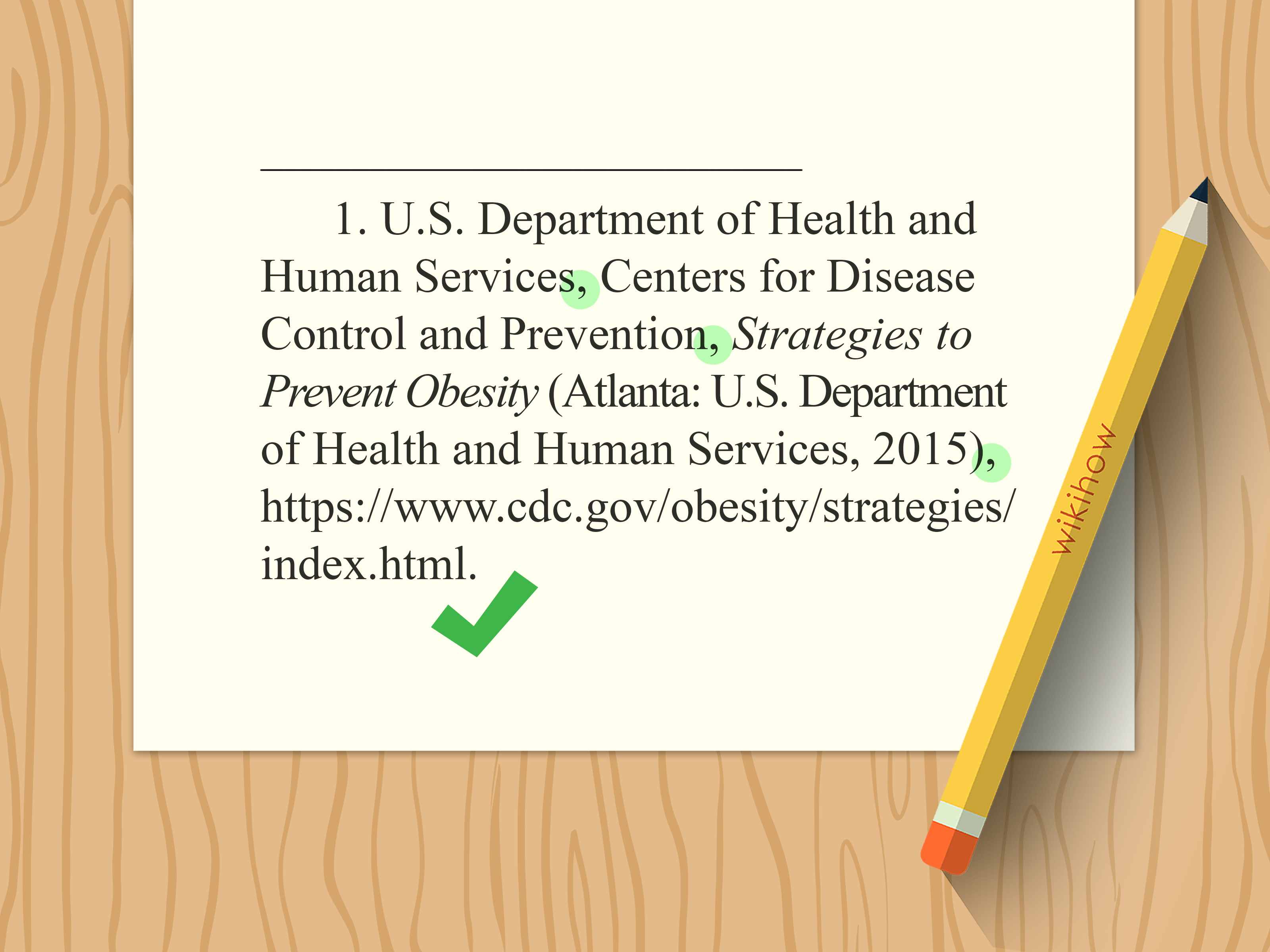
Example footnote:
Example bibliography entry:
Chicago Author-Date Format
Reference list format:
In-text citation:
When Chicago Gets Tricky
Chicago style becomes especially important when a government webpage changes, moves, or disappears. Public websites are not stone tablets. They can be updated, reorganized, archived, or removed. For important government sources, record the access date in your notes, save a PDF when allowed, or use a stable archived version if your instructor or publisher permits it.
Chicago is a good option for policy essays, public health history, government analysis, and professional reports. It may feel formal, but it is excellent when your readers want a precise trail back to the source.
4. Cite the CDC in AMA Style
AMA style is common in medicine, nursing, public health journals, pharmacy, and clinical writing. It is often the best fit when the CDC source is being used in a scientific or medical context. AMA references are numbered in the order they appear in your paper, and the reference list uses those numbers.
AMA Format for a CDC Webpage
Format:
Example:
AMA In-Text Citation
AMA uses numbered citations. Depending on the publication’s requirements, the number may appear as superscript or in parentheses. A sentence might look like this:
Then the reference list begins with the matching number:
AMA for CDC Reports and Data
For CDC reports, include the report title, issuing center, report number if available, publication year, and URL when relevant. For datasets, include the agency, database or survey name, year, and access information. CDC-related data sources such as National Center for Health Statistics materials may provide suggested citation language, which is always worth checking before you build your own citation from scratch.
AMA is the “wear comfortable shoes and bring evidence” style of citation. It is practical, concise, and built for readers who want to move quickly from claim to source.
CDC Citation Examples by Source Type
CDC Webpage
A regular CDC health topic page is usually cited as a webpage. Use the CDC as the author unless a specific person or subgroup is clearly listed.
CDC PDF Report
A CDC PDF report may need a report number, series title, center name, or publication location. Do not cite only the landing page if you actually used the PDF. Cite the document you read.
CDC Dataset
For datasets, cite the database or survey rather than a general CDC homepage. Include the responsible center, year, and access information when required.
CDC Journal Article
If you are citing an article from a CDC journal such as Emerging Infectious Diseases or Preventing Chronic Disease, cite it like a journal article, not a generic webpage. Include authors, article title, journal title, year, volume, issue, and URL or DOI if available.
Common Mistakes to Avoid When Citing the CDC
Mistake 1: Using “CDC” as the Reference List Author Without Introducing It
Many styles prefer the full name in the reference list: Centers for Disease Control and Prevention. You can abbreviate it as CDC in your writing after introducing the abbreviation.
Mistake 2: Forgetting the Specific Page Title
Do not cite the CDC homepage when you used a specific page about measles, flu, COVID-19, diabetes, travel health, or vaccination schedules. A source citation should lead readers to the exact information, not drop them at the front door and make them wander around.
Mistake 3: Ignoring Dates
CDC pages may show dates such as “last reviewed,” “last updated,” or “page last reviewed.” Use the date that best matches your citation style’s requirements. If no date is available, use the style-approved no-date format, such as n.d. in APA.
Mistake 4: Treating Every CDC Source the Same
A webpage, report, data table, journal article, and PDF are not identical source types. Citation styles care about that difference. A little extra checking up front saves you from a bibliography that looks confident but is quietly wrong.
Quick Comparison Table
| Style | Best For | CDC Author Format | In-Text Citation Style |
|---|---|---|---|
| APA | Public health, psychology, nursing, education | Centers for Disease Control and Prevention | (CDC, 2024) |
| MLA | Humanities, English, general writing | Centers for Disease Control and Prevention | (Centers for Disease Control and Prevention) |
| Chicago | History, publishing, policy, professional reports | Centers for Disease Control and Prevention | Footnotes or author-date |
| AMA | Medicine, clinical writing, public health journals | Centers for Disease Control and Prevention | Numbered citation |
Practical Experiences: What Citing the CDC Looks Like in Real Writing
In real academic and professional writing, citing the CDC rarely happens in a neat little vacuum. It usually happens when you are juggling a deadline, a half-finished outline, seven browser tabs, and the sudden realization that your “quick source check” has turned into a full archaeological expedition through CDC.gov.
One common experience is using CDC information for a student research paper. Suppose you are writing about childhood vaccination rates. You may begin with a CDC overview page, then discover a data table, then find a downloadable PDF report from the National Center for Health Statistics. At first, all three seem like “CDC sources,” but they should not be cited the same way. The overview page works as a webpage citation. The report needs report-style details. The dataset may need a database citation. The lesson is simple: cite the exact thing you used, not the general organization you visited.
Another real-world situation happens in healthcare workplaces. A nurse, clinic manager, or health educator may use CDC guidance to create patient handouts, staff training materials, or internal policy updates. In that setting, the citation does more than satisfy a teacher. It shows that the information comes from an official public health source and lets colleagues verify whether the guidance is current. For fast-changing topics, adding an access date can be helpful even when a style guide does not always require it.
Writers also run into the “CDC abbreviation problem.” In the first draft, it is tempting to write “CDC says” everywhere. That is fine conversationally, but formal citation needs the full agency name first. A polished sentence might say, “The Centers for Disease Control and Prevention (CDC) recommends…” After that, using CDC is usually clear. This tiny move makes the writing look professional without forcing readers to decode government alphabet soup.
Editors often notice another issue: missing page titles. A vague citation to the CDC homepage is like giving someone directions to “the internet” and hoping for the best. If the claim comes from a page about flu symptoms, cite that page. If it comes from a data brief, cite the data brief. Specific citations make your work easier to fact-check, and they reduce the chance that readers will land on a different page with similar but not identical information.
The most useful habit is to capture citation details the moment you use a CDC source. Copy the title, URL, date, agency name, and access date into your notes immediately. Future you will be grateful. Future you may even be suspiciously emotional about it. There are few academic joys greater than finishing a paper and realizing your references are already organized, complete, and not hiding in a browser tab you closed three hours ago.
Conclusion
Citing the Centers for Disease Control and Prevention is straightforward once you identify the source type and choose the correct citation style. APA works well for public health and social science papers. MLA is useful for humanities and general writing. Chicago is strong for history, policy, and professional reports. AMA is the natural fit for medical and clinical writing.
The golden rule is simple: cite the specific CDC source you used. Use the full agency name in formal references, include the page or report title, pay attention to dates, and add access dates when your style guide or source type calls for them. A good CDC citation is not just decoration at the end of your paper. It is a map that leads readers back to reliable public health information without making them wander through the website like tourists looking for a parking garage.