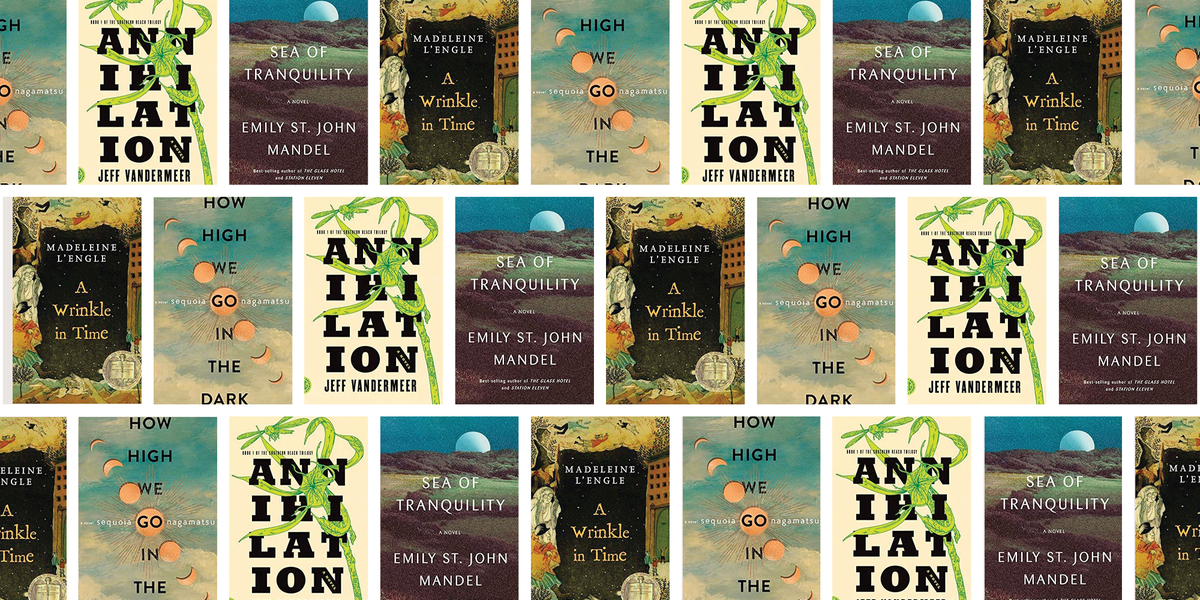
Science fiction is the only genre brave enough to ask, “What if humanity conquered the stars?” and then immediately follow up with, “What if we brought paperwork, politics, and terrible dating habits with us?” The best sci-fi books of all time do more than fire lasers across the page. They explore power, technology, identity, climate, faith, artificial intelligence, space travel, and the small problem of humans being humans wherever they go.
This list of the 20 best sci-fi books of all time includes classic science fiction novels, modern speculative fiction, dystopian masterpieces, and a few essential fantasy reads that belong on the same shelf. Some books here changed the genre forever. Others predicted the future with uncomfortable accuracy. A few are simply so entertaining that you may forget to eat dinner, which is fine unless you are stranded on Mars and dinner is potatoes again.
How This List Was Chosen
To build a balanced ranking, this article considers literary influence, reader popularity, awards, originality, cultural impact, and whether the book still feels alive when opened today. The result is not just a museum tour of famous titles. It is a practical guide for readers who want the best science fiction and fantasy books to read now, from epic desert planets to cyberpunk cities, from time travel trauma to magical rings that make everyone act extremely dramatic.
20 Best Sci-Fi Books of All Time
1. Dune by Frank Herbert
Dune is the grand cathedral of science fiction: huge, strange, political, ecological, and occasionally full of people whispering ominously in robes. Set on the desert planet Arrakis, the novel follows Paul Atreides as his family becomes trapped in a deadly struggle over spice, the most valuable substance in the universe. Herbert combines empire, religion, ecology, prophecy, and resource exploitation into a story that still feels shockingly modern. It is one of the best sci-fi books for readers who want world-building with sand in its boots and philosophy in its bloodstream.
2. The Left Hand of Darkness by Ursula K. Le Guin
Ursula K. Le Guin’s The Left Hand of Darkness is a landmark of intellectual science fiction. The novel follows Genly Ai, an envoy sent to the icy planet Gethen, where the people do not fit familiar human categories of gender. Instead of using aliens as rubber-forehead decorations, Le Guin uses them to question culture, identity, loyalty, and bias. The result is quiet, profound, and emotionally powerful. It is not a book that shouts. It simply rearranges the furniture in your brain while you are not looking.
3. Foundation by Isaac Asimov
Before modern readers obsessed over data science, Isaac Asimov imagined psychohistory, a fictional discipline that uses mathematics to predict the behavior of civilizations. Foundation begins with Hari Seldon foreseeing the fall of a galactic empire and creating a plan to shorten the dark age that follows. The book is less about one hero saving the day and more about ideas moving through history like comets with spreadsheets. For fans of big-concept science fiction, Foundation remains essential reading.
4. Frankenstein by Mary Shelley
Long before robots asked whether they had souls, Mary Shelley asked what happens when a creator refuses responsibility for his creation. Frankenstein is often called one of the first science fiction novels, and it still hits hard because its central question has never aged: just because we can make something, should we? Victor Frankenstein is not a mad scientist cackling in a lightning storm so much as a brilliant person with the emotional maturity of wet cardboard. The novel is gothic, tragic, philosophical, and foundational.
5. Neuromancer by William Gibson
Neuromancer did not merely help define cyberpunk; it made the future smell like neon, rain, and questionable decisions. William Gibson’s novel follows Case, a washed-up hacker pulled into a dangerous job involving artificial intelligence, corporate power, and cyberspace. Its language is sharp, cool, and sometimes beautifully disorienting. If today’s internet feels like a shopping mall, a casino, and a haunted house sharing one Wi-Fi password, Neuromancer helped imagine the mood before most people had logged on.
6. Kindred by Octavia E. Butler
Kindred uses time travel not as a puzzle box but as a confrontation. Dana, a Black woman living in 1970s California, is repeatedly pulled back to a plantation in the antebellum South. Octavia E. Butler strips away any cozy fantasy of visiting the past and replaces it with danger, moral pressure, and historical truth. The book is gripping because the speculative premise is simple, but the emotional and ethical consequences are enormous. It is one of the most important science fiction reads in American literature.
7. The Martian Chronicles by Ray Bradbury
Ray Bradbury’s The Martian Chronicles is less a single plot than a linked collection of haunting visions about Mars, colonization, loneliness, memory, and human arrogance. Bradbury’s Mars is dreamlike rather than scientifically strict, but that is part of its magic. The stories feel like campfire tales told under alien stars. They remind us that when humans travel to new worlds, they often bring old problems packed neatly in their luggage.
8. The Hitchhiker’s Guide to the Galaxy by Douglas Adams
Some science fiction explains the universe. Douglas Adams looks at the universe, raises an eyebrow, and asks why anyone thought this was a sensible arrangement. The Hitchhiker’s Guide to the Galaxy begins with Earth being destroyed to make way for a hyperspace bypass, which is inconvenient for Arthur Dent, who had other plans. Absurd, quotable, and surprisingly sharp, Adams’s comic masterpiece proves that the best sci-fi books do not need to be solemn to be smart. Sometimes the answer really is 42.
9. The Handmaid’s Tale by Margaret Atwood
Margaret Atwood’s The Handmaid’s Tale is a dystopian classic set in Gilead, a theocratic regime where women’s bodies are controlled by the state. Its speculative power comes from Atwood’s famous discipline of building with recognizable materials: political extremism, surveillance, gender oppression, and historical patterns of control. The book is chilling because it does not feel impossibly distant. It feels like a warning label someone tried to peel off.
10. The Dispossessed by Ursula K. Le Guin
The Dispossessed is subtitled “An Ambiguous Utopia,” and that ambiguity is exactly what makes it brilliant. Le Guin contrasts two societies: one capitalist, one anarchist, neither simple. Through the physicist Shevek, the novel explores freedom, responsibility, community, isolation, and the cost of building a better world. It is a science fiction book for readers who enjoy political thought experiments that also have a beating human heart.
11. Do Androids Dream of Electric Sheep? by Philip K. Dick
Best known as the inspiration for Blade Runner, Philip K. Dick’s Do Androids Dream of Electric Sheep? asks what separates humans from machines in a damaged future. Rick Deckard hunts androids, but the novel is less interested in action than in empathy, authenticity, and spiritual exhaustion. It is weird, paranoid, funny in jagged little flashes, and deeply influential. If an android ever reads it, expect a very complicated book club discussion.
12. Fahrenheit 451 by Ray Bradbury
In Fahrenheit 451, books are illegal and firemen burn them. The premise is simple enough for a poster, but Bradbury’s warning is more complex than “censorship is bad.” The novel also critiques distraction, anti-intellectualism, passive entertainment, and a culture too numb to notice what it has lost. Guy Montag’s awakening remains one of the great arcs in dystopian fiction. It is a short book with a long shadow.
13. Hyperion by Dan Simmons
Hyperion is what happens when science fiction decides to borrow the structure of The Canterbury Tales and then add interstellar politics, artificial intelligence, religious mystery, time distortion, and a terrifying creature called the Shrike. Dan Simmons gives each pilgrim a story, and each story opens another door in a vast, strange universe. It is literary, violent, emotional, and ambitious enough to need its own parking lot.
14. The Three-Body Problem by Cixin Liu
Cixin Liu’s The Three-Body Problem, translated into English by Ken Liu, helped bring Chinese science fiction to a massive global readership. The novel begins during China’s Cultural Revolution and expands into a first-contact story with enormous scientific and philosophical stakes. It is especially rewarding for readers who enjoy hard science fiction, cosmic scale, and the terrifying possibility that the universe is not a friendly neighborhood.
15. Snow Crash by Neal Stephenson
Snow Crash is cyberpunk after drinking three espressos and challenging capitalism to a sword fight. Neal Stephenson introduces Hiro Protagonist, a hacker and pizza delivery driver, in a world of corporate city-states, virtual reality, ancient language theories, and digital danger. The book is chaotic in the best way, mixing satire, action, linguistics, and technology. Its vision of the metaverse remains one reason the word still has futuristic glitter stuck to it.
16. Parable of the Sower by Octavia E. Butler
Parable of the Sower is set in a near-future America broken by climate disaster, inequality, violence, and institutional collapse. Lauren Olamina, the young protagonist, creates a belief system called Earthseed while trying to survive and build community. Butler’s vision is frightening because it feels grounded, but the book is not hopeless. It is about adaptation, leadership, and the stubborn human need to plant meaning in scorched soil.
17. The Fifth Season by N.K. Jemisin
N.K. Jemisin’s The Fifth Season blends science fantasy, apocalyptic fiction, geological terror, and social critique. Set on a world repeatedly devastated by catastrophic climate events, the novel follows characters shaped by oppression, survival, and power. Jemisin’s structure is bold, her world-building is fierce, and her emotional stakes are volcanic in every sense. This is one of the best modern fantasy and science fiction reads for anyone who wants the genre pushed forward.
18. A Wrinkle in Time by Madeleine L’Engle
A Wrinkle in Time is a science fantasy classic that introduces young readers to cosmic evil, family love, tesseracts, and the radical idea that awkward kids may be exactly the heroes the universe needs. Meg Murry’s journey across space and time is imaginative, heartfelt, and deeply accessible. It remains a gateway book for readers who later discover that speculative fiction can be both brainy and emotionally sincere.
19. The Lord of the Rings by J.R.R. Tolkien
Yes, The Lord of the Rings is fantasy, not science fiction. It belongs here because any list of top science fiction and fantasy reads would look suspiciously incomplete without Tolkien’s epic. The trilogy shaped modern fantasy through its languages, mythology, moral seriousness, and sense of deep history. Frodo’s journey proves that world-saving is not always about strength. Sometimes it is about endurance, friendship, mercy, and walking an absurd distance with terrible snacks.
20. The Martian by Andy Weir
Andy Weir’s The Martian is a survival story powered by science, humor, and potatoes. Astronaut Mark Watney is stranded on Mars and must solve one deadly problem after another using engineering, botany, math, and jokes sharp enough to keep panic away. The book is accessible, fast, and unusually cheerful for a novel about almost dying every few pages. It is a perfect sci-fi recommendation for readers who think they do not like sci-fi yet.
Why These Books Still Matter
The best science fiction books endure because they are not really about gadgets. Spaceships, androids, alien planets, and virtual worlds are exciting, but the core questions are human. What do we owe our creations? What happens when power controls knowledge? How do societies collapse? Can technology save us from ourselves, or does it simply give us faster ways to make bigger mistakes?
Classic sci-fi books like Foundation, Dune, and Fahrenheit 451 still matter because they turn abstract fears into unforgettable stories. Modern speculative fiction like The Fifth Season, Parable of the Sower, and The Three-Body Problem expands the genre by bringing new histories, voices, structures, and anxieties into the conversation. Fantasy masterpieces like The Lord of the Rings remind us that invented worlds can reveal moral truths more clearly than realistic settings sometimes can.
Reading Experience: How to Enjoy the Best Sci-Fi and Fantasy Books
Reading the best sci-fi books of all time can feel a little like joining a gym where the equipment includes wormholes, dragons, artificial intelligence, collapsing empires, and one emotionally unavailable scientist named Victor. The trick is not to treat the genre like homework. Start with the mood you want. If you want adventure, pick Dune or The Martian. If you want ideas that quietly follow you around for days, choose The Left Hand of Darkness or The Dispossessed. If you want something funny enough to make public reading risky, grab The Hitchhiker’s Guide to the Galaxy.
A good experience with science fiction often depends on patience with unfamiliar worlds. Many great books begin by dropping readers into strange names, new rules, and political systems that seem designed by a committee of caffeinated owls. Do not panic. You do not need to understand every detail on page one. Let the world teach you. After a few chapters, the vocabulary that felt alien starts to feel natural. This is one of the pleasures of speculative fiction: your brain gets a passport stamp.
Book clubs can make these novels even better. Kindred and The Handmaid’s Tale spark powerful conversations about history, gender, power, and survival. Neuromancer and Snow Crash are excellent for debates about technology, virtual reality, and whether the internet became exactly as weird as writers warned us it might. Parable of the Sower can lead to serious discussions about climate, community, and resilience. Bring snacks. Heavy themes land better with cookies.
Another helpful strategy is to alternate dense classics with faster reads. Follow Foundation with The Martian. Pair Dune with A Wrinkle in Time. Read The Fifth Season when you want intensity, then recover with Douglas Adams before your soul files a complaint. The genre is huge enough to match every reading personality. Some readers love hard science. Others want myth, politics, romance, horror, satire, or philosophical puzzles wearing rocket boots.
Most importantly, allow these books to disagree with one another. Science fiction is not one worldview. Asimov trusts systems. Butler tests survival. Le Guin questions assumptions. Gibson distrusts corporate futures. Bradbury worries about memory and imagination. Tolkien believes small acts of courage matter in a darkening world. Together, these books create a conversation across generations. Reading them is not just entertainment; it is a way of practicing imagination before the future arrives and starts knocking on the door like it forgot its keys.
Conclusion
The 20 best sci-fi books of all time prove that speculative fiction is not escapism in the lazy sense. It is escape with a return ticket and a suitcase full of questions. These novels take us to Mars, Gethen, Arrakis, Middle-earth, Gilead, cyberspace, broken Earths, and futures that feel too close for comfort. Along the way, they remind us that imagination is not the opposite of reality. It is one of the sharpest tools we have for understanding it.
If you are new to the genre, start with the book that matches your curiosity. If you are already a fan, revisit a classic and see what has changed: the book, the world, or you. The best science fiction and fantasy reads have a funny habit of aging like starlight. They leave long afterimages, and they make ordinary life feel slightly more mysterious when you finally close the cover.
Note: This HTML article is written in original American English for web publishing, with no copied source text, no source-link clutter inside the body, and no unnecessary citation placeholders.