Editorial note: This article is written as a refreshed, publish-ready feature inspired by the original “Pinterest Contest: Win a Marimekko Teapot” concept. Readers should always check the official contest page, dates, rules, eligibility, and sponsor details before entering any giveaway.
Some contests shout. Others wink politely from a beautifully styled kitchen shelf. A Pinterest contest to win a Marimekko teapot belongs firmly in the second category: visual, charming, design-forward, and just practical enough to make your morning tea feel like it has hired a tiny Scandinavian art director.
The original idea was simple and brilliant: invite readers to create Nordic-inspired Pinterest boards, celebrate black-and-white design, and reward one lucky participant with a graphic Marimekko teapot. It was the kind of giveaway that made perfect sense for design lovers. Instead of asking people to fill out a dull form and immediately forget about it, the contest encouraged creativity. Participants built mood boards, collected interiors, played with contrast, and showed their taste one carefully pinned image at a time.
That is why this topic still has legs. A Marimekko teapot is not just a kettle-adjacent object that holds hot water and dreams. It is a small design statement. It sits on the table like it has opinions about curtains. It can make a plain breakfast feel considered, a rainy afternoon feel cozy, and an open shelf look as though someone in the house actually knows what “visual balance” means.
Why a Marimekko Teapot Makes a Perfect Pinterest Prize
Pinterest is built for aspiration. People use it to plan kitchens they may or may not renovate, parties they may or may not host, and gardens that somehow never include mosquitoes. A Marimekko teapot fits that visual world beautifully because it combines three things Pinterest users adore: strong pattern, everyday usefulness, and a sense of lifestyle.
Marimekko, the Finnish design house founded in Helsinki in 1951, is famous for bold prints, expressive color, and home pieces that feel cheerful without tipping into chaos. Its tableware collections often blend clean ceramic forms with patterns that have become recognizable design icons. The result is practical enough for daily use but decorative enough to photograph from seven angles while pretending the croissant crumbs were intentional.
A teapot also has emotional appeal. Unlike a random promotional mug or a branded tote bag that mysteriously multiplies in the closet, a teapot suggests ritual. It says: slow down, pour something warm, maybe do not answer that email yet. For a Pinterest contest, that emotional layer matters. People are not just entering to win an object; they are entering to win a scene. A quiet kitchen. A soft morning. A beautiful table. A tiny upgrade to ordinary life.
The Design Story Behind Marimekko Tableware
Marimekko’s home pieces are often admired because they combine Nordic restraint with graphic confidence. That pairing sounds contradictory, but it is exactly the magic. The silhouettes are usually simple, while the surfaces carry personality. A cup, plate, or teapot may have a calm shape, then suddenly arrive wearing a pattern that looks like it came from a happy art studio.
One of Marimekko’s best-known patterns is Unikko, created by Maija Isola in 1964. The pattern is famous because it broke the rules in the most stylish way possible. Marimekko’s founder, Armi Ratia, was skeptical of floral prints because she believed real flowers could not be faithfully captured on fabric. Isola responded not with a shy little daisy, but with a bold abstract flower that became one of the brand’s signature designs. If design history had a mic-drop moment, this would be printed in red, pink, and orange.
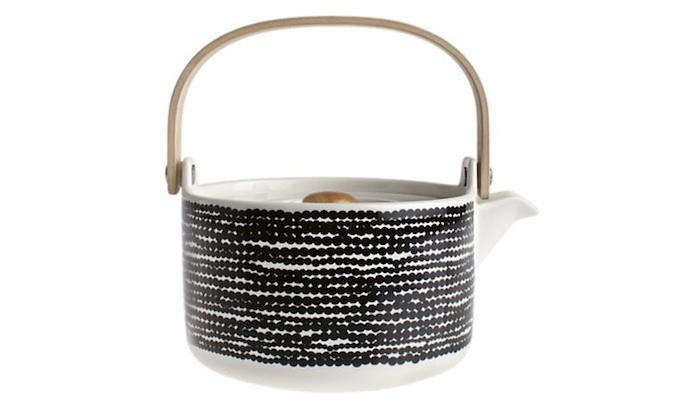
Modern Marimekko teapots, including versions in the Oiva tableware family, often use stoneware, ceramic strainers, and wood details. The Oiva line, designed by Sami Ruotsalainen, is known for simple forms that allow Marimekko prints to shine. Some versions feature the Unikko pattern, while the original Remodelista-era contest highlighted a black-and-white teapot with the Räsymatto pattern designed by Maija Louekari. The Räsymatto design, with its rhythmic dot pattern, feels especially suited to Pinterest because it photographs well in minimalist spaces, maximalist shelves, and everything in between.
What Made the Original Pinterest Contest So Appealing?
The original “Pinterest Contest: Win a Marimekko Teapot” worked because it understood its audience. Design readers do not merely want to click a button; they want to curate. They want to gather visual references, compare textures, save kitchens, admire chairs, and create a small universe where every object looks like it belongs. A Pinterest board is the natural habitat for that behavior.
The contest asked participants to submit Nordic-inspired black-and-white pinboards. That theme was clever because it gave entrants a clear creative direction without making every board look identical. Black and white may sound restrictive, but in design it opens the door to texture, contrast, shadow, pattern, ceramics, linen, steel, marble, painted wood, and dramatic little corners where a teapot can become the star.
The winning board was praised for capturing the simplicity of Scandinavian design while still showing warmth. That is the trick with Nordic interiors: they are not supposed to look cold, empty, or like nobody is allowed to sit down. The best versions combine clean lines with softness. Think wool throws, handmade ceramics, pale wood, candlelight, graphic prints, and enough breathing room for the eye to relax.
How a Pinterest Contest Like This Usually Works
A well-designed Pinterest giveaway should be easy to understand, fair to enter, and transparent. For a contest centered on a Marimekko teapot, the structure might look something like this:
1. Create a Themed Pinterest Board
Entrants may be asked to create a board around a theme such as Nordic kitchen style, black-and-white interiors, Scandinavian tea time, modern table settings, or cheerful everyday design. The theme should be specific enough to inspire creativity but flexible enough to let people show their own taste.
2. Add a Mix of Pins
A strong board might include tableware, kitchen shelving, linen napkins, tea accessories, breakfast trays, graphic textiles, and cozy dining nooks. The best entries usually feel edited, not stuffed. In Pinterest terms, more is not always more. Sometimes more is just a digital junk drawer wearing a linen apron.
3. Follow the Official Entry Instructions
Contest hosts may ask participants to submit a board URL, use a specific hashtag, or complete a form. The official rules should explain eligibility, entry deadline, judging criteria, prize value, winner selection, and how the winner will be contacted.
4. Respect Platform and Legal Guidelines
Modern Pinterest promotions need clear rules. Hosts should avoid implying that Pinterest sponsors or endorses the promotion. They should not require users to save one specific image as the only way to enter, and they should generally keep entries fair and limited. If social posts are part of the entry process, clear disclosure matters, especially when the post is connected to a prize opportunity.
Why Pinterest and Marimekko Are Such a Natural Pair
Marimekko is visual shorthand for confidence. Pinterest is visual search for people who like to plan beautiful things before breakfast. Put them together, and you have a contest that almost writes itself. Users can build boards around color stories, table settings, tea rituals, apartment kitchens, Scandinavian interiors, or “things I would buy if my shelves were not already negotiating for structural support.”
The pairing also works because Pinterest is not just a social platform; it is a discovery engine. Many users come to Pinterest with intent. They are looking for ideas, products, styling cues, and inspiration they can act on later. A Marimekko teapot contest can introduce people to Finnish design while also giving them practical inspiration for their own homes.
For brands and publishers, a Pinterest contest can extend the life of a story. A standard giveaway may get a quick spike of entries. A board-based contest creates a gallery of ideas. Entrants do some of the creative work, the prize becomes part of a larger design conversation, and the campaign feels less like advertising and more like a community mood board.
How to Create a Winning Nordic-Inspired Pinterest Board
If you were entering a modern version of this contest, your goal would not be to pin every teapot on the internet. Your goal would be to tell a visual story. A winning board needs rhythm, contrast, and personality. It should feel like someone could step inside the board and immediately know where to sit, what to sip, and which chair is probably expensive.
Start With a Clear Color Palette
For a black-and-white Nordic board, begin with contrast. Use white walls, black ceramics, charcoal textiles, pale wood, and soft gray accents. Then add small moments of warmth: a candle, a loaf of bread, a woven basket, or a wooden handle on a teapot. The warmth keeps the board from looking like a stylish refrigerator.
Mix Product Shots With Real Interiors
A board made only of product photos can feel like a catalog. A board made only of interiors can make the prize disappear. The sweet spot is a mix: one close-up of a teapot, one kitchen shelf, one breakfast table, one linen napkin, one moody window, one graphic plate, and maybe one chair that looks uncomfortable but photographs like a dream.
Use Texture to Add Depth
Scandinavian style depends heavily on texture. Pin stoneware, raw wood, linen, wool, paper lamps, ceramic tiles, matte black hardware, and handmade dishes. Texture is especially important when the color palette is restrained. Without it, black and white can become flat. With it, the board feels layered and livable.
Keep the Mood Human
The best design boards do not look like nobody has ever touched anything. Add signs of life: tea being poured, a book beside a cup, herbs on a windowsill, slippers near a kitchen bench, or a breakfast tray that says, “I woke up early and became the person I always claimed I was.”
What to Know Before Entering Any Pinterest Giveaway
Before entering a Pinterest contest, slow down and read the rules. Yes, reading rules is less exciting than pinning a perfect kitchen, but it is also how you avoid disappointment, confusion, or accidentally entering something that ended during the previous geological era.
Check the contest dates first. Then look for eligibility requirements, especially location and age restrictions. Many giveaways are limited to certain countries or states. Next, confirm how the winner is chosen. A contest may be judged based on creativity, or it may be a random sweepstakes. Those are not the same thing. If creativity is being judged, your board needs a point of view. If it is random, your board still deserves dignity, but you do not need to lose sleep over whether your napkin pin clashes with your chair pin.
Also look for disclosure requirements. If the contest asks you to post publicly, you may need to include a clear hashtag such as #contest or another phrase required by the sponsor. The point is to make it obvious that the post is connected to a chance to win something. Transparency protects readers, entrants, and the brand.
Styling a Marimekko Teapot at Home
Winning a Marimekko teapot is only the beginning. The real fun begins when you bring it into your kitchen and start pretending your breakfast table has been scouted for a design magazine. Fortunately, styling a graphic teapot does not require a full remodel, a marble island, or a suspiciously perfect bowl of lemons.
Place the teapot on an open shelf with white bowls and dark mugs for contrast. Pair it with linen napkins if you want softness. Add a wooden tray to echo natural materials. For a black-and-white teapot, keep the surrounding palette calm and let the pattern do the talking. For a colorful Unikko piece, repeat one color in a nearby towel, flower, book spine, or fruit bowl so the whole setup feels intentional.
A Marimekko teapot also works beautifully as a centerpiece for casual gatherings. Put it on the table with mugs, honey, lemon slices, cookies, and a small vase of flowers. The scene does not have to be perfect. In fact, a slightly lived-in table often feels more inviting. Pinterest may love polish, but real life needs somewhere to put the spoon.
Why Small Design Objects Matter
It is easy to dismiss a teapot as a small thing. But small design objects shape daily life more than we realize. Most people do not interact with a statement sofa before 8 a.m. They do interact with a mug, a spoon, a plate, a kettle, a towel, or a teapot. These objects become part of routine. When they are beautiful, durable, and pleasant to use, they quietly improve the day.
That is the deeper appeal of the Marimekko teapot contest. The prize is not a luxury for display only. It is an invitation to make ordinary rituals more enjoyable. Tea becomes a pause. A kitchen shelf becomes a tiny gallery. A Pinterest board becomes a way to imagine a home that feels more personal.
Good design does not have to be grand. Sometimes it is a patterned teapot waiting beside the sink, reminding you that even Tuesday afternoon can have a little ceremony.
Experience Notes: Living With the Idea of a Marimekko Teapot Contest
The first time you build a Pinterest board for a contest like this, you may think it will take ten minutes. This is adorable. Ten minutes later, you are comparing three different photos of black ceramic cups and wondering whether one of them has “too much emotional distance.” Pinterest has a way of turning casual browsing into a full interior design identity crisis.
That is part of the charm. A contest centered on a Marimekko teapot is not just about the prize; it is about the experience of noticing your own taste. You begin with a simple theme, such as Nordic black and white, and soon you realize you are drawn to matte finishes, open shelving, pale floors, warm wood, and kitchens where nobody owns plastic food containers with missing lids. The board becomes a mirror, except kinder and better lit.
There is also a pleasant discipline in working with a limited palette. Black and white sounds easy until you try to keep a board from feeling repetitive. You learn to look for variation: glossy tile beside matte stoneware, crisp stripes beside soft linen, high-contrast artwork beside a quiet breakfast nook. The Marimekko teapot becomes the anchor, but the surrounding pins create the mood.
If you have ever styled a real tea table after making a Pinterest board, you know the translation from screen to life can be both delightful and humbling. Online, the napkin folds itself. In real life, it looks like a tired envelope. Online, the teapot sits beside perfect pastries. In real life, someone has eaten the best cookie before the photo. Still, the attempt is worthwhile. You start thinking more intentionally about what you already own. A plain white plate suddenly looks better next to a patterned mug. A wooden cutting board becomes a serving tray. A small flower in a jam jar becomes “casual Scandinavian charm,” which is much nicer than “I forgot to buy a vase.”
The best experience related to a contest like this is the way it turns passive scrolling into active creativity. Instead of simply admiring someone else’s kitchen, you build a visual argument for your own version of beauty. Maybe your Nordic board is minimal and serene. Maybe it is bold, graphic, and full of pattern. Maybe it includes a teapot, a striped rug, five kitchens, and one mysterious photo of a snowy cabin because the vibes demanded it.
And if you win the Marimekko teapot? Wonderful. Use it. Do not imprison it in a cabinet for “special occasions,” because special occasions have a bad habit of waiting until everyone forgets they exist. Brew tea on a regular morning. Bring it out when friends visit. Let it sit on the table during a long conversation. A beautiful object earns its place by becoming part of life.
If you do not win, the contest can still leave you with something useful: a board full of ideas. You may discover a new color palette for your kitchen, a better way to arrange shelves, or a renewed appreciation for well-made tableware. You may even realize that the real prize was not the teapot, although let us be honest, the teapot would still be very nice.
That is the quiet genius of a design giveaway. It offers a tangible reward, but it also invites people to dream in a practical way. You are not fantasizing about a castle with twelve fireplaces and a staff member dedicated solely to fluffing pillows. You are imagining tea, a table, a shelf, a pattern, a slower morning. That is reachable. That is human. That is why “Pinterest Contest: Win a Marimekko Teapot” still feels like more than a headline. It feels like an invitation to make everyday life a little more beautiful, one pin and one pour at a time.
Conclusion
A Pinterest contest featuring a Marimekko teapot is a smart blend of design, creativity, and everyday usefulness. It gives readers a reason to explore Scandinavian style, build thoughtful mood boards, and celebrate the kind of home object that makes daily rituals feel special. Whether the prize is a black-and-white Räsymatto teapot, a white-on-white Unikko design, or another Marimekko classic, the appeal is the same: bold Finnish design in a form you can actually use.
For entrants, the key is to create a board with a clear story, balanced visuals, and personal taste. For contest hosts, the key is transparency, fair rules, and respect for Pinterest’s promotional guidelines. And for everyone else? Put the kettle on. Good design is best enjoyed warm.