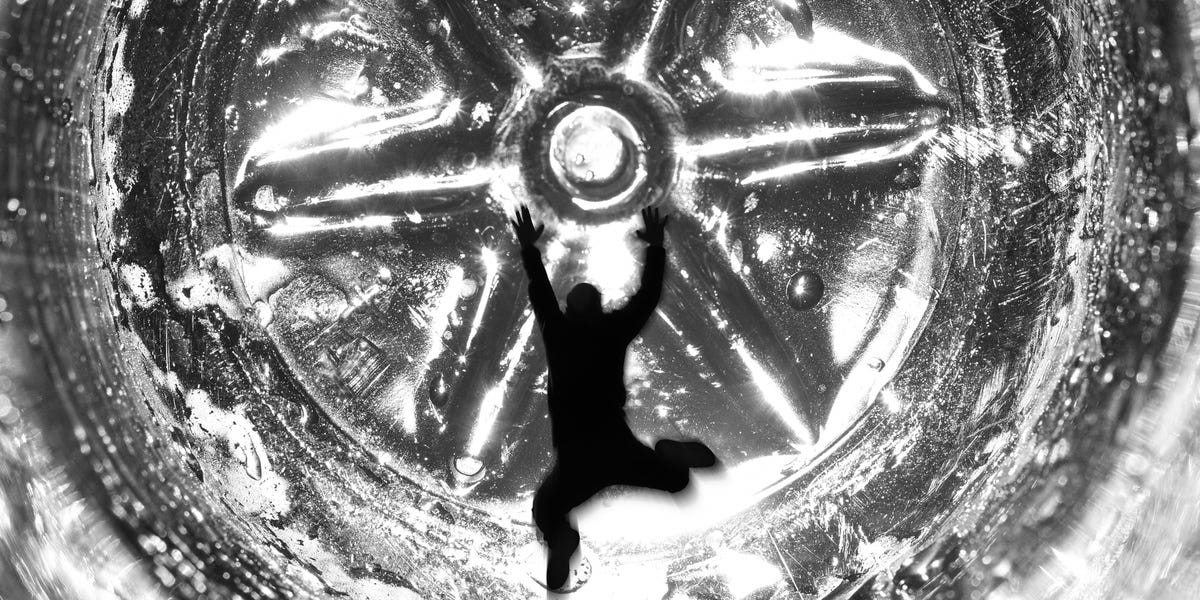
Can time go backwards, or is that question just science fiction wearing a lab coat and pretending it has tenure? Surprisingly, modern physics does not give us a simple “no.” It gives us a much more interesting answer: in ordinary life, time appears to move forward, but at the microscopic and quantum levels, some processes can look reversible, blurred, or even more consistent with a reverse flow of time.
Before anyone starts shopping for a stainless-steel time machine or practicing dramatic “I must warn my past self” speeches in the mirror, let’s set expectations. Science has not proven that humans can travel back to yesterday, stop themselves from sending a risky text, or unspill coffee onto a white shirt. The universe is still very rude about laundry. But physicists have discovered that the direction of time is less obvious than our daily experience suggests.
The big idea is called the arrow of time. It points from past to future, from neat to messy, from hot pizza to cold regret. Yet quantum physics, relativity, entropy, and particle experiments all show that time is not merely a cosmic wall clock ticking politely in the background. It is woven into the structure of reality, and in some cases, the rules seem flexible enough to make “reverse time” a serious scientific discussion.
What Do We Mean When We Ask, “Can Time Go Backwards?”
The phrase “time going backwards” can mean several different things. In movies, it usually means a person travels into the past while everyone else remains clueless. In physics, it often means something more precise: a system evolves from a later-looking state into an earlier-looking state, or the mathematical description of a process works just as well when time is reversed.
For example, imagine filming two billiard balls colliding on a perfectly smooth table. If you play the video backward, the motion may still look physically possible. The balls do not suddenly turn into dragons or file taxes. Many fundamental equations in classical mechanics and quantum mechanics have this kind of time-reversal symmetry. In other words, at the microscopic level, the laws often do not strongly prefer “forward” over “backward.”
Now film an egg falling off a counter and splattering onto the floor. Play that backward, and everyone instantly knows something is wrong. Eggs do not casually reassemble, leap into shells, and return to the countertop like tiny breakfast superheroes. This difference is where the mystery lives.
The Arrow of Time: Why Yesterday Feels Gone
The most familiar explanation for time’s one-way direction comes from thermodynamics, especially the concept of entropy. Entropy is often described as disorder, but a more careful way to think about it is the number of possible microscopic arrangements that match what we see macroscopically.
A neat deck of cards has relatively few arrangements that count as “perfect order.” A shuffled deck has a huge number of possible messy arrangements. That is why shuffling feels natural, while a random deck sorting itself into perfect order would make you either call a physicist or suspect the magician is overcharging.
The second law of thermodynamics says that in an isolated system, entropy tends to increase. This is why ice melts in warm soda, smoke spreads through a room, and hot coffee cools down instead of spontaneously stealing heat from the air and becoming lava. The direction in which entropy increases gives us the thermodynamic arrow of time.
Entropy Makes Time Feel Personal
Entropy is not just an abstract classroom idea. It shapes memory, aging, weather, cooking, decay, and nearly every practical experience of time. We remember the past because records of the past exist: brain patterns, photos, fossils, documents, scars, receipts, and that one embarrassing comment still preserved in a group chat. Those records are physical arrangements created by processes that also increase entropy.
This is why the past feels fixed and the future feels open. The universe contains traces of what happened before, but not reliable traces of what happens next. If time had a customer service department, this would be its official policy: “Past records available. Future records pending.”
Relativity Changed the Meaning of Time
Einstein’s relativity made time even stranger. Before relativity, people often pictured time as a universal clock shared by everyone everywhere. One cosmic metronome. One schedule. One giant appointment calendar for the universe.
Relativity ruined that simplicity in the most elegant way possible. Special relativity showed that measurements of time depend on motion. A moving clock can tick at a different rate from a stationary one, as seen by an observer. General relativity went further, connecting time with gravity. Stronger gravity can make time pass differently compared with weaker gravity.
This does not mean time casually flows backward near every heavy object. Your refrigerator is massive compared with a sandwich, but it is not a time portal, even if leftovers inside it sometimes look prehistoric. Relativity means time is flexible, relative, and tied to spacetime. It can stretch, slow, and curve in extreme conditions, but ordinary backward time travel remains far beyond confirmed physics.
Could the Universe Allow Time Loops?
Some solutions in general relativity raise the possibility of closed timelike curves, which are paths through spacetime that loop back on themselves. These ideas appear in discussions of rotating universes, wormholes, and extreme gravitational setups. They are mathematically fascinating, but there is no evidence that usable time loops exist in nature.
Most serious physicists treat these possibilities carefully. The math may allow unusual spacetime structures under special conditions, but making them real would likely require exotic matter, extreme energy, or assumptions that may not hold in the actual universe. Translation: the equations may open the door a crack, but reality might have installed sixteen locks, a camera, and a “No Time Travelers” sign.
Quantum Physics: Where Time Gets Weird Fast
Quantum physics is where the question “can time go backwards?” becomes especially spicy. At the quantum level, particles do not behave like tiny billiard balls with better branding. They exist in states described by probabilities, can become entangled, and may behave in ways that clash with everyday intuition.
In standard quantum mechanics, the evolution of a closed quantum system is often mathematically reversible. If you know the complete quantum state and the governing rules, you can in principle calculate both forward and backward. However, measurement changes the story. When a quantum system is measured, uncertainty gives way to an outcome, and the process can appear irreversible.
This is one reason physicists argue that the arrow of time may not be a simple built-in feature of the most basic laws. It may emerge from interaction, measurement, environment, and information. In plain English: time’s direction might not be a fundamental road sign. It may be more like traffic flow created by countless tiny interactions.
Scientists Have Simulated Time Reversal on Quantum Computers
One famous experiment used a quantum computer to simulate a kind of time reversal. Researchers created an algorithm that returned a quantum system to an earlier state, like making a tiny quantum splash re-form into its original ripple. This was not a human traveling into the past. It was a carefully controlled quantum process that reversed the evolution of a small system.
The result was exciting because it showed that backward-like dynamics can be engineered in controlled quantum settings. It also highlighted why such reversals are not common in nature. The more complex a system becomes, the harder it is to reverse perfectly. Try unscrambling a quantum state with a few particles, and maybe you have a chance. Try reversing every molecule in a broken coffee mug, and the universe will politely laugh.
“Negative Time” Does Not Mean a Time Machine, But It Is Still Wild
Recent quantum experiments have explored something called negative time. In these experiments, photons passing through a cloud of atoms can appear to spend a negative amount of time in the material. That sounds like a photon entered the building after it left, which is exactly the sort of sentence that makes quantum physics both wonderful and slightly rude.
The important point is that this does not mean scientists built a time machine. The effect can be understood within standard quantum physics. It involves how photons interact with atoms, how energy is temporarily stored as atomic excitation, and how weak measurements reveal subtle timing behavior. Still, the result reminds us that time in quantum systems is not always as straightforward as a stopwatch suggests.
Two Arrows of Time? Science Says It Is Possible in Quantum Systems
Some theoretical research suggests that opposing arrows of time can emerge in certain quantum systems. That means one part of a quantum description may behave as though time flows forward, while another behaves as though time flows backward. This is not the same as a person aging in reverse while eating cereal. It is a statement about how quantum processes can be represented and how time direction may emerge from deeper rules.
Other recent work has gone even further, designing quantum control protocols that can stretch, blur, or reverse the apparent arrow of time in monitored quantum systems. These protocols can make a system’s behavior more consistent with time flowing backward than forward. Again, that does not put a DeLorean in the driveway. But it may help scientists understand quantum measurement, energy extraction, state preparation, and future quantum technologies.
Particle Physics Shows Time Is Not Perfectly Symmetric
There is another twist. While many microscopic laws are time-reversal symmetric, not all physical processes behave the same way when time is reversed. Experiments involving B mesons have shown time-reversal violation, meaning certain particle transformations occur differently in one time direction than in the reverse direction.
This matters because it shows that time asymmetry is not only about broken eggs and messy rooms. At least in some particle processes involving the weak nuclear force, nature itself has a preference. It is subtle, deeply technical, and not something you notice while microwaving noodles, but it is real physics.
So, Can Time Actually Go Backwards?
The best answer is: not in the everyday sense, but yes in some limited scientific senses.
Time does not appear to run backward for people, planets, or household objects. We do not see adults become babies, ashes become logs, or text messages unsend themselves before causing emotional damage. The macroscopic world is dominated by entropy, complexity, and irreversible processes.
However, at microscopic and quantum scales, the story changes. Some equations work both forward and backward. Some experiments can reverse the evolution of small quantum states. Some quantum systems can blur the direction of time. Some particle processes reveal that time symmetry is not universal. And modern research continues to show that the arrow of time may be an emergent feature rather than a simple, absolute commandment.
Examples That Make Reverse Time Easier to Understand
Example 1: The Shattered Glass
A glass falls, breaks, and scatters. In principle, the atoms and molecules obey physical laws that could be reversed mathematically. In practice, reversing every particle’s motion with perfect accuracy is so wildly unlikely that it might as well be impossible. Entropy wins the room.
Example 2: The Cooling Coffee
Hot coffee loses heat to the cooler air. The reverse would require random air molecules to coordinate perfectly and push heat back into the cup. That is allowed by microscopic motion in a loose mathematical sense, but statistically absurd. Your coffee gets cold because the universe prefers probability over your morning happiness.
Example 3: The Quantum Computer
A small quantum state can be prepared, evolved, and then driven back toward a previous state using a carefully designed algorithm. This looks like time reversal for that system. But it is controlled, limited, and fragile. It does not reverse the whole laboratory, the researchers, or the snack machine outside the lab.
Why This Matters Beyond Curiosity
Studying whether time can go backwards is not just philosophical entertainment for people who own too many blackboards. It can lead to practical advances. Quantum time reversal research may help improve quantum computing, error correction, quantum control, and measurement-based engines. Understanding entropy and irreversibility also matters for information theory, cosmology, black hole physics, and the origin of the universe.
The question also forces science to confront one of the deepest mysteries: why did the universe begin in such a low-entropy state? If entropy explains why time seems to move forward, then the early universe’s unusual order becomes crucial. The arrow of time may be connected not only to local physics but to the history of the cosmos itself.
Common Myths About Backward Time
Myth 1: Quantum Time Reversal Means Humans Can Travel Back
No. Quantum experiments deal with tiny, controlled systems. They do not reverse the entire universe, a human body, or yesterday’s bad haircut.
Myth 2: Negative Time Means Events Happen Before Their Causes
Not in the science-fiction sense. Negative time effects usually involve how quantum systems are measured and interpreted. They do not allow messages to be sent into the past.
Myth 3: Relativity Proves Time Machines Are Real
Relativity shows time is flexible and connected to motion and gravity. It does not prove practical backward time travel is possible.
Myth 4: Entropy Is Just “Messiness”
Messiness is a helpful shortcut, but entropy is really about the number of microscopic arrangements available to a system. The shortcut works at parties. The full definition works in physics.
Experiences Related to the Question: Can Time Go Backwards?
Even though we do not experience literal backward time, daily life is full of moments that make the idea emotionally powerful. Everyone knows the strange feeling of wanting to rewind a conversation. Maybe you said something too quickly, missed a chance, or chose the wrong moment to be funny. Suddenly, time feels less like a river and more like a locked door. Science may talk about entropy and quantum states, but human beings often meet the arrow of time through regret, memory, and change.
One relatable experience is cleaning a room. At first, everything is arranged: books stacked, cables hidden, desk clear, chair not wearing three jackets like a tired fashion model. Then life happens. A cup appears. A receipt lands. A charger tangles itself with another charger in what appears to be a private cable wedding. Within days, the room becomes a small museum of decisions. Cleaning it is possible, of course, but it requires effort. That is entropy in everyday clothing. Order can return, but not for free.
Another experience is watching old videos. A childhood clip, a graduation recording, or an old family moment can make the past feel almost reachable. The people move, laugh, speak, and smile as if the moment still exists somewhere. Yet the video is not the past itself. It is a record made by light, electronics, memory, and storage. It reminds us that the past leaves traces, while the future does not leave the same kind of evidence. This is one reason time feels directional.
Cooking also gives a perfect example. Batter becomes cake. Raw onions soften in a pan. Ice cream melts when ignored, which is tragic but scientifically predictable. These transformations are hard to reverse because heat, moisture, chemical reactions, and structure all change together. You can freeze melted ice cream again, but it will not return to its original creamy texture. The universe remembers the journey, even when the freezer tries to pretend nothing happened.
Sports offer another time-arrow experience. A basketball shot can be replayed backward on video, and it looks amusingly magical as the ball leaps from the net into the player’s hands. But the actual event cannot be reversed because energy has spread into sound, heat, muscle movement, floor vibration, and air motion. The video reverses pixels, not reality. That distinction is simple, but it captures the heart of the physics.
Perhaps the most personal experience is memory. We remember yesterday but not tomorrow because our brains are physical systems that store records of past interactions. A memory is not a mystical postcard from time; it is a pattern built by biology. Remembering uses energy, chemistry, and structure. Forgetting, learning, aging, healing, and changing all happen in the same forward-moving stream.
So when people ask, “Can time go backwards?” they are often asking two questions at once. The scientific question asks whether physical systems can reverse their evolution. The human question asks whether moments can be recovered. Physics gives a fascinating maybe at the quantum scale, a mostly no at the human scale, and a giant “please define your terms” everywhere else. Life gives a simpler answer: we cannot go back, but we can understand the direction we are moving in. That may not be a time machine, but it is still useful equipment.
Conclusion: Time May Be Stranger Than It Looks
So, can time go backwards? In the world of daily experience, no one has shown that people, planets, or broken coffee mugs can reverse into the past. Entropy, complexity, and probability keep the macroscopic arrow of time firmly aimed toward the future.
But science says the deeper story is far more interesting. Quantum systems can show reversible behavior. Researchers can simulate backward dynamics in controlled systems. Some experiments reveal strange timing effects that look negative. New theoretical work suggests the quantum arrow of time can be blurred, reshaped, or made to point in the opposite direction under special conditions.
Time, then, is not simply a ticking clock on the wall. It is a physical dimension, a thermodynamic direction, a quantum puzzle, and a philosophical headache with excellent job security. We may not be able to visit yesterday, but by studying whether time could flow in reverse, science is teaching us something even better: the future of physics is not boring.