When SaaStr Annual 2021 rolled onto the calendar, the SaaS world did what it does best: refreshed the agenda page, checked LinkedIn for who else was going, and quietly wondered whether “networking shoes” were still a thing after 18 months of mostly digital meetings. The answer, thankfully, was yes. And probably sneakers.
Held September 27–29, 2021 in the San Francisco Bay Area, SaaStr Annual 2021 was not just another software conference with branded tote bags and aggressively cheerful coffee stations. It marked a major return for the B2B SaaS community: founders, CEOs, revenue leaders, product thinkers, customer success pros, marketers, and venture capitalists gathering again in person, with a digital layer for those joining remotely.
The big question was simple: who’s coming to 2021 SaaStr Annual next week? The better question was: who wasn’t?
The attendee and speaker mix included leaders from companies such as Box, Calendly, HubSpot, Twilio, Atlassian, Shopify, PagerDuty, Intercom, Databricks, Vimeo, Algolia, Postman, G2, Klaviyo, Gainsight, Craft Ventures, Bessemer Venture Partners, Y Combinator, Andreessen Horowitz, and many more. In other words, if your startup had a pricing page, a churn problem, a sales pipeline, or a dream of reaching $100 million in ARR, there was probably someone at SaaStr Annual 2021 who had already lived through that movie and could tell you where the plot gets expensive.
Why SaaStr Annual 2021 Mattered So Much
SaaStr Annual has long been known as one of the most important gatherings for SaaS founders and operators. But the 2021 edition carried extra weight. After the pandemic pushed major business events into remote formats, SaaStr Annual 2021 became a symbol of cautious reopening for the cloud software industry.
The event was designed around a hybrid experience, combining in-person attendance at the San Mateo County Event Center with digital access for people who could not make the trip. The in-person gathering emphasized health and safety protocols, including vaccination requirements, outdoor and open-air programming, temperature checks, and careful event planning. It was SaaS networking, but with more fresh air and fewer awkward elbow-bump calculations.
For founders and executives, the timing was important. By late 2021, the SaaS market had changed dramatically. Remote work had accelerated cloud adoption. Product-led growth had become more mainstream. Revenue teams were rethinking how to sell when buyers were scattered across home offices, kitchen tables, and occasionally suspiciously beachy Zoom backgrounds. SaaStr Annual 2021 gave the community a place to compare notes in real life.
The Big Names: SaaS Leaders, Unicorn Builders, and Category Creators
The speaker lineup reflected the broad range of companies shaping cloud software. Leaders from mature public companies stood alongside founders of fast-growing startups. That mix is one reason SaaStr has always attracted serious operators: it does not focus only on inspirational success stories. It digs into the messy middle, where go-to-market plans break, pricing gets redesigned, and customer success teams become the difference between growth and churn.
Founders and CEOs Taking the Stage
SaaStr Annual 2021 featured founders and CEOs from well-known SaaS and cloud companies, including Aaron Levie of Box, Tope Awotona of Calendly, Anjali Sud of Vimeo, Jennifer Tejada of PagerDuty, Bernadette Nixon of Algolia, Abhinav Asthana of Postman, Hayden Brown of Upwork, Ali Ghodsi of Databricks, and other leaders who helped define their categories.
This matters because SaaS founders rarely need generic encouragement. They need specific lessons: when to hire a first VP of Sales, how to move upmarket without breaking the product, what customer success should own, and why “we’ll fix pricing later” is usually a very expensive sentence.
Hearing from CEOs who had scaled companies through multiple growth stages gave attendees a practical lens on what comes after product-market fit. The first $1 million in ARR is exciting. The next $10 million is operational. After that, the company becomes a system, and every weak spot starts sending invoices.
Revenue, Marketing, and Customer Success Experts
Beyond CEOs, the event brought together senior leaders across revenue, marketing, product, and customer success. Attendees could learn from executives connected to companies such as HubSpot, Twilio, Klaviyo, G2, Gainsight, Freshworks, Outreach, Notion, ActiveCampaign, and Segment.
That variety made the conference especially useful for teams trying to scale across functions. A founder could attend a session on fundraising, then talk to a marketing leader about demand generation, then join a discussion about customer retention, and then realize lunch had somehow become a pipeline review. That is the magic and mild danger of SaaStr: every conversation can become useful.
Investors Were Everywhere, and That Was the Point
Another major draw of SaaStr Annual 2021 was the investor presence. Venture capital firms and growth investors were represented across the event, including names associated with Bessemer Venture Partners, Craft Ventures, Andreessen Horowitz, Sapphire Ventures, Felicis, OpenView, Benchmark, and Y Combinator.
For founders, this was not just about pitching in the classic “please love my deck” sense. It was about market intelligence. Investors see patterns across hundreds or thousands of companies. They know which categories are heating up, which metrics are being rewarded, and which growth stories sound exciting until gross retention walks into the room carrying a spreadsheet.
SaaStr Annual’s VC matchmaking and mentorship elements made the investor side more actionable. Founders could meet potential backers, ask targeted questions, test fundraising narratives, and get a clearer sense of what the market expected from SaaS companies at different stages.
What Types of Companies Were Coming?
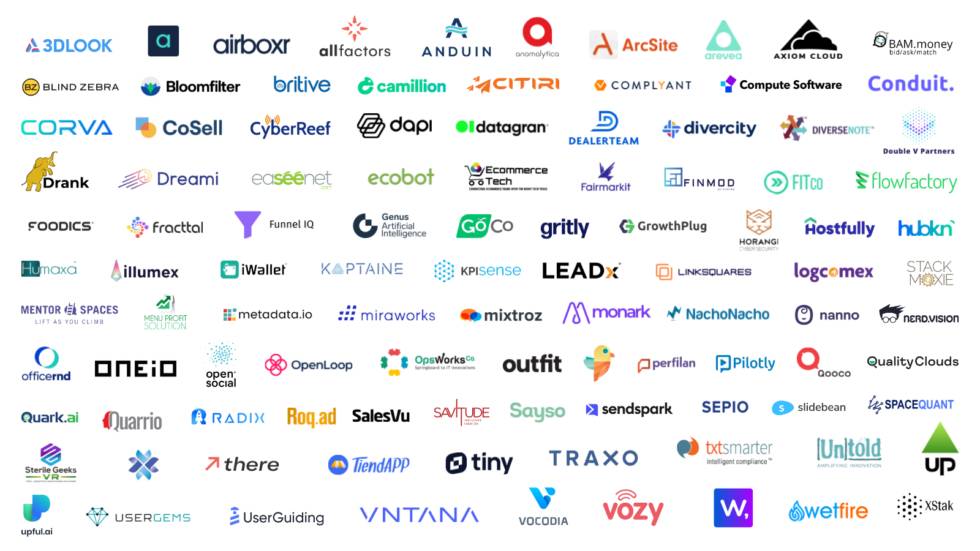
The attendee list was broad, ranging from early-stage startups to category leaders and major cloud companies. A partial list included well-known brands and emerging software companies across security, sales, marketing, finance, developer tools, collaboration, analytics, HR tech, customer success, and vertical SaaS.
Companies connected to the event included 1Password, 6sense, ActiveCampaign, Adobe, Airbase, Aircall, Algolia, Amazon, AppFolio, AppsFlyer, AppSumo, Asana, Atlassian, Box, Brex, Calendly, Chargebee, Checkr, Cloudflare, Contentful, Databricks, Dialpad, Dropbox, Expensify, Freshworks, FullStory, Gainsight, G2, Guru, HackerOne, HubSpot, Intercom, Klaviyo, Loom, Mailchimp, Miro, Nylas, PagerDuty, Plaid, Postman, Segment, Sendbird, Shopify, Stripe, Twilio, Vimeo, WalkMe, Zapier, and many others.
That kind of density creates an unusual advantage. At a typical business event, you might meet a few people who understand your exact problem. At SaaStr, you could meet someone who solved your problem last year, someone currently suffering through it, someone funding companies that fix it, and someone selling a tool that promises to make it disappear by Tuesday.
The Main Themes at SaaStr Annual 2021
SaaStr Annual 2021 was not only about who attended. It was about what the SaaS industry needed to figure out at that moment. Several themes stood out.
1. Scaling Efficiently Without Losing the Plot
Fast growth is thrilling until the team realizes that hiring, onboarding, sales processes, customer support, and product roadmaps are all growing at different speeds. Many SaaS companies in 2021 were benefiting from strong cloud demand, but they also faced pressure to build durable systems.
Sessions and conversations around scaling focused on how to move from founder-led chaos to repeatable execution. That meant better sales playbooks, clearer customer segmentation, stronger onboarding, and more disciplined operating metrics.
2. Product-Led Growth and Sales-Led Growth Learning to Share a Desk
By 2021, product-led growth had moved from buzzword to boardroom topic. Companies wanted to know how free trials, freemium models, self-service onboarding, usage-based expansion, and sales-assisted conversion could work together.
The best SaaS companies were no longer asking whether product-led or sales-led was “better.” They were asking how to combine both. A great product could create demand, but enterprise deals still required trust, procurement navigation, security reviews, and human conversations. In short, software could sell itself, but not always to a committee with a 17-step approval process.
3. Customer Success as a Growth Engine
SaaS companies do not win by simply closing deals. They win by keeping customers, expanding accounts, and turning users into advocates. That made customer success one of the most important topics at the event.
Leaders discussed retention, onboarding, customer health scoring, expansion revenue, and the role of customer success in product feedback. The smartest companies treated customer success not as a support function, but as a strategic growth system. Churn, after all, is just revenue leaving through a door someone forgot to watch.
4. Fundraising in a Hot but Demanding Market
The SaaS funding environment in 2021 was active, but investor expectations were becoming more sophisticated. Founders needed more than exciting growth charts. They needed strong retention, credible go-to-market motion, realistic unit economics, and a clear path to category leadership.
That made SaaStr Annual especially valuable for fundraising conversations. Founders could hear directly from investors and operators about what separated strong SaaS companies from noisy ones. A big market helped. A sharp narrative helped. But metrics still had the final word, as they tend to do, because spreadsheets are famously unimpressed by charisma.
Why the “Who’s Coming” Question Was So Powerful
The original excitement around “who’s coming” was not just social curiosity. In SaaS, the room matters. The right room can change a company’s strategy, hiring plan, partner pipeline, or fundraising path.
For an early-stage founder, meeting a peer two stages ahead can be more valuable than reading ten generic growth articles. For a VP of Sales, hearing how another team rebuilt outbound after a market shift can save months of trial and error. For a marketer, a hallway conversation about positioning can unlock a clearer message than an entire week of internal meetings.
SaaStr Annual 2021 created that kind of room. It gathered people who were building, selling, funding, operating, and fixing SaaS businesses at every stage. Some attendees came for sessions. Some came for meetings. Some came because after too many months of remote work, the idea of talking to another SaaS human outdoors sounded almost luxurious.
How Founders Could Get the Most Out of SaaStr Annual 2021
For founders, the best way to approach SaaStr Annual was with a plan. Walking into a large conference without goals is like opening a CRM with no filters: technically possible, emotionally risky.
Build a Meeting List Before Arriving
The attendee density made preparation essential. Founders who identified target investors, potential partners, customers, and peer operators in advance had a major advantage. The best meetings often happened because someone sent a clear, concise note before the event.
Choose Sessions Based on Company Stage
A seed-stage founder and a $50 million ARR executive do not need the same advice. SaaStr’s broad programming allowed attendees to choose sessions based on where they were in the journey: early traction, scaling sales, moving upmarket, improving retention, hiring executives, or preparing for later-stage fundraising.
Ask Specific Questions
The best conference questions are not “How do we grow faster?” They are questions like, “When should we split customer success from support?” or “What pipeline coverage did you need before hiring a second sales manager?” Specific questions attract specific answers, and specific answers are the good stuff.
What SaaStr Annual 2021 Revealed About the SaaS Community
SaaStr Annual 2021 showed that the SaaS community had not lost its appetite for in-person learning. If anything, the break made the event feel more important. Founders and executives were eager to compare what had changed, what still worked, and what needed to be rebuilt for a new era of cloud software.
The event also showed how broad the SaaS ecosystem had become. SaaS was no longer just CRM, marketing automation, or project management. It touched security, finance, legal operations, developer tools, healthcare, logistics, education, data infrastructure, artificial intelligence, collaboration, and nearly every business workflow that could be improved by software and a monthly invoice.
That expansion made the attendee list more diverse and more valuable. A founder building vertical SaaS could learn from horizontal platform companies. A revenue leader at a mature business could borrow ideas from product-led startups. A VC could spot patterns across categories. Everyone could complain about attribution models. Community is about shared experience, after all.
Experience Notes: What It Felt Like to Attend SaaStr Annual 2021
Attending SaaStr Annual 2021 felt different from a normal conference because it was more than a business event. It was a re-entry moment. People were not just showing up with pitch decks and branded hoodies; they were showing up with a strange mix of excitement, caution, curiosity, and “Wait, do I still remember how to small talk?” energy.
The outdoor and open-air structure shaped the mood. Instead of being trapped in windowless hotel ballrooms where coffee goes to lose its will to live, attendees could move through a more breathable environment. Conversations felt more relaxed. People lingered after sessions. The casual setting made it easier to connect, and in SaaS, connection is often where the real value hides.
One of the best experiences at an event like this is realizing how universal certain problems are. A founder might arrive thinking their churn issue is uniquely embarrassing, only to meet five other founders wrestling with the same thing. A sales leader might discover that everyone is rethinking outbound. A marketer might hear that even famous companies struggle to explain new categories clearly. That is oddly comforting. SaaS can make teams feel alone inside their own dashboards, but events like SaaStr remind people that the chaos is shared.
The hallway conversations were often as useful as the official sessions. You could stand in line for coffee and hear a founder explain how they changed pricing. You could sit near a networking table and pick up a debate about whether community-led growth was real strategy or just a nicer name for “please talk about us.” You could join a small-group session and walk away with a practical hiring framework that would have taken months to learn through mistakes.
Another memorable part of the experience was the range of company stages represented. There were founders still validating their first market, executives from public companies, operators from fast-growing unicorns, and investors looking for the next great software business. That variety kept the event from becoming an echo chamber. Advice was not one-size-fits-all; it depended on stage, market, team, and motion.
For first-time attendees, the biggest lesson was to pace yourself. SaaStr Annual could easily overwhelm anyone who tried to attend every session, meet every investor, scan every sponsor booth, and still have a perfectly thoughtful dinner conversation. The smarter approach was to prioritize: choose the sessions that matched your current bottleneck, schedule the meetings that mattered most, and leave room for spontaneous conversations. The best conference moments are often not on the calendar.
In the end, the experience of SaaStr Annual 2021 was about momentum. After a long stretch of uncertainty, the SaaS community came back together to talk about building again. Not just surviving. Not just adapting. Building. That is why the question “Who’s coming?” mattered so much. Because the people coming were not simply attending an event; they were helping restart the rhythm of an industry built on learning from each other.
Conclusion
So, who came to 2021 SaaStr Annual next week? A serious cross-section of the SaaS universe: founders, CEOs, operators, marketers, sales leaders, product executives, customer success experts, venture capitalists, and category builders from some of the most influential companies in cloud software.
The event mattered because it combined practical learning, high-value networking, investor access, and community energy at a time when the industry needed all four. SaaStr Annual 2021 was not just a conference comeback. It was a reminder that SaaS grows faster when smart people compare notes, challenge assumptions, and occasionally admit that their onboarding flow needs work.
For anyone studying the history of SaaS events, SaaStr Annual 2021 stands out as a defining gathering: part reunion, part strategy summit, part fundraising marketplace, and part giant outdoor group therapy session for people who care deeply about ARR.