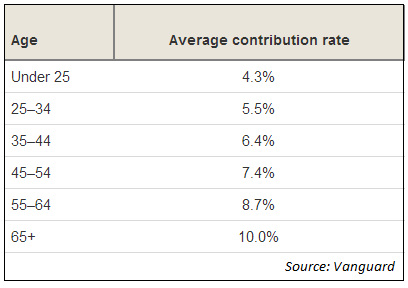
Retirement savings by age group can feel like one of those topics everyone is supposed to understand by adulthood, right next to “how escrow works” and “why printer ink costs more than perfume.” The truth is simpler and more forgiving: retirement planning is not about hitting one magic number by one perfect birthday. It is about building momentum, adjusting as life changes, and knowing what “on track” looks like for your age, income, household, and future lifestyle.
In the United States, retirement savings usually come from a mix of workplace plans such as 401(k)s and 403(b)s, individual retirement accounts, taxable investments, Social Security, pensions for some workers, home equity, and plain old cash savings. The big question is not only “How much should I have saved?” but also “What should I do next?” A 28-year-old with student loans, a 45-year-old raising kids, and a 62-year-old deciding when to claim Social Security are all playing the same gamebut on very different levels.
This guide breaks down retirement savings by age group, explains common benchmarks, and gives practical strategies for every decade. No panic, no financial finger-wagging, and no pretending everyone has a spare $2,000 sitting in a kitchen drawer. Just real-world planning with a little humor, because retirement math is easier to face when it is not dressed like a tax form.
What Counts as Retirement Savings?
Retirement savings include money set aside specifically to support your future life after full-time work. That can include 401(k) balances, traditional IRAs, Roth IRAs, 403(b)s, 457 plans, SEP IRAs, SIMPLE IRAs, pension benefits, annuities, brokerage accounts earmarked for retirement, and health savings accounts used as long-term medical savings. Emergency funds and regular checking accounts matter too, but they are not the same as invested retirement assets.
One important distinction is average versus median savings. Average savings can look impressively high because a small number of wealthy households pull the number upward. Median savings often gives a more realistic picture of the typical household because it represents the middle point. If the average retirement balance in a room sounds amazing but most people in that room are quietly checking their bank app with one eye open, the median may tell the better story.
Retirement Savings Benchmarks: A Useful Guide, Not a Court Sentence
Many financial firms suggest saving a multiple of your annual income by certain ages. A common rule of thumb is to aim for roughly one year of salary saved by age 30, three times salary by age 40, six times salary by age 50, eight times salary by age 60, and around ten times salary by age 67. Other benchmark models are slightly more flexible, especially for households with different incomes, pensions, debts, or retirement goals.
These benchmarks are helpful, but they are not universal laws carved into a stone tablet by the Department of Sensible Cardigans. Someone with a pension may need less in personal savings than someone relying heavily on a 401(k). A homeowner with a paid-off mortgage may need less income than a renter in a high-cost city. A person planning to retire at 55 needs a very different savings path than someone who enjoys work and plans to continue part-time into their late 60s.
Retirement Savings in Your 20s: Start Small, Start Now
Your 20s are not usually famous for giant retirement balances. This decade often includes first jobs, student loans, career changes, apartment deposits, car repairs, weddings, and the shocking realization that groceries do not magically appear in the refrigerator. Still, the 20s offer one enormous advantage: time.
Because compound growth rewards early investing, even modest contributions can grow meaningfully over several decades. A 25-year-old who invests consistently does not need to be rich to build wealth. They need consistency, patience, and the emotional strength not to cash out a retirement account for a couch shaped like a cloud.
Smart moves in your 20s
The first priority is to capture any employer match in a workplace retirement plan. If your employer matches part of your 401(k) contribution, that is part of your compensation. Skipping it is like leaving money on the conference room table and hoping payroll develops telepathy.
A realistic goal in your 20s is to contribute enough to get the full match, then gradually increase your savings rate. If you can save 10% to 15% of income including employer contributions, that is a strong start. If you cannot, begin with what you can and raise your contribution by one percentage point each year or whenever you get a raise.
Retirement Savings in Your 30s: Build the Machine
Your 30s are often the decade when retirement planning starts to feel real. Income may rise, but so do responsibilities. Housing, childcare, insurance, family expenses, and career pressure can make retirement savings feel like a polite suggestion from another planet.
By age 30, many benchmarks suggest aiming for around one times your annual salary saved for retirement. By age 35, some guidelines place the target around one to one-and-a-half times salary. If you are behind, do not declare financial doom and move into a blanket fort. The better move is to increase your savings rate and automate the process.
Example for your 30s
Suppose you earn $70,000 a year at age 35. A benchmark of one to one-and-a-half times salary would suggest a retirement savings range of about $70,000 to $105,000. If you have $35,000 saved, you are behind the benchmark but not out of the race. Increasing your contribution rate, investing consistently, avoiding early withdrawals, and using raises wisely can close a surprising amount of ground over the next decade.
Your 30s are also a good time to balance retirement savings with debt payoff. High-interest credit card debt should usually be attacked aggressively. Lower-interest debt, such as some student loans or mortgages, may be managed alongside investing. The goal is not perfection; it is forward motion.
Retirement Savings in Your 40s: The Catch-Up Before the Catch-Up
Your 40s are the decade where retirement planning starts tapping its watch. Many people are earning more than they did in their 20s and 30s, but they may also be paying for kids, aging parents, home repairs, and the mysterious household category known as “everything broke at once.”
By age 40, a common benchmark is around three times annual salary. By age 45, several models suggest moving toward four times salary or more, depending on income and retirement goals. The exact number matters less than whether your savings rate is strong enough to build momentum.
Smart moves in your 40s
In your 40s, automation becomes your best friend. Set contributions high enough that saving happens before money reaches your checking account. Review investment allocations to make sure your portfolio is still growth-oriented enough for a retirement that may be 20 years away. Also, avoid raiding retirement savings when changing jobs. Cashing out a 401(k) can create taxes, penalties, and a long-term growth loss that is much larger than it feels in the moment.
This is also the decade to get serious about fees, old accounts, and beneficiary designations. If you have three forgotten 401(k)s from past jobs, it may be time to organize them. Future you does not want to play “Find the Missing Retirement Account” at age 66.
Retirement Savings in Your 50s: Catch-Up Mode Gets Official
Your 50s can be powerful retirement-building years. The kids may be more independent, income may be near its peak, and the IRS begins offering catch-up contribution opportunities. For 2026, the employee contribution limit for many workplace retirement plans such as 401(k), 403(b), most 457 plans, and the federal Thrift Savings Plan is $24,500. Workers age 50 and older can make additional catch-up contributions, and workers ages 60 to 63 may qualify for a higher catch-up limit under current rules.
For IRAs, contribution limits also rise in 2026, with an additional catch-up amount for those age 50 and older. These limits matter because tax-advantaged accounts can help accelerate retirement savings during the final stretch of working years.
How much should you have in your 50s?
By age 50, many benchmarks suggest aiming for around six times annual salary. By age 55, the target may move higher, often around seven times salary or more depending on the model. If that sounds intimidating, remember that benchmarks are diagnostic tools, not insults. They tell you whether your current plan needs adjustment.
People in their 50s should also begin estimating retirement income. Look at expected Social Security, pension benefits if applicable, retirement account balances, possible downsizing, and future expenses. This is the decade to move from “I hope it works” to “Here is the spreadsheet, and yes, it has tabs.”
Retirement Savings in Your 60s: Protect, Plan, and Decide
Your 60s are not only about how much you have saved. They are about how you turn savings into income. This decade includes major decisions: when to retire, when to claim Social Security, how to manage healthcare before and after Medicare eligibility, how much to withdraw, and whether to keep working part-time.
For people born in 1960 or later, full retirement age for Social Security is 67. Benefits can start as early as 62, but claiming early generally reduces monthly payments. Delaying past full retirement age can increase monthly benefits until age 70. That does not mean everyone should wait; health, job status, family needs, and cash flow all matter. But the claiming decision deserves careful thought because it can affect lifetime income and survivor benefits.
Withdrawal planning in your 60s
A common starting point is the 4% rule, which suggests withdrawing about 4% of retirement assets in the first year and adjusting for inflation afterward. However, real retirement spending is more personal. Market performance, taxes, healthcare costs, housing, and longevity can all change the plan. Some retirees use a bucket strategy: cash for near-term expenses, bonds or conservative assets for medium-term needs, and stocks for long-term growth.
Your 60s are also a good time to create a tax strategy. Traditional retirement account withdrawals are generally taxable, Roth withdrawals may be tax-free if rules are met, and Social Security may be taxable depending on income. Good planning can reduce surprises and keep more money working for you.
Retirement Savings After 70: Income, Longevity, and Required Withdrawals
After 70, the focus shifts from accumulation to sustainability. Some retirees are still working, some are fully retired, and others are somewhere in between. Required minimum distributions, often called RMDs, generally force withdrawals from traditional IRAs and many tax-deferred retirement accounts once you reach the applicable age. Under current rules, many people must begin RMDs at age 73, with later rules scheduled for some younger cohorts.
Retirees should review spending each year, especially housing, healthcare, insurance, travel, and support for family members. Average spending may decline in some categories with age, but healthcare often becomes a larger share of the budget. A retirement plan that ignores medical costs is like packing for vacation and forgetting shoes.
Average Retirement Savings by Age Group: Why the Numbers Vary
Published retirement savings figures can vary widely because they measure different things. Some reports focus only on 401(k) balances. Others include IRAs. Some count only households with retirement accounts, while others include all households, including those with no retirement savings. That is why one source may show a much higher average than another.
Federal Reserve data has shown that median retirement savings are much lower than averages, which means many households have less saved than headline numbers suggest. Reports from major retirement plan providers often show higher balances among participants because their data includes people who already have workplace retirement accounts. In plain English: the sample matters.
How to compare yourself fairly
Instead of asking, “Am I average?” ask better questions: Am I saving enough for my desired retirement age? Am I getting the full employer match? Is my investment mix appropriate? Do I have emergency savings to avoid raiding my 401(k)? Am I increasing contributions over time? Do I understand my future Social Security benefits?
Comparison can be useful, but it can also be noisy. Your neighbor’s shiny SUV does not reveal their retirement balance. Their vacation photos do not show their debt. Their kitchen remodel does not come with a footnote. Focus on your plan.
How Much Should You Save for Retirement?
A widely used target is saving 15% of income per year, including employer contributions. Some people need more, especially if they start late, plan to retire early, or expect high expenses. Others may need less if they have a pension, lower living costs, or a later retirement age.
The best retirement savings rate depends on four main factors: when you start, how much you already have, when you plan to retire, and how much income you will need. A 25-year-old saving 10% may be in better shape than a 48-year-old saving 10%, simply because the younger saver has more time for compounding.
Best Retirement Accounts by Age Group
20s and 30s
Roth accounts can be attractive in lower-earning years because contributions are made with after-tax dollars and qualified withdrawals can be tax-free. A Roth IRA or Roth 401(k) may be useful if you expect your tax rate to rise later.
40s and 50s
Traditional 401(k) contributions may help reduce taxable income during higher-earning years. This is also a good time to consider whether Roth diversification makes sense. Having both pre-tax and Roth money can create flexibility in retirement.
60s and beyond
Account location matters more as retirement nears. Retirees often coordinate withdrawals from taxable accounts, traditional retirement accounts, Roth accounts, and Social Security to manage taxes and cash flow.
Common Retirement Savings Mistakes by Age
In your 20s, the biggest mistake is waiting too long to start. In your 30s, it is lifestyle creepletting every raise disappear into a nicer apartment, better car, or delivery food that somehow costs $48. In your 40s, it is underestimating how quickly retirement approaches. In your 50s, it is failing to use catch-up opportunities. In your 60s, it is retiring without a withdrawal plan.
Another major mistake at every age is withdrawing from retirement accounts early. Life happens, and sometimes people have limited options. But early withdrawals can create taxes, penalties, and lost compounding. A strong emergency fund helps protect retirement savings from becoming a backup checking account.
Practical Experiences and Lessons About Retirement Savings By Age Group
One of the most useful experiences people share about retirement savings is that the beginning often feels unimpressive. A new worker may contribute 4% to a 401(k), check the balance after three months, and think, “That’s it?” Yes, that is itfor now. Retirement saving is slow at first, like planting a tree and wondering why it is not producing shade by Tuesday. The visible progress usually comes later, after years of contributions, employer matches, dividends, interest, and market growth.
Another common experience is that every age group feels behind. People in their 20s think they should have started at 18. People in their 30s think they should have saved more before buying a house. People in their 40s worry that college costs and mortgage payments have eaten the retirement budget. People in their 50s may feel the pressure of a countdown clock. Even people in their 60s may wonder whether they should work one more year. This is normal. The key is not to freeze. A late start is not ideal, but a late start plus action is much better than a late start plus avoidance.
Many savers also learn that automation beats motivation. Motivation is great on January 2, right after you buy a planner and decide this is the year you become a financial wizard. Automation is still working on August 17 when you are tired, busy, and tempted by a sale on patio furniture. Automatic payroll contributions, automatic IRA transfers, and automatic annual contribution increases remove the need to make the same good decision over and over.
People who successfully build retirement savings often treat raises differently. Instead of increasing spending by the full amount of each raise, they send part of the increase to retirement. For example, if your pay rises by 4%, you might increase your 401(k) contribution by 1% or 2%. You still enjoy more take-home pay, but your future self also gets a raise. This strategy is especially powerful in your 30s, 40s, and 50s because income often grows during those years.
Another real-world lesson is that emergency savings and retirement savings are teammates. Without an emergency fund, a car repair or medical bill can push people toward credit cards or retirement withdrawals. With even a modest cash cushion, retirement accounts have a better chance to stay invested. This matters because retirement wealth is not built only by choosing good investments; it is built by leaving those investments alone long enough to work.
Finally, people nearing retirement often discover that confidence comes from clarity. A person with $900,000 saved but no plan may feel more anxious than someone with $550,000, a realistic budget, a Social Security strategy, and a part-time work option. Retirement readiness is not just a balance. It is a system: income, expenses, taxes, healthcare, housing, investments, and flexibility. The sooner you build that system, the less retirement feels like a cliff and the more it feels like a bridge.
Conclusion: Your Age Matters, but Your Next Step Matters More
Retirement savings by age group gives you a useful map, but it should not become a source of shame. The goal is not to match a national average or impress a spreadsheet. The goal is to create financial choices for your future self. In your 20s, start. In your 30s, build. In your 40s, accelerate. In your 50s, catch up. In your 60s, plan income carefully. After 70, protect your lifestyle and manage withdrawals wisely.
The best retirement plan is not the fanciest one. It is the one you actually follow. Increase contributions when you can, claim employer matches, avoid unnecessary withdrawals, keep fees reasonable, invest with a long-term mindset, and revisit your plan every year. Future you may not send a thank-you card, but they will absolutely appreciate the effort.