A classic desk lamp is the rare home-office object that can make you feel instantly more capable. You sit down with a notebook, switch on that focused pool of light, and suddenly the unpaid bills look like “documents,” the tangled charging cables look like “infrastructure,” and your half-finished to-do list looks almost professional. That is the quiet magic of a great desk lamp: it does not merely illuminate a surface; it organizes a mood.
The best classic desk lamps share a few important traits. They are adjustable without feeling flimsy, handsome without shouting, and practical enough to survive daily work. Some were born on drafting tables, some in Bauhaus workshops, some in Scandinavian lighting labs, and some in the sleek world of modern LED design. What they have in common is staying power. They still look right beside a laptop, a fountain pen, a stack of books, or a coffee mug pretending to be a paperweight.
This guide gathers ten easy pieces: timeless, functional desk lamps that bring together design history, task lighting, and everyday usability. Think of it as a friendly field guide for anyone who wants a workspace that says, “I have excellent taste,” even when the browser has 47 tabs open.
What Makes a Desk Lamp “Classic”?
A classic desk lamp is not simply old, expensive, or famous on design blogs. It earns the title by solving a real problem beautifully. A good desk lamp directs light exactly where it is needed, minimizes glare, and works with the rhythm of the desk. It should help you read, write, sketch, type, sort paperwork, or stare dramatically into the middle distance while thinking about your next big idea.
Classic desk lamps also have strong silhouettes. The angled arm of an architect lamp, the green glass shade of a banker’s lamp, the saucer-like precision of a Bauhaus table lamp, or the compact curve of a modern LED task light can become the visual anchor of a room. These designs are not decorative afterthoughts; they are small machines for better focus.
10 Easy Pieces: Classic Desk Lamps Worth Knowing
1. Anglepoise Original 1227 Desk Lamp
The Anglepoise Original 1227 is the desk lamp equivalent of a perfectly tailored navy blazer: useful, recognizable, and almost impossible to make obsolete. Designed by George Carwardine in the 1930s, it became famous for its balanced-arm mechanism, which allows the shade to move smoothly and stay put without constant fussing. That may sound ordinary now, but it was a major leap in task lighting.
Its charm lies in the exposed springs, metal shade, sturdy base, and industrial honesty. It looks equally at home in a writer’s office, a student’s study corner, or a creative studio where someone says “mood board” at least twice a day. Choose black for a serious architectural look, a softer neutral for a home office, or a bright color if your desk needs a little personality therapy.
2. Luxo L-1 Architect Lamp
The Luxo L-1 is another legend of the adjustable-arm family. Designed by Norwegian designer Jac Jacobsen in 1937, it refined the spring-balanced work lamp into a clean, practical form that became a favorite of architects, engineers, illustrators, and anyone who likes their lighting with a side of mechanical confidence.
The L-1 is all about reach. Its long arm can stretch across a work surface, pull back when not needed, and pivot toward drawings, keyboards, notebooks, or craft projects. It has a practical personality: less “look at me” and more “let’s get this done.” That is exactly why it remains beloved. A clamp version is especially useful for small desks because it frees up precious surface area for notebooks, devices, and the snack you said you were not going to eat at your desk.
3. Artemide Tolomeo Table Lamp
The Artemide Tolomeo is proof that modern design can be elegant without becoming fragile. Created by Michele De Lucchi and Giancarlo Fassina and launched in 1987, the Tolomeo has become one of the most recognizable Italian task lamps in the world. It has a lighter, more refined feel than many earlier industrial lamps, with a polished aluminum body and a beautifully engineered tension system.
What makes the Tolomeo special is its balance of grace and utility. It moves with very little effort, but it does not look like a piece of workshop equipment. It can soften a minimalist office, sharpen a traditional desk, or bring a professional studio feeling to a bedroom workspace. If your design taste is “I want something iconic, but I do not want my lamp to look like it is about to repair a motorcycle,” the Tolomeo is a very strong candidate.
4. Louis Poulsen PH 3/2 Table Lamp
The Louis Poulsen PH 3/2 table lamp brings a different kind of classic energy. Instead of showing off exposed joints and springs, it focuses on soft, glare-free illumination. Poul Henningsen’s famous three-shade system was designed to shape light carefully, directing it downward while creating a gentle glow through layered shades.
This is the lamp for people who want a desk to feel calm, warm, and quietly luxurious. It is not the most aggressive task lamp for a giant drafting board, but it is excellent for reading, writing, and creating atmosphere in a study, library, or executive office. The PH 3/2 proves that practical lighting does not have to look strictly technical. Sometimes the best desk lamp is one that makes paperwork feel as if it belongs in a very tasteful Danish novel.
5. Flos Kelvin LED Desk Lamp
The Flos Kelvin LED brings the classic adjustable desk lamp into the LED era. Designed by Antonio Citterio with Toan Nguyen, it features a clean double-arm structure, an adjustable head, and a crisp modern profile. It is slim, precise, and architectural, making it a natural match for contemporary home offices.
Unlike vintage-style lamps that rely on visible nostalgia, the Kelvin feels current. It is the sort of lamp that works well beside a thin monitor, a glass desktop, or a minimalist writing table. The LED source helps keep the design compact, while the adjustability gives it the flexibility a real work lamp needs. If the Anglepoise is the charming old professor, the Kelvin is the well-dressed consultant who arrives with a laptop, a plan, and very good shoes.
6. Pablo Pixo Desk Lamp
Pablo Designs’ Pixo is a compact modern task lamp made for real desks, not fantasy desks with nothing on them except one pencil and a ceramic cup. Designed with a minimal footprint, adjustable arm, rotating shade, LED efficiency, and convenient charging features, Pixo is especially useful in small apartments, dorm rooms, and hybrid workspaces.
Its rounded form softens the usual hard lines of a task lamp, while the technology keeps it practical. This is a good choice for anyone who wants a classic-in-the-making rather than a reproduction of an older icon. It does not try to look like a 1930s drafting lamp. It behaves like a 21st-century desk companion: efficient, flexible, and quietly aware that your phone battery is probably at 12 percent.
7. GUBI Bestlite BL1 Table Lamp
The Bestlite BL1, designed by Robert Dudley Best in 1930, carries strong Bauhaus influence with its clean geometry, movable shade, and practical elegance. It has long been associated with serious desks and serious work, but it avoids looking severe. The round shade and slender arm give it a refined, almost tailored look.
The BL1 is excellent for interiors that mix vintage and modern elements. It can sit on a dark wood desk, a white lacquer table, or a midcentury credenza and still look intentional. Its appeal comes from restraint. Nothing feels extra. Nothing begs for applause. It simply does the job with the confidence of an object that knows it has already passed the test of time.
8. Fritz Hansen Kaiser Idell Table Lamp
The Kaiser Idell lamp, associated with designer Christian Dell, is a Bauhaus classic known for its geometric clarity and beautiful materials. Its domed shade, circular base, and polished details give it a sculptural presence without sacrificing function. It looks formal, but not stiff; elegant, but not fussy.
This lamp is ideal for a desk that needs a little authority. It works beautifully with leather, walnut, steel, and monochrome interiors. The shape is simple enough for modern rooms but rich enough for traditional ones. In other words, it is the kind of lamp that makes even a grocery list look like an important memo.
9. The Classic Banker’s Lamp
The banker’s lamp is one of the most recognizable desk lamps in American interiors. Traditionally associated with brass bases and green glass shades, it has appeared in libraries, offices, courtrooms, movies, and the occasional dramatic scene where someone signs something important. Its appeal is partly nostalgic, but the form is still practical: a broad shade spreads light across the writing surface while shielding the eyes from direct glare.
A banker’s lamp is best for a traditional desk, a reading table, or a home office that leans vintage. It pairs naturally with wood, books, framed art, and the kind of chair that makes you want to use words like “correspondence.” It is not as adjustable as an architect lamp, so placement matters. But for atmosphere and classic office character, it is hard to beat.
10. HAY Noc Clamp Lamp
The HAY Noc Clamp Lamp is a newer design, but it earns a place here because it updates the classic clamp light with a crisp, modern shape. Designed by SmithMatthias, it features a faceted aluminum shade and a clamp that can attach to a desk, shelf, or headboard. That flexibility makes it especially useful in small spaces where a traditional lamp base would eat up too much room.
The Noc has a compact, practical spirit. It is not trying to be a grand design monument; it is trying to put light exactly where you need it. That makes it a smart choice for renters, students, small workstations, and anyone whose desk surface is already losing the battle against books, chargers, pens, and mysterious receipts.
How to Choose the Right Classic Desk Lamp
Match the Lamp to the Work
If you draw, draft, sew, repair small objects, or spread papers across a large desk, choose a lamp with reach and articulation. Anglepoise, Luxo, Tolomeo, and Kelvin-style lamps are strong options because they can move across the surface and direct light precisely. For reading and writing, a softer table lamp like the PH 3/2 or a banker’s lamp may feel more comfortable and atmospheric.
Think About Glare Before Style
A lamp can be beautiful and still annoying if it shines directly into your eyes or reflects harshly off a screen. Look for shades that control the beam, adjustable heads that let you aim light away from your face, and dimming features when possible. The goal is not to create a spotlight interrogation scene. The goal is useful, comfortable illumination.
Consider Desk Size
Small desks benefit from clamp lamps, narrow bases, or compact LED designs. Large desks can handle broader arms, heavier bases, and more sculptural lamps. Before buying, measure the desk and imagine the lamp in its working position, not just its glamorous product-photo pose. A lamp that looks perfect online can feel like a small construction crane if your desk is only 36 inches wide.
Choose a Finish That Fits Your Room
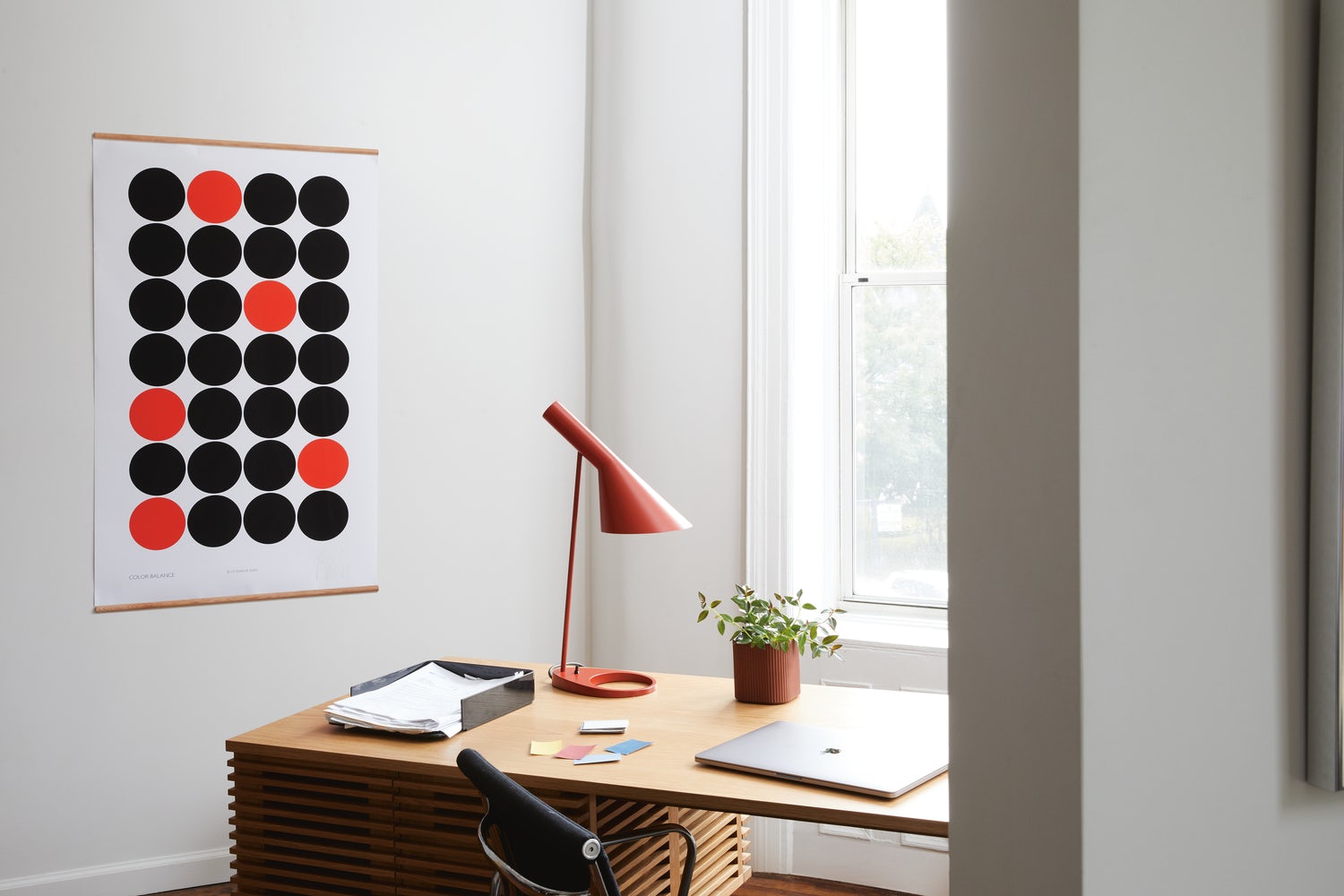
Black, white, chrome, brass, and aluminum are the safest classic finishes. Black adds contrast and authority. White feels light and modern. Chrome and aluminum lean technical. Brass warms up traditional and transitional rooms. A colored shade can be charming, but use it intentionally. A red desk lamp can look brilliant; five unrelated bright objects around it can make the room feel like a confused toy store.
Classic Desk Lamps and Interior Style
For a midcentury office, pair a walnut desk with a Kaiser Idell, Bestlite, or Nelson-inspired lighting nearby. For a Scandinavian workspace, lean toward Louis Poulsen, HAY, or a clean white adjustable lamp. For an industrial studio, the Anglepoise and Luxo families feel natural. For a sleek modern setup, Flos Kelvin or Pablo Pixo keeps the desk looking edited and efficient.
The secret is contrast. A traditional banker’s lamp can look fantastic on a modern desk because it adds history. A sleek LED lamp can freshen up an antique table because it adds precision. Great rooms rarely come from matching everything perfectly. They come from choosing pieces that have a conversation without yelling over one another.
Field Notes: Real-Life Experience With Classic Desk Lamps
In everyday use, the best classic desk lamp quickly becomes less like a decoration and more like a trusted tool. You notice the difference most at night, when overhead lighting feels too broad and the screen feels too bright. A good lamp creates a smaller, calmer world on the desk. It says, “Here is the work area. Everything outside this circle can wait.” That psychological boundary is surprisingly helpful, especially in home offices where work, laundry, homework, and household chaos all compete for attention.
One practical lesson is that adjustability matters more than most people expect. A lamp that looks wonderful but cannot move where you need it will eventually become a stylish obstacle. The arm should raise, lower, pivot, or swing without drama. The shade should aim at the page, not your eyes. If you are right-handed, placing the lamp on the left often reduces shadows while writing; if you are left-handed, the reverse usually works better. This tiny placement change can make handwriting, sketching, or note-taking feel much more comfortable.
Another lesson: bigger is not always brighter in the way you need. A heavy lamp with a wide shade may look impressive, but a compact LED lamp with a focused beam can perform better on a small desk. On the other hand, a tiny lamp on a large executive desk may look visually lost and force you to drag paperwork into its narrow pool of light. Scale is part function, part design instinct. The lamp should feel proportionate to both the desk and the task.
Bulb choice also changes the experience. Warm light feels cozy and flattering, especially in reading corners and traditional studies. Neutral light can feel better for focused work, color review, or long sessions with paper. Very cool light may seem energetic at first, but it can feel harsh in a residential room. Dimming is a luxury that quickly becomes a habit. Once you can lower the brightness in the evening, it is hard to return to a lamp with only one setting: “tiny sun.”
Classic desk lamps also teach you that good design ages differently from trendy design. A trendy lamp may look exciting for a season, then oddly specific a year later. A classic lamp has enough restraint to survive changing chairs, computers, paint colors, and desk accessories. It can move from a student room to a first apartment, from a home office to a bedside table, from a writing desk to a reading nook. That flexibility is one reason investing in a well-made lamp can be smarter than buying three cheaper ones that wobble, glare, or give up after a few months.
The most enjoyable part is the ritual. Switching on a classic desk lamp marks the beginning of focus. It can turn a messy table into a workspace and a quiet corner into a reading room. It gives the desk a center. And on days when productivity is limping along in mismatched socks, a beautiful lamp at least makes the scene look promising. Sometimes that is enough to start.
Conclusion: The Best Desk Lamp Is the One You Actually Use
Classic desk lamps endure because they solve daily problems with style. The Anglepoise Original 1227 and Luxo L-1 celebrate mechanical flexibility. The Artemide Tolomeo and Flos Kelvin refine the adjustable task lamp for modern interiors. The Louis Poulsen PH 3/2, Bestlite BL1, Kaiser Idell, banker’s lamp, Pablo Pixo, and HAY Noc each offer a different balance of beauty, utility, and personality.
The right choice depends on how you work, how much room you have, and what kind of atmosphere makes you feel focused. A serious drafting lamp may be perfect for a creative studio. A glowing glass-shaded lamp may be better for reading and writing. A compact LED lamp may be the hero of a tiny desk. The good news is that classic desk lamps are not just about light. They are about making the place where you work feel considered, capable, and a little more delightful.
Choose one that moves well, controls glare, fits your desk, and makes you happy every time you switch it on. That is the real test of a classic.