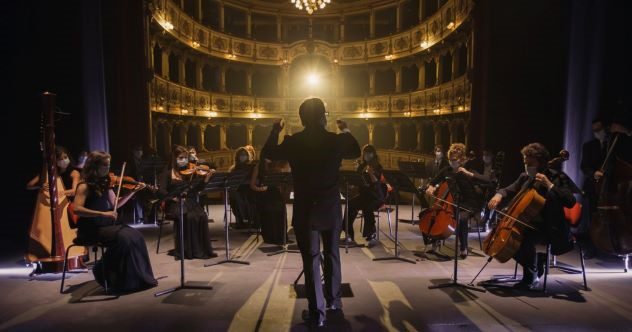
Classical music has a funny habit of sounding “timeless” only after it has survived the first round of public panic. Today, we applaud Beethoven, hum Bizet, study Stravinsky, and pretend we were always sophisticated enough to understand John Cage. History, however, keeps receipts. Many of the works now treated like marble monuments entered the world like uninvited dinner guests: too loud, too long, too strange, too sensual, too intellectual, or, in one famous case, too silent.
The most pioneering classical music premieres did more than introduce new pieces. They changed what audiences thought music could be. They stretched harmony, exploded form, questioned drama, expanded orchestration, and occasionally made people wonder whether they had accidentally paid to attend a philosophical prank. These controversial classical premieres prove that innovation rarely arrives wearing comfortable shoes. It usually kicks the door open, knocks over the punch bowl, and asks why everyone looks so nervous.
Below are ten of the most pioneering yet polarizing premieres in classical music historyworks that shocked, confused, thrilled, irritated, and ultimately reshaped the concert hall and opera house forever.
1. Beethoven’s “Eroica” Symphony: The Symphony Gets Muscles
Premiere: April 7, 1805, Theater an der Wien, Vienna
Before Beethoven’s Symphony No. 3 in E-flat major, “Eroica,” the symphony was already respected. After “Eroica,” it became a battlefield, a biography, a political statement, and an emotional obstacle course with horns. The work was longer, broader, and more dramatic than most symphonies audiences knew at the time. Instead of polite balance, Beethoven offered conflict, struggle, funeral grandeur, heroic energy, and a finale that refused to behave like a tidy musical bow.
The premiere divided listeners. Some heard greatness; others heard a composer who had forgotten when to stop. That complaint“too long”is one of music history’s most dependable signs that something important has happened. “Eroica” expanded symphonic form and helped move Western classical music from elegant Classical proportions toward Romantic intensity. In other words, Beethoven did not simply make the symphony bigger. He made it psychologically louder.
2. Berlioz’s “Symphonie fantastique”: A Fever Dream with an Orchestra
Premiere: December 5, 1830, Paris Conservatoire
Hector Berlioz’s “Symphonie fantastique” is what happens when heartbreak, imagination, literary drama, and orchestration all drink too much espresso. The piece tells the story of an artist obsessed with an ideal woman, then spirals through a ball, a pastoral scene, a march to execution, and a witches’ sabbath. For 1830, this was not just program music. It was cinema before cinema, psychological drama before the word “psychological” had bought a proper concert ticket.
The premiere did not instantly conquer everyone, but it made Berlioz impossible to ignore. Its recurring “idée fixe,” representing the beloved, gave listeners a musical character to follow through increasingly bizarre scenes. Its orchestration was vivid, theatrical, and sometimes deliciously outrageous. The score helped establish the Romantic orchestra as a vehicle for hallucination, obsession, and narrative. Not bad for a symphony that sounds like it was written by someone who looked at moderation and said, “Cute idea, but no.”
3. Wagner’s “Tristan und Isolde”: The Chord That Would Not Go Home
Premiere: June 10, 1865, Königliches Hof- und Nationaltheater, Munich
Richard Wagner’s “Tristan und Isolde” begins with one of the most famous unresolved gestures in music: the so-called “Tristan chord.” That chord did not merely raise eyebrows; it helped loosen the gravitational pull of traditional tonality. The opera’s harmony stretches desire into sound, delaying resolution so long that listeners may feel they have entered a musical fog bank with excellent acoustics.
Even before its premiere, the work had a reputation for being almost unperformable because of its length, vocal demands, and emotional intensity. When it finally reached the stage in Munich, it marked a turning point in opera and harmonic language. Wagner’s chromaticism opened doors that later composers would walk through, sprint through, or in some cases, blow off the hinges. “Tristan” remains polarizing because it asks audiences to surrender to slow-burning tension instead of quick satisfaction. It is not fast food. It is a four-hour simmering sauce.
4. Bizet’s “Carmen”: Freedom Walks Onstage and Everyone Panics
Premiere: March 3, 1875, Opéra-Comique, Paris
Today, “Carmen” is one of the most popular operas ever written. At its premiere, however, Georges Bizet’s masterpiece made many audience members deeply uncomfortable. The Opéra-Comique was associated with spoken dialogue, lighter traditions, and a certain expectation of moral tidiness. Then came Carmen: independent, witty, sensual, unpredictable, and absolutely unwilling to be anyone’s decorative side dish.
The opera’s realism, violence, and unapologetic heroine shocked critics and audiences. Even rehearsals were difficult because the chorus had to behave like individual characters rather than a neat musical block. Women smoking, fighting, and refusing to act politely onstage? Paris clutched its pearls so hard the pearls probably needed medical attention.
Musically, “Carmen” is packed with unforgettable melodies, but its deeper innovation lies in character. Bizet made danger charming, freedom magnetic, and social outsiders dramatically central. The premiere may have been troubled, but history voted with its ears. “Carmen” became a cornerstone of the operatic repertoire and a reminder that scandal sometimes ages into immortality.
5. Strauss’s “Salome”: Modernism Enters Through the Side Door Carrying Dynamite
Premiere: December 9, 1905, Dresden Court Opera
Richard Strauss’s “Salome” was controversial before many people even heard it. Based on Oscar Wilde’s play, the opera brought taboo subject matter, psychological extremity, and blazing orchestration to the stage. Its premiere in Dresden was a success, but the work’s reputation quickly became scandalous. In New York, its 1907 Metropolitan Opera premiere caused such outrage that further performances were banned for years.
What made “Salome” pioneering was not simply its shock value. Strauss compressed operatic drama into one intense act and pushed late-Romantic harmony toward expressionist fever. The orchestra does not merely accompany the drama; it prowls, shimmers, snarls, and comments like a very expensive gossip columnist. The vocal writing is demanding, the atmosphere claustrophobic, and the ending still has the power to make first-time listeners sit very still.
“Salome” helped define early twentieth-century musical modernism. It proved that opera could be psychologically brutal, harmonically daring, and commercially irresistible. Apparently scandal sellsespecially when orchestrated by Strauss.
6. Schoenberg’s String Quartet No. 2: Tonality Waves Goodbye
Premiere: December 21, 1908, Bösendorfer-Saal, Vienna
Arnold Schoenberg’s String Quartet No. 2 did two things audiences did not expect from a string quartet: it added a soprano, and it began moving beyond traditional tonality. The final movement sets Stefan George’s line “I feel air from another planet,” which might be the most accurate concert review ever accidentally written inside a piece.
The premiere provoked jeers and laughter. Schoenberg later remembered the event as riotous, and the work became a symbol of the break from the old tonal order. The quartet does not abandon the past casually. It sounds like a farewell, a crisis, and a discovery all at once. The first movements still brush against late-Romantic language, but by the end, the ground has shifted.
This premiere matters because it dramatized a historical turning point. Schoenberg did not merely create a new style; he forced listeners to confront the possibility that music no longer needed a traditional home key to make sense. Many listeners are still filing complaints with the universe.
7. Stravinsky’s “The Rite of Spring”: The Night the Audience Became Percussion
Premiere: May 29, 1913, Théâtre des Champs-Élysées, Paris
No list of controversial classical music premieres can ignore Igor Stravinsky’s “The Rite of Spring.” The ballet, choreographed by Vaslav Nijinsky for the Ballets Russes, famously caused an uproar at its Paris premiere. The exact details of the “riot” have been debated, but there is no doubt that the evening became legendary.
The music was a thunderclap: pounding rhythms, irregular accents, raw orchestral colors, and a vision of ritual that rejected polished ballet elegance. The choreography, with turned-in feet and heavy movements, looked deliberately primitive to audiences expecting grace. Together, music and dance seemed to announce that the twentieth century had arrived and had no interest in asking permission.
“The Rite of Spring” changed rhythm in Western concert music. It made the orchestra feel physical, almost percussive, and turned musical violence into structural energy. Today it is a staple. In 1913, it sounded like someone had replaced the wallpaper in the concert hall with lightning.
8. Berg’s “Wozzeck”: Opera Looks Poverty in the Eye
Premiere: December 14, 1925, Berlin State Opera
Alban Berg’s “Wozzeck” took opera into bleak modern reality. Based on Georg Büchner’s unfinished play, the opera follows a poor soldier crushed by social pressure, humiliation, and psychological collapse. This was not grand opera about kings, gods, or glamorous doomed lovers. This was opera about exploitation, fear, and human fragility.
The premiere at the Berlin State Opera made a major impact. Some critics recognized a landmark of modernity; others found the music harsh and disturbing. Berg’s genius was to combine atonal and expressionist language with rigorous formspassacaglia, invention, suite, fuguewithout making the drama feel like homework. The structure is hidden inside the emotional machinery.
“Wozzeck” remains one of the twentieth century’s great operas because its difficulty serves its humanity. The music is unsettling because the world it depicts is unsettling. It does not decorate suffering. It listens to it.
9. Varèse’s “Ionisation”: Percussion Becomes the Main Character
Premiere: March 6, 1933, New York
Edgard Varèse’s “Ionisation” was a radical statement: a concert work built around percussion ensemble. Written for thirteen percussionists, it elevated rhythm, timbre, density, and noise into primary musical materials. For listeners trained to expect melody to carry the passport, this was a suspicious border crossing.
The premiere, conducted by Nicolas Slonimsky, gathered an impressive group of modern musicians. “Ionisation” used sirens and a wide range of percussion instruments to create a sound world that felt urban, metallic, and futuristic. It did not ask percussion to add spice to orchestral soup. It made percussion the soup, the bowl, and possibly the restaurant.
The piece helped open the door for percussion ensemble as a serious concert medium. Its influence can be heard in later experimental music, film scoring, contemporary classical composition, and any moment when composers realized that “beautiful sound” did not have to mean “pretty sound.”
10. John Cage’s “4’33"”: The Loudest Silence in Music History
Premiere: August 29, 1952, Maverick Concert Hall, Woodstock, New York
John Cage’s “4’33"” may be the most famous piece of silence ever performed, although calling it silence is already a trap. At the premiere, pianist David Tudor sat at the piano and did not play in the conventional sense. Instead, the audience heard the sounds around them: the room, the weather, their own shifting bodies, their expectations cracking softly in real time.
Some listeners thought it was nonsense. Others recognized a profound challenge to the definition of music. Cage was asking whether listening itself could be the composition. The piece turned the concert hall inside out. Instead of presenting sound as a controlled object, it framed ambient sound as worthy of attention.
“4’33"” remains polarizing because it removes the usual safety rail. There is no melody to admire, no virtuosity to applaud, no harmonic journey to follow. The listener becomes uncomfortably responsible. For some, that is liberation. For others, it is four minutes and thirty-three seconds of “Did I leave the oven on?”
Why Polarizing Premieres Matter
These pioneering premieres in classical music share a pattern. Each one broke an agreement audiences did not realize they had signed. Beethoven challenged scale. Berlioz challenged narrative. Wagner challenged harmonic resolution. Bizet challenged social morality. Strauss challenged operatic psychology. Schoenberg challenged tonality. Stravinsky challenged rhythm and movement. Berg challenged operatic subject matter. Varèse challenged instrumentation. Cage challenged the very definition of music.
Polarization is not automatically proof of greatness. Plenty of bad art annoys people and then wisely disappears. But when a controversial premiere continues to provoke discussion decades or centuries later, the controversy usually points to a real shift in artistic language. These works survived because their shock was not empty. It was attached to craft, imagination, and a new way of hearing.
The funny thing is that today’s standard repertoire was often yesterday’s public headache. Audiences now dress up to hear music that once made listeners squirm, boo, laugh, argue, or flee emotionally if not physically. That is one of classical music’s great pleasures: the museum is full of former troublemakers.
Listening Experiences: What Modern Audiences Can Learn from These Premieres
Experiencing these once-polarizing works today can feel like visiting famous volcanoes after the lava has cooled. We know “Eroica” is important, so we listen respectfully. We know “The Rite of Spring” changed rhythm, so we brace ourselves for genius. We know “4’33"” is conceptually famous, so we try not to cough too dramatically. But to really understand these pieces, modern listeners should try to recover a little of the original uncertainty.
One helpful experience is to listen without treating the music like a museum label. Instead of starting with “This is a masterpiece,” start with “Why might this have upset people?” In Beethoven’s “Eroica,” notice how long the first movement feels compared with earlier Classical symphonies. Let the scale surprise you. In Berlioz, follow the idée fixe like a character in a film. In Wagner, pay attention to how often the music seems to approach resolution, then slips away like a cat avoiding bath time.
For opera lovers, “Carmen,” “Salome,” and “Wozzeck” offer different kinds of discomfort. “Carmen” still challenges audiences because its heroine refuses simple moral packaging. “Salome” tests how much psychological intensity an audience can absorb in one act. “Wozzeck” asks listeners to hear social cruelty not as background but as the engine of tragedy. Watching these operas is not just an aesthetic experience; it is a reminder that music can expose the pressure points of a society.
Modern listeners can also learn from the body. “The Rite of Spring” is not only something to analyze; it is something to feel physically. Its accents and repetitions hit the nervous system before the intellect has time to write a polite essay. Varèse’s “Ionisation” works the same way. If you stop waiting for a singable tune and instead listen to texture, attack, and resonance, the piece begins to feel less like “noise” and more like architecture made of impact.
Cage’s “4’33"” may offer the strangest experience of all because it depends on the listener’s willingness to stop demanding entertainment. In a world full of notifications, playlists, and background noise, the piece can feel more relevant than ever. It asks a simple but uncomfortable question: are you actually listening, or merely waiting for something labeled “music” to begin?
These experiences reveal why controversial classical premieres still matter. They train the ear to handle surprise. They remind us that confusion is not failure. Sometimes confusion is the first stage of growth. The audience members who booed, laughed, or complained were not necessarily foolish; they were meeting a new language before anyone had written the dictionary. Today, we have the advantage of hindsight. The challenge is not to let hindsight make us lazy.
The best way to hear these works is with curiosity rather than obligation. Do not love them because a textbook tells you to. Let them irritate you a little. Let them puzzle you. Let them win you over slowly, or not at all. Classical music is not a marble statue demanding obedience. At its best, it is a living argument across centuries. These ten premieres prove that the argument can be noisy, strange, funny, uncomfortable, and absolutely worth having.
Conclusion
The 10 most pioneering yet polarizing premieres in classical music show that artistic progress rarely arrives quietly. From Beethoven’s heroic expansion of the symphony to Cage’s radical framing of silence, each work forced listeners to reconsider the rules. Some premieres caused outrage, some confusion, some scandal, and some laughter. Yet all of them expanded the musical imagination.
What once sounded impossible can become essential. What once seemed offensive can become beloved. What once felt like chaos can become a classic. That does not mean every shocking new work is destined for greatness, but it does mean that audiences should be careful when declaring, “This is not music.” History may be sitting nearby with a notebook, smiling politely, and preparing to prove otherwise.