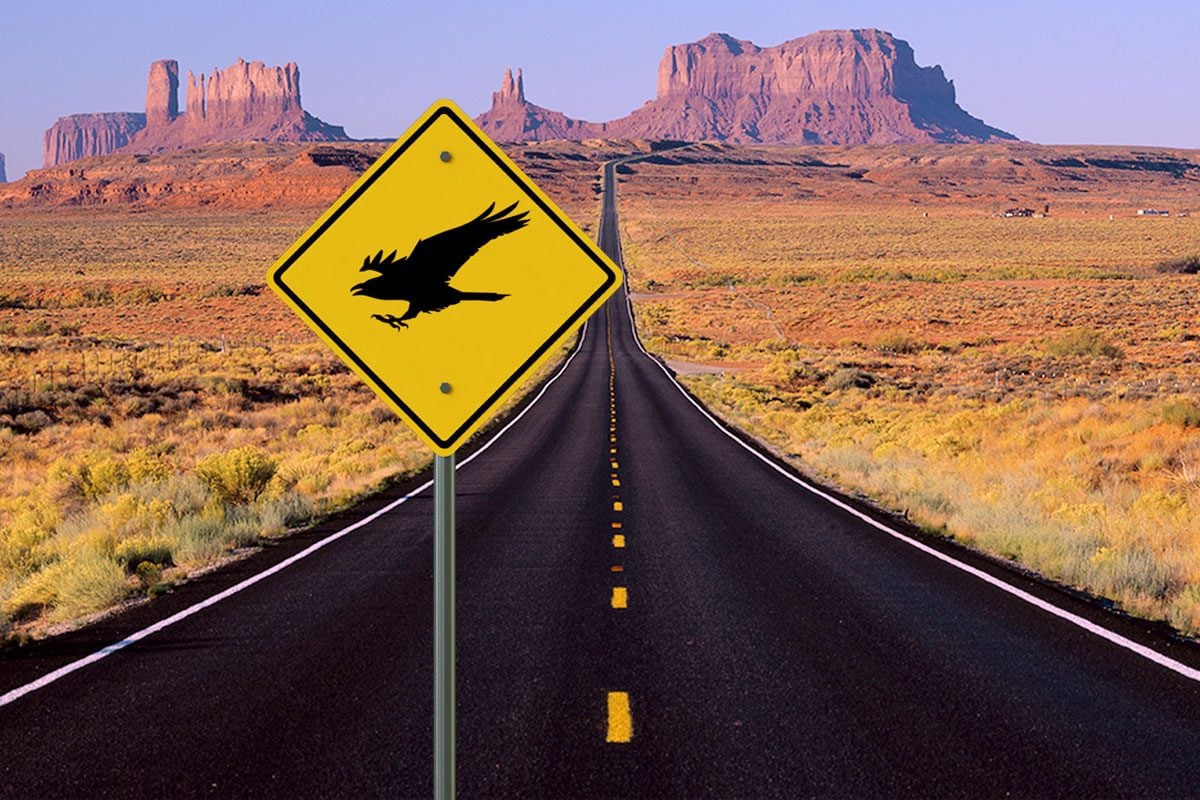
Traffic laws are supposed to be boring. They are supposed to be the legal equivalent of oatmeal: practical, sensible, and not especially exciting. And yet, hidden among the ordinary rules about red lights, seat belts, and speed limits, there are still some wonderfully odd laws hanging around in American statute books. Some sound like punchlines. Others feel like leftovers from a time when horses, livestock, and early automobiles were all fighting for the same patch of road.
That is what makes weird driving laws so fascinating. They are not always ridiculous in context. In fact, many of them made perfect sense when they were written. The funny part is that the wording survived, the world changed, and now modern drivers in SUVs and electric cars can still run into rules that sound like they were drafted during the age of dirt roads and cowboy hats.
Below are 11 weird driving laws that are still on the books in the United States. Some are quirky because of their wording. Some are strange because they reflect old-fashioned road hazards. And a few are the kind of laws that make you pause and think, “Wait, this is still a thing?”
Why These Weird Driving Laws Still Exist
Before we get into the list, here is the big secret: unusual traffic laws often survive because nobody feels a strong need to repeal them. If a law still works, does not cause problems, and might even help in rare situations, legislators tend to leave it alone. That is why old road rules involving horses, livestock, trailers, and fuel stations still pop up in modern legal codes. They may sound outdated, but they still technically apply.
In other words, weird does not always mean useless. Sometimes it just means the law has aged like an old photo: a little faded, slightly hilarious, but still real.
11 Weird Driving Laws That Are Still on the Books
1. In New Jersey, you still cannot pump your own gas
If you grew up anywhere else in America, pulling into a gas station and reaching for the pump handle feels as normal as breathing. In New Jersey, however, that little move can still earn you a firm “Nope” from the attendant. The state’s long-running ban on self-service gasoline remains one of the most famous oddball road-adjacent laws in the country.
What makes it weird is not just the rule itself, but how out of place it feels in 2026. Everywhere else, drivers casually swipe a card and fill up. In New Jersey, you sit in the car and let the attendant handle it. The original reasoning centered on safety, convenience, and station operations, which sounded more persuasive in the mid-20th century than it does in the era of touchless payments and backup cameras. Still, the law remains part of the state’s identity. For road trippers, it is less a legal trap than a culture shock with fuel nozzles.
2. In Indiana, coasting downhill in neutral is still prohibited
This is one of those laws that sounds like it was written by someone who deeply distrusted both gravity and overconfidence. Indiana still prohibits drivers from coasting downhill in neutral. The logic is that a vehicle should remain fully under control, especially on a downgrade, and disengaging the gears can reduce control or braking effectiveness.
Today, most people are not dramatically throwing a modern automatic transmission into neutral to save gas like it is 1974. But the law is still on the books, and it carries the unmistakable vibe of old-school motoring advice that turned into black-letter law. It is weird because it feels so specific, like lawmakers once watched one too many drivers treat hills like amusement park rides and decided that was enough excitement for one state.
3. In Hawaii, you cannot let a person, animal, or object interfere with the driver’s area
Hawaii has a law that forbids a driver from holding in their lap, or allowing in the driver’s immediate area, any person, animal, or object that interferes with control of the vehicle. That wording gives the statute a slightly chaotic energy. It reads like the legislature had seen enough dogs on laps, oversized beach bags in the front seat, and perhaps one toddler trying to “help” steer.
What makes this law memorable is its broad, almost cinematic phrasing. Person? Covered. Animal? Covered. Random object with bad timing? Also covered. On paper, it sounds funny. In practice, it is a sensible rule aimed at keeping the driving controls free and the driver focused. Still, there is something wonderfully specific about a law that basically says, “Please stop letting the inside of your car turn into a small circus while you are operating two tons of metal.”
4. In California, drivers must slow down or stop for horses, ridden animals, and livestock
California is home to freeways, Teslas, and some of the most advanced car culture in the country. It is also home to a law requiring drivers approaching a horse-drawn vehicle, a ridden animal, or livestock to use proper control and reduce speed or stop when necessary. Yes, in the same state known for autonomous vehicle debates, you may still need to calm down for a horse.
This law makes more sense in rural and equestrian areas, where animals and vehicles still share space. But it sounds delightfully strange to urban drivers who think the only thing crossing the road is a food delivery scooter. The law is really about preventing animals from being startled and protecting the people managing them. It is weird only because it reminds us that not every roadway problem is solved with more horsepower. Sometimes the correct legal response is actually less horsepower.
5. In Arizona, a frightened horse or livestock can effectively tell your car to wait
Arizona has a related law that feels like it wandered in from a Western film and never left. If horses or livestock appear frightened, the person controlling the vehicle must reduce speed, and if requested by signal or otherwise, the driver must not proceed further until it is safe.
That means the person in charge of the animal can, in effect, tell a motorist to hold position. For a modern driver used to lane markers, app directions, and impatient traffic behind them, that can feel surreal. But Arizona’s geography and ranching history make the rule less silly than it first appears. Large animals can react unpredictably, and a startled horse or herd is not something you want to negotiate at speed. It is a weird law because it momentarily flips the usual traffic hierarchy: the SUV waits, and the horse wins.
6. In Arkansas, if a horse looks frightened, you may have to stop completely and even help
Arkansas takes the horse issue one step further. If a horse appears about to become frightened by the approach of a motor vehicle, the driver must come to a full stop until the horse has passed. If necessary, the driver is also expected to assist in preventing an accident.
That last part is where the law becomes unforgettable. Not only might you need to stop your car, but you may also be legally nudged toward becoming part-time roadside equine support staff. The rule clearly comes from an era when motor vehicles were the disruptive newcomers and lawmakers wanted a firm protocol for mixed road use. Even now, though, it holds up surprisingly well. A startled horse can endanger everyone nearby. The only thing funnier than the wording is realizing the statute is basically saying, “Do not just sit there. Be helpful.”
7. In Connecticut, approaching a horse means slow down, and do not make a racket
Connecticut law requires drivers approaching a horse on a public highway to reduce speed appropriately or stop if necessary to avoid frightening or striking the horse. It also bars drivers from blowing the horn or making loud or unusual noises in a way that could startle the animal.
This is one of the best examples of a law that sounds old-timey but still carries a very modern lesson: not every road hazard responds well to aggressive honking. Human drivers may interpret a horn as useful communication. Horses may interpret it as a reason to panic dramatically. Connecticut’s rule is weird in the most charming way because it asks motorists to do something rare in traffic law: lower the volume, be patient, and stop acting like the road belongs only to engines.
8. In Massachusetts, you may need to stop for a cow, horse, or other animal and even shut off the motor
Massachusetts still has a law that sounds like it escaped from a 1910 driver’s handbook. A motorist must stop when approaching a cow, horse, or other animal being ridden or driven if signaled, and if necessary, must shut off the motor so the animal can pass safely without becoming frightened.
That is right: not only can the animal interrupt your trip, but your engine may need to go completely quiet for the moment. In a world of push-button ignitions and traffic apps, this feels gloriously old-fashioned. But the practical logic is easy to understand. A scared animal can bolt, kick, veer, or cause a chain reaction. Massachusetts may be known for busy roads and impatient commuters, yet the law still reserves a tiny legal courtesy for livestock and draft animals. It is weird, yes, but also oddly polite.
9. In Maine, it is illegal to annoy, harass, or frighten an animal on or near a public way
Maine’s animal-on-the-road law has some of the most memorable wording in the group. Drivers may not knowingly operate a motor vehicle in a way that annoys, startles, harasses, or frightens an animal being ridden or driven on or near a public way. The inclusion of “annoys” is what gives this law real personality.
Most traffic statutes talk in stern, mechanical language. Maine’s version sounds like it was partly written by someone who had absolutely had it with jerks buzzing horses for fun. That makes the law both amusing and refreshingly human. It recognizes that reckless driving near animals is not only dangerous but also pointlessly obnoxious. As a legal standard, it is practical. As phrasing, it is elite. Very few statutes manage to sound like a traffic rule and a scolding from a disappointed neighbor at the same time.
10. In New York, do not honk at a horse while approaching or passing
New York’s vehicle law specifically says a driver shall not sound the horn when approaching or passing a horse on a public highway. That is a wonderful little slice of legal precision. Not “be careful around horses,” not “use due care,” but very specifically: keep your hand off the horn.
The law also requires a reasonable and prudent speed and a reasonable passing distance, but the horn rule is what makes the whole statute memorable. In the age of gridlock, road rage, and reflexive honking, this feels like a direct rebuke to the modern American impulse to communicate all feelings through the steering wheel. The horse, the law reminds us, is not going to interpret your horn as a constructive note. It is just going to freak out. For that reason alone, this statute still feels surprisingly sensible beneath the weirdness.
11. In New Mexico, nobody gets to ride inside a house trailer while it is being towed
New Mexico makes it a misdemeanor to occupy a house trailer while it is being towed on a highway, and it is also unlawful to tow a house trailer when someone is inside it. This law sounds like the state once looked out at the road, saw people treating a trailer like a rolling living room, and decided to end that experiment immediately.
The weirdness comes from the image it creates. You can practically picture the outlaw family vacation fantasy: one person driving up front while someone else lounges in the trailer with snacks and a paperback novel. The law shuts that down hard. While modern safety standards make the rule easy to understand, the wording still feels like a relic from a period when people were more willing to test common sense on wheels. It is weird because it confirms that yes, apparently lawmakers once needed to say this out loud.
What These Strange Traffic Laws Actually Tell Us
Put all 11 together and a pattern appears. The weirdest laws are often not random at all. They preserve snapshots of older road life: horses on highways, livestock near traffic, trailers used creatively, and drivers trying questionable tricks on hills or at gas pumps. These statutes survive because the situations they cover have not disappeared completely. They are less common, sure, but they still happen often enough that lawmakers never felt the need to erase the rule.
That is what makes weird driving laws so fun to read about. They are comedy with context. Beneath the odd phrasing is a genuine attempt to keep roads safe in messy, real-world situations that do not fit neatly into a modern driver’s ed diagram.
Road Experiences That Make These Laws Feel Less Weird
It is easy to laugh at unusual driving laws when you read them from a couch with a coffee in hand. It is much harder to laugh when you are actually on the road and one of these situations appears in front of you like a side quest no navigation app warned you about.
Take New Jersey, for example. A first-time visitor pulls into a gas station, hops out confidently, grabs the nozzle, and is immediately met with the unmistakable energy of, “Friend, put that down.” It feels awkward for five seconds, then oddly luxurious. You sit back down, the attendant handles it, and suddenly this supposedly weird law feels less like a legal relic and more like a small regional ritual. Strange? Yes. Also kind of nice on a cold, windy night? Absolutely.
Then there is the rural-road experience, where horse-related laws stop sounding silly very quickly. Drivers who have never encountered a horse on a public road often assume a quick pass and a tiny horn tap are harmless. Then they round a bend, see a rider signaling for space, and realize the entire situation depends on calm, patience, and not acting like the main character in an action movie. In that moment, the old statutes from California, Arizona, Arkansas, Connecticut, Massachusetts, Maine, and New York suddenly feel less like trivia and more like survival instructions written by people who had already seen the disaster version play out.
The same thing happens on a long downhill stretch. Coasting in neutral can sound like one of those suspicious bits of advice handed down by someone’s uncle who also claims he once fixed a transmission with a spoon and optimism. But on a steep grade, when braking, control, and momentum all matter, the law’s logic becomes clearer. It is not there because lawmakers hate fun. It is there because gravity is undefeated and vehicles behave better when drivers keep full control.
Trailer laws land the same way. The image of someone riding inside a towed house trailer sounds funny right up until you think about bumps, sway, emergency braking, and what happens if something goes wrong at highway speed. Suddenly the statute is not quirky so much as deeply practical. A lot of these laws live in that exact space: funny in theory, unfunny in motion.
That may be the best way to understand weird driving laws that are still on the books. They look absurd when removed from real life, but many of them become surprisingly reasonable once you imagine the actual road, the actual risk, and the actual human tendency to do something questionable the moment a law does not specifically say not to. Traffic law, apparently, is where common sense goes to get its paperwork.
Conclusion
Weird driving laws are more than internet bait. The real ones, at least, reveal how American roads evolved and how lawmakers responded to the messy overlap between animals, machines, people, and the occasional bad idea. Some of these rules are funny because their language feels antique. Others are funny because they preserve scenarios that sound wildly unlikely today. But all of them have one thing in common: they are still legally alive.
So the next time someone tells you traffic law is dull, remind them that somewhere in the United States, a driver still has to think about horses, livestock, self-serve gas, neutral on a hill, or whether a house trailer counts as an acceptable place for passengers. The road, as it turns out, has always been a little weirder than it looks.