A good date usually comes with butterflies, small talk, and the quiet hope that your hair still looks normal under restaurant lighting. It usually does not come with two strangers walking up, handing you a folded note, and disappearing like romantic safety ninjas. Yet that is exactly the kind of moment that turned one woman’s ordinary date into a viral dating mystery.
The Date That Turned Into A Public Service Announcement
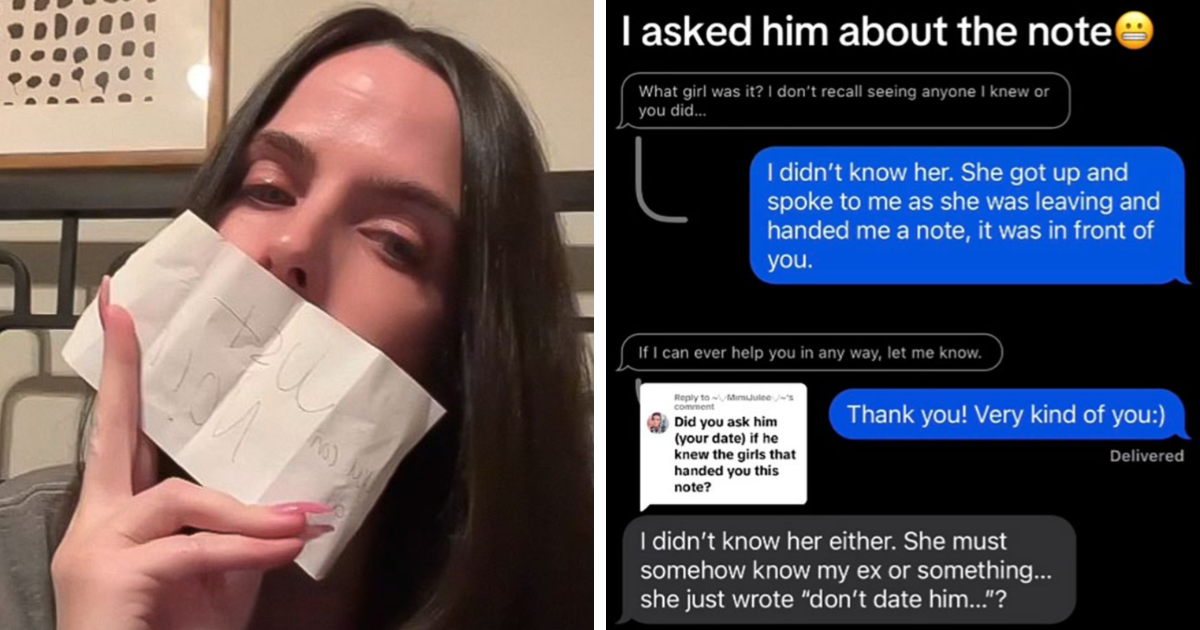
The story centers on a woman named Lindsay from the Dallas-Fort Worth area, who said she was on her third date with a man when two women nearby approached her, handed over a note, and vanished before offering any explanation. The message was short, blunt, and impossible to ignore: “Just no!! You can do better.”
That is not exactly the kind of feedback card restaurants leave beside the dessert menu. Lindsay later shared the incident online, asking viewers what they would have done in her situation. Was it a warning? A prank? A case of mistaken identity? Or did the women overhear something that made their internal alarm bells start clanging like a fire drill in a library?
The internet, being the internet, immediately turned into a jury, dating panel, detective agency, and group chat all at once. Many viewers argued that the note should be treated seriously. Others wondered whether the strangers had seen or heard something Lindsay missed. Some pointed out that women often develop a sixth sense around uncomfortable social situations, while others believed the note’s vagueness made it hard to act on.
Lindsay later reflected that, if she could replay the night, she might have opened the note and read it in front of her date. That small change could have shifted the entire situation. It might have revealed whether the man became defensive, calm, confused, dismissive, or strangely familiar with the strangers. In dating, reactions often tell a louder story than the original event.
Why A Tiny Note Felt So Huge
A warning note from a stranger hits differently because it interrupts the usual rules of dating. Most people are trained to be polite, laugh off awkward moments, and avoid making a scene. A folded note, however, slices through all that social choreography. It says: someone outside the bubble saw something, and they thought it mattered enough to intervene.
That is why the story spread so quickly. It tapped into a shared fear: What if you are too close to a situation to read it clearly? What if charm is distracting you from red flags? What if someone across the room has a clearer view because they are not emotionally invested, hoping for chemistry, or trying to give the person “one more chance”?
The note also felt familiar because it echoed another viral dating story. In that case, a woman named Hadia said she was on a coffee date when a stranger passed her a receipt with a warning: “Too many red flags. Run. Be safe girl.” That phrase became internet folklore because it was direct, protective, and dramatic enough to deserve its own movie trailer.
Both stories reveal the same uncomfortable truth: people rarely receive warnings when everything is obviously fine. A stranger does not usually risk awkwardness unless something feels off. That does not automatically mean the date is dangerous or doomed, but it does mean the moment deserves attention.
Modern Dating Has Made Red Flags Harder To Sort
Dating used to involve meeting through friends, school, work, or community circles. That did not make it perfect, but it often came with context. Today, many people meet through dating apps, social platforms, or casual online conversations. A person can seem charming in messages, polished in photos, and perfectly normal over a quick video call, then behave very differently in person.
Pew Research Center has found that online dating is now a common part of American romantic life, with three in ten U.S. adults saying they have used a dating site or app. But the same research also shows that dating platforms can bring mixed experiences. Many users report excitement and possibility; many also report scams, unwanted contact, offensive messages, and safety concerns.
That matters because the date in the viral note story is not just gossip. It is a snapshot of a larger dating culture where people are constantly trying to decode behavior. Is someone confident or controlling? Romantic or love-bombing? Nervous or evasive? Passionate or pushy? Dating has become part chemistry test, part background check, and part emotional weather forecast.
The Red Flags People Often Notice First
Not every bad date is unsafe. Sometimes the chemistry is simply missing. Sometimes one person talks too much because they are nervous. Sometimes a date is not a villain; they are just wildly incompatible, like pineapple pizza and a keyboard covered in crumbs. Still, certain behaviors deserve closer attention.
1. They Come On Too Strong Too Fast
Intensity can feel flattering at first. Someone who says all the right things, texts constantly, praises you endlessly, and starts talking about the future after two dates may seem romantic. But moving too fast can also be a way to create pressure before trust has had time to grow. Healthy interest respects pace. Unhealthy intensity tries to skip the getting-to-know-you part and jump straight into emotional ownership.
2. They Ignore Small Boundaries
Boundaries are not only about major decisions. They show up in tiny moments: whether someone accepts “no thanks,” whether they pressure you to stay longer, whether they keep asking questions you clearly do not want to answer, or whether they treat your hesitation like a negotiation. A person who respects small boundaries is more likely to respect bigger ones later.
3. They Are Rude To People Who Cannot Benefit Them
Watch how a date treats servers, cashiers, drivers, and strangers. Anyone can be charming toward someone they want to impress. Character is often easier to see when they interact with people they do not need anything from. If they are dismissive, cruel, condescending, or performatively superior, congratulations: the red flag has arrived wearing tap shoes.
4. They Turn Every Conversation Into A Debate
A lively disagreement can be fun. A date who treats every opinion like a courtroom battle is another story. If someone constantly tries to dominate, correct, mock, or corner you, that may signal a deeper need for control. You should leave a date feeling curious, respected, and safe to speak. You should not feel like you accidentally enrolled in a three-hour seminar titled “Why You Are Wrong About Everything.”
5. They Make You Feel Weirdly Responsible For Their Feelings
Early dating should not require emotional babysitting. Be cautious if someone acts wounded when you set a boundary, sulks when you disagree, or makes you feel guilty for not matching their intensity. Healthy people can feel disappointed without punishing you for it.
Why Bystanders Sometimes Step In
The most interesting part of Lindsay’s story is not only the date. It is the bystanders. Two women saw or heard something and decided silence was not good enough. Their method was not perfect. The note was vague. It left Lindsay with more questions than answers. But the instinct behind it was protective.
Bystander intervention can take many forms. Sometimes it is direct: asking, “Are you okay?” Sometimes it is subtle: alerting a server, checking in near the restroom, or creating a reason for someone to step away from an uncomfortable situation. In public spaces like restaurants and bars, other people can become unexpected safety nets.
Of course, intervention should be thoughtful. A vague note may help, but it may also create confusion. A clearer message such as “We heard him say something concerning when you stepped away” would give the person more information. Still, in a fast-moving situation, people do what they can. Not every guardian angel arrives with a full incident report and bullet-point appendix.
What Should You Do If A Stranger Warns You During A Date?
First, pause. You do not have to decide instantly whether the warning is completely accurate. You only need to decide what keeps you safest in the moment. If the note makes you uneasy, you are allowed to end the date. You do not need courtroom-level evidence to leave a situation that no longer feels right.
Second, create distance. Excuse yourself to the restroom, step outside to take a call, or speak privately with staff. A short break gives you room to think without being watched or pressured. If the warning came from nearby strangers, you might ask them what they noticed. Specific information is more useful than mystery.
Third, control your exit. Ideally, meet early dates in public places, arrange your own transportation, and tell a trusted person where you are. If you feel uncomfortable, leaving early is not rude. It is responsible. The world will survive one unfinished appetizer.
Fourth, trust patterns more than explanations. A person can explain away one awkward comment. But if the night contains pressure, disrespect, rushing intimacy, boundary-pushing, and then a warning from strangers, the pattern matters. You are not obligated to keep collecting evidence until your discomfort becomes undeniable.
Why People Ignore Red Flags Even When They See Them
One reason these stories feel so relatable is that many people have ignored a red flag at least once. Sometimes attraction makes everything look warmer and softer. Sometimes politeness keeps people seated long after their gut has stood up and walked out. Sometimes the fear of overreacting is stronger than the instinct to leave.
There is also the temptation to explain things away. Maybe they are just nervous. Maybe they had a bad day. Maybe the comment came out wrong. Maybe the strangers misunderstood. Maybe, maybe, maybe. A generous mindset is lovely, but generosity should not require you to discount your own discomfort.
Red flags do not always arrive as dramatic movie moments. They often show up as small data points: a joke that feels mean, a compliment that feels possessive, a question that feels invasive, a reaction that seems too angry for the situation. One moment may not tell the whole story, but several moments can form a map.
The Difference Between A Bad Date And A Warning Sign
A bad date can be boring, awkward, or mismatched. Maybe the conversation limps along like a shopping cart with one broken wheel. Maybe one person loves hiking and the other believes nature is best enjoyed through documentaries. That is normal.
A warning sign feels different. It makes you shrink, self-edit, or scan for exits. It makes you wonder whether saying no will cause a problem. It makes you feel as if the other person is not simply trying to know you, but trying to steer you. That is when the issue shifts from compatibility to safety.
In Lindsay’s situation, viewers did not know exactly what the strangers noticed. But many recognized the social meaning of the note: something about the date was visible enough, strange enough, or concerning enough that two people decided to interrupt. That does not prove danger. It does justify caution.
How To Date With Confidence, Not Paranoia
The goal is not to treat every date like a villain audition. Most people are not dangerous. Many are simply awkward, hopeful, nervous, or carrying a tragic misunderstanding of what counts as a good first-date shirt. Dating can still be fun, warm, silly, and meaningful.
Confidence comes from preparation. Choose public places for early meetings. Tell a friend your plan. Keep your phone charged. Arrange your own way home. Avoid sharing deeply personal information too quickly. Notice how the person responds to boundaries. These steps do not make dating less romantic; they make it less chaotic.
It also helps to decide your dealbreakers before the date. When you know what behavior you will not accept, you are less likely to negotiate with yourself in the moment. Rudeness, pressure, dishonesty, contempt, aggressive jealousy, and disrespect are not quirky personality traits. They are exit signs.
Experiences And Lessons Related To The Warning Note Story
Many people who responded to stories like Lindsay’s recognized the same emotional puzzle: you can be enjoying a date and still miss what someone else sees. That does not mean you are careless. It means dating is immersive. When you are inside a conversation, you are tracking eye contact, humor, timing, attraction, nerves, and whether your fries are still socially shareable. A stranger at the next table has fewer distractions. They may notice tone, body language, interruptions, or a comment that lands badly.
One common experience is the “I knew something was off, but I talked myself out of it” date. Maybe the person made a cutting joke and then smiled as if it were harmless. Maybe they complained about every ex as if they had personally dated a parade of villains. Maybe they kept steering the conversation toward private plans even after the other person said they preferred to stay in public. In the moment, each issue can seem small. Later, the pattern looks obvious enough to wear a neon vest.
Another familiar experience is the friend rescue. Plenty of daters have a prearranged check-in text, a code phrase, or a fake emergency call. It sounds dramatic until you need it, and then it feels like genius. The best safety plans are simple and boring: tell someone where you are, share the name or profile of the person you are meeting, and have an easy way to leave. Boring is underrated. Boring gets you home.
There is also the experience of being the bystander. Maybe you overhear a date becoming cruel, controlling, or frightening. Maybe you see someone freeze when the other person leans too close or refuses to back off. Stepping in can feel awkward because nobody wants to misread a situation. But there are gentle ways to help: ask if the person is okay, alert staff, create a harmless interruption, or offer support without forcing them to explain. The goal is not to become the hero of someone else’s night. The goal is to give them an option.
The biggest lesson from the warning note story is that discomfort does not need to become a disaster before it counts. You are allowed to leave because the vibe changed. You are allowed to take a stranger’s warning seriously while still gathering more information. You are allowed to be polite, but you are not required to be available, agreeable, or endlessly patient. A date is not a contract. It is an audition for continued access to your time, attention, and trust.
In the end, the note worked because it did what red flags are supposed to do: interrupt autopilot. Whether the strangers saw something specific or simply sensed a mismatch, they reminded Lindsay to look again. Sometimes that second look is all it takes. Not every warning will arrive on a folded receipt. Sometimes it is a tight feeling in your chest, a friend’s raised eyebrow, a server quietly checking in, or your own inner voice whispering, “This is not it.” Listen sooner. Leave easier. Debrief later. Your future self will probably send a thank-you note.
Conclusion: The Small Note With A Big Message
The viral story of a woman receiving a disturbing note from strangers while on a date is more than a dramatic internet moment. It is a reminder that dating safety often depends on paying attention to small signals before they become big problems. The note may have been brief, but its message was powerful: do not ignore discomfort just because the evening started well.
Healthy dating should feel respectful, balanced, and safe. It should leave room for curiosity without pressure, chemistry without control, and honesty without intimidation. If someone’s behavior makes you uneasy, you do not need permission to step away. If a stranger, friend, server, or your own gut tells you something is wrong, take a breath and listen.
Love may be blind, but dating does not have to be. Keep your eyes open, keep your standards alive, and remember: sometimes the universe sends a warning through intuition, sometimes through a friend, and sometimes through two women at the next table with excellent timing and a folded note.