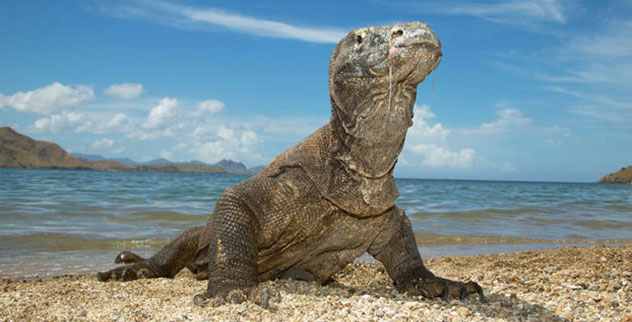
Some reptiles look like they were designed during a thunderstorm: armored shells, forked tongues, claws like garden tools, jaws that close with the enthusiasm of a bear trap, and facial expressions that say, “I have seen the dinosaurs, and they were amateurs.” Turtles and lizards are often imagined as quiet sunbathers, but a few species deserve a much more respectful distance. They are not “evil,” and most do not chase people around like movie monsters. Still, many can injure humans when handled, cornered, surprised, or kept irresponsibly as exotic pets.
This guide explores 10 terrifying and dangerous turtles and lizards based on real biology, documented defensive behavior, venom, bite strength, invasive-species concerns, and zoonotic disease risks. The point is not to create panic. The point is to admire these animals with the right mix of curiosity, common sense, and “maybe I should not poke that.”
What Makes a Turtle or Lizard Dangerous?
“Dangerous” does not always mean “aggressive.” In reptiles, danger usually comes from four things: powerful jaws, venom or toxic saliva components, sharp claws, disease transmission, and sheer size. Some reptiles are dangerous because they are predators. Others are dangerous because humans insist on picking them up, putting them in bathtubs, or trying to take selfies with an animal whose ancestors survived asteroid-adjacent career changes.
Reptiles can also carry Salmonella and other germs even when they appear perfectly healthy. That makes safe handling, handwashing, and responsible ownership important, especially around children, older adults, pregnant people, and anyone with a weakened immune system.
1. Komodo Dragon: The Living Dragon With a Surgical Bite
The Komodo dragon is the headline act of dangerous lizards. Native to several Indonesian islands, this giant monitor lizard is the largest living lizard on Earth. It has a massive body, muscular neck, powerful claws, and roughly 60 sharp teeth designed to slice flesh. Calling it a “lizard” almost feels unfair. It is more like a reptilian appliance built for turning large prey into lunch.
For years, people believed Komodo dragons relied mainly on filthy bacteria in their mouths to bring down prey. Modern research has made the story more interesting: the bite itself causes deep tearing wounds, while venom components can contribute to blood loss, shock, and impaired clotting. The animal bites, pulls, slashes, and follows. Nature did not give it fire breath, probably because that would have been excessive.
Why It Is Dangerous
Komodo dragons are dangerous because of their size, predatory behavior, serrated teeth, claws, venom-associated effects, and ability to inflict catastrophic wounds. Human attacks are rare, but they have occurred. This is not a pet, not a roadside attraction, and absolutely not something to feed by hand unless your long-term plan involves counting with fewer fingers.
2. Gila Monster: The Venomous Desert Tank
The Gila monster looks like a slow-moving beadwork sculpture that secretly joined a biker gang. Native to the southwestern United States and northwestern Mexico, it is one of the few venomous lizards in the world. Unlike venomous snakes, which inject venom through hollow fangs, Gila monsters have grooved teeth in the lower jaw. When they bite, they chew venom into the wound.
That chewing part matters. A Gila monster bite is not a quick “ouch.” It may hold on with a powerful grip and deliver venom while the victim learns several new vocabulary words. The bite is usually not fatal to healthy adults, but it can cause intense pain, swelling, weakness, nausea, and blood pressure changes. Medical care is necessary.
Why It Is Dangerous
The danger comes from venom, jaw strength, and its tendency to hang on when threatened. Gila monsters are not out hunting humans. Most bites happen when people handle, harass, or illegally keep them. The safest way to enjoy one is from a respectful distance, where its orange-and-black pattern can be admired without becoming a hospital story.
3. Mexican Beaded Lizard: The Gila Monster’s Bigger Cousin
The Mexican beaded lizard is closely related to the Gila monster and shares the same general venom-delivery style: glands in the lower jaw, grooved teeth, and a chew-and-deliver approach. It is larger than the Gila monster, darker in color, and equipped with the kind of defensive bite that can turn curiosity into regret with astonishing speed.
These lizards are often surrounded by folklore, but the real animal is more impressive than the myths. Its venom can cause severe pain and swelling, and there is no reason for anyone without professional training to handle one. Like many dangerous reptiles, it would rather avoid trouble, but if grabbed or threatened, it has a very convincing argument available in its mouth.
Why It Is Dangerous
The Mexican beaded lizard is dangerous because of its venomous bite, strong jaws, and slow but determined defensive behavior. It is not a villain. It is a specialized reptile that wants to be left alone. Respect that request, and everyone gets to keep their original hand arrangement.
4. Crocodile Monitor: The Tree-Climbing Serrated Blade
The crocodile monitor, also called the Papuan monitor, is one of the longest lizards in the world. Native to New Guinea, it is a mostly arboreal monitor with an extraordinarily long tail, sharp claws, and teeth that are flatter and more serrated than those of many other monitor lizards. That dental design helps it slice and tear prey.
The name “crocodile monitor” is not just marketing. Its bite has been compared to that of crocodilians because of those cutting teeth. Add in its ability to climb, whip with its tail, and move through forest habitat with athletic confidence, and you have a lizard that looks like it skipped leg day never.
Why It Is Dangerous
Crocodile monitors can inflict serious bites and lacerations. They are intelligent, powerful reptiles that require expert care in captivity. For average people, the correct interaction level is admiration from behind a barrier, not “let me see if it wants a snack.”
5. Nile Monitor: The Invasive Heavyweight With Teeth, Claws, and Attitude
The Nile monitor is a large African lizard that has become established in parts of Florida, where wildlife managers consider it a serious invasive species concern. It is an excellent swimmer, a strong climber, and an opportunistic predator. Its menu may include frogs, birds, rodents, eggs, turtles, and other reptiles. Basically, if it fits into the ecological buffet, the Nile monitor has considered it.
These lizards can grow large, move quickly, and defend themselves with jaws, claws, and muscular tails. In areas where they are not native, they can threaten local wildlife and create conflicts with people. Their danger is not just personal injury; it is ecological disruption.
Why It Is Dangerous
Nile monitors are dangerous because of their size, defensive bite, sharp claws, invasive potential, and predatory pressure on native animals. They are also a cautionary tale about exotic pets: a cute juvenile monitor can become a large, powerful adult that does not care about your apartment lease.
6. Asian Water Monitor: The Urban “Little Godzilla”
The Asian water monitor is one of the largest lizards in the world, second only to the Komodo dragon in many discussions of living lizard size. It is native across parts of South and Southeast Asia and is famously comfortable around water. These monitors swim well, climb well, scavenge well, and adapt to human-modified landscapes with surprising confidence.
In some cities, water monitors have become everyday urban wildlife, appearing in canals, parks, and drainage systems. Most encounters are harmless when people keep distance, but a large water monitor has powerful jaws, sharp claws, serrated teeth, and a tail that can deliver a painful defensive strike. Imagine a very muscular garden hose with prehistoric ambition.
Why It Is Dangerous
Asian water monitors are dangerous when cornered, handled, fed, or surprised. They are not monsters, but they are large wild predators and scavengers. The best safety rule is simple: never feed them, never grab them, and never assume a slow-looking reptile cannot suddenly become very motivated.
7. Green Iguana: The Pet That Becomes a Whipping, Clawing Dinosaur
Green iguanas are common in the exotic pet trade and invasive in parts of Florida. They may look calm on a branch, wearing that classic reptile expression of ancient disappointment, but adult iguanas can defend themselves effectively. Their tails can whip, their claws can scratch deeply, and their sharp teeth can deliver painful bites.
The danger increases when people underestimate them. A small iguana may seem manageable, but a full-grown adult is strong, fast enough when it wants to be, and fully capable of turning a casual handling attempt into a first-aid demonstration. Invasive green iguanas can also damage landscaping, burrow into infrastructure, and compete with native species.
Why It Is Dangerous
Green iguanas are dangerous because of bites, scratches, tail strikes, disease risk, and invasive impacts. They are also a perfect example of why exotic pet ownership requires research before purchase, not after the animal has grown into a scaly roommate with boundary issues.
8. Alligator Snapping Turtle: The Armored Ambush Trap
The alligator snapping turtle looks like it was carved from a swamp log by someone who had nightmares about bear traps. It has a massive head, a hooked beak, a rugged shell, and powerful jaws. This turtle often lies motionless underwater with its mouth open, using a worm-like lure on its tongue to attract fish. When prey comes close, the jaws snap shut.
Despite its terrifying appearance, the alligator snapping turtle is not usually aggressive toward people. The danger comes when someone tries to pick it up, harass it, or handle it carelessly. Its bite can cause serious injury, and large adults are heavy, strong animals that should be managed only by trained professionals.
Why It Is Dangerous
This turtle is dangerous because of its powerful bite, hooked beak, size, and defensive potential. If you see one in the wild, admire it like you would admire a chainsaw in a glass case: with respect and without touching the business end.
9. Common Snapping Turtle: The Freshwater Grump With Reach
Common snapping turtles are widespread across much of North America and are among the most familiar dangerous turtles. In water, they usually prefer escape over confrontation. On land, especially when moving between ponds or nesting sites, they feel exposed and may snap aggressively if approached.
A common snapping turtle has a long neck, powerful jaws, and a defensive style that can surprise people who think the shell provides a convenient handle. It does not. Picking one up incorrectly can put your hands within bite range, and the turtle will not pause to review your intentions.
Why It Is Dangerous
Common snapping turtles are dangerous because they can bite hard, reach farther than expected, and become highly defensive when handled. The safest way to help one cross a road is to avoid the head, use proper guidance from wildlife authorities, and move it only in the direction it was already going.
10. Spiny Softshell Turtle: The Pancake With a Temper
The spiny softshell turtle does not have the heavy armor of a snapping turtle. Instead, it has a flat, leathery shell, a long neck, a pointed snout, and impressive speed in water. Because its shell offers less protection than the hard shells of many turtles, it can be more defensive when seized. Translation: do not grab the angry swimming pancake.
Spiny softshells can scratch, struggle, and bite painfully when handled. They are excellent swimmers and usually avoid humans, but when cornered on land or captured, they become surprisingly intense. Their odd appearance makes people curious; their bite teaches people about personal boundaries.
Why It Is Dangerous
Spiny softshell turtles are dangerous mainly when handled. Their flexible bodies, long necks, claws, and painful bite make them difficult to control safely. Like most reptiles on this list, they are not looking for a fight. They simply come prepared in case one arrives.
Safety Tips Around Dangerous Turtles and Lizards
Most reptile injuries are preventable. Do not handle wild turtles or lizards unless there is an emergency and you know the correct method. Never feed large lizards, because feeding teaches wild animals to approach humans and can lead to dangerous encounters. Keep children away from unknown reptiles, and teach them that “cute” does not mean “touchable.”
If you keep reptiles as pets, research their adult size, diet, enclosure needs, temperament, legal status, and veterinary requirements before bringing one home. Wash hands thoroughly after handling reptiles, cleaning tanks, or touching anything in their environment. Do not allow reptiles to roam in kitchens, bathrooms, or food-preparation areas. And never release a pet reptile into the wild. That decision can harm native ecosystems and may be illegal.
Experience Notes: What Real Encounters With These Reptiles Teach Us
The most memorable reptile encounters usually begin with overconfidence. Someone sees a turtle on the road and assumes the shell means easy handling. Someone sees an iguana frozen by cold weather and thinks it is safe to bring indoors. Someone buys a monitor lizard as a baby and forgets that babies, inconveniently, grow. The lesson repeats: reptiles do not operate by mammal rules, and they do not appreciate surprise cuddles.
People who work with large reptiles often describe the same pattern. These animals are not chaotic villains; they are predictable if you respect their biology. A snapping turtle on land feels vulnerable, so it snaps. A monitor lizard cornered in a cage uses its tail, teeth, and claws. A Gila monster does not chase hikers, but if someone tries to pick it up, the lizard may defend itself with a bite that becomes legendary by dinner.
Field encounters also teach patience. Watching an alligator snapping turtle underwater is like watching a mossy boulder secretly think. It may barely move, yet every part of its body is specialized for ambush. Seeing a green iguana sprint along a canal bank reminds you that “herbivore” does not mean helpless. Observing a water monitor in an urban park shows how wildlife can adapt to human spaces, sometimes more smoothly than humans adapt to wildlife.
The best experiences come from distance, observation, and restraint. Binoculars beat bandages. Photos beat stitches. A safe encounter lets the animal continue its day and lets you keep all your fingers available for typing dramatic captions later. There is also a deeper reward in understanding why these reptiles behave as they do. The “terrifying” features are not horror props; they are survival tools. Venom discourages predators. Serrated teeth process prey. Heavy shells protect slow bodies. Tail whips and defensive bites are last-resort messages written in reptile punctuation.
Responsible reptile appreciation also means resisting the exotic-pet impulse when the animal is too large, too specialized, or illegal to keep. Many invasive reptile problems begin with someone buying a small animal without planning for the adult version. A six-inch lizard may fit in a tank; a six-foot lizard can rearrange your life, your furniture, and possibly your insurance outlook. The most ethical choice is sometimes to admire the animal at a zoo, sanctuary, nature center, or in the wild from a safe distance.
Ultimately, dangerous turtles and lizards remind us that nature does not need fangs the size of steak knives to deserve respect. Sometimes danger wears a shell. Sometimes it flicks a tongue. Sometimes it looks sleepy until the exact wrong moment. Treat these reptiles as wild animals, not props, and they become fascinating neighbors in the larger story of life on Earth.
Conclusion
Dangerous turtles and lizards are not mindless monsters. They are highly adapted reptiles with tools that work beautifully in the wild and painfully when humans ignore boundaries. Komodo dragons, Gila monsters, beaded lizards, monitors, iguanas, snapping turtles, and softshell turtles all show that “slow and scaly” can still mean powerful, defensive, venomous, invasive, or medically risky. The smartest approach is simple: respect their space, learn their behavior, wash your hands after reptile contact, and never treat a wild reptile like a toy with legs.