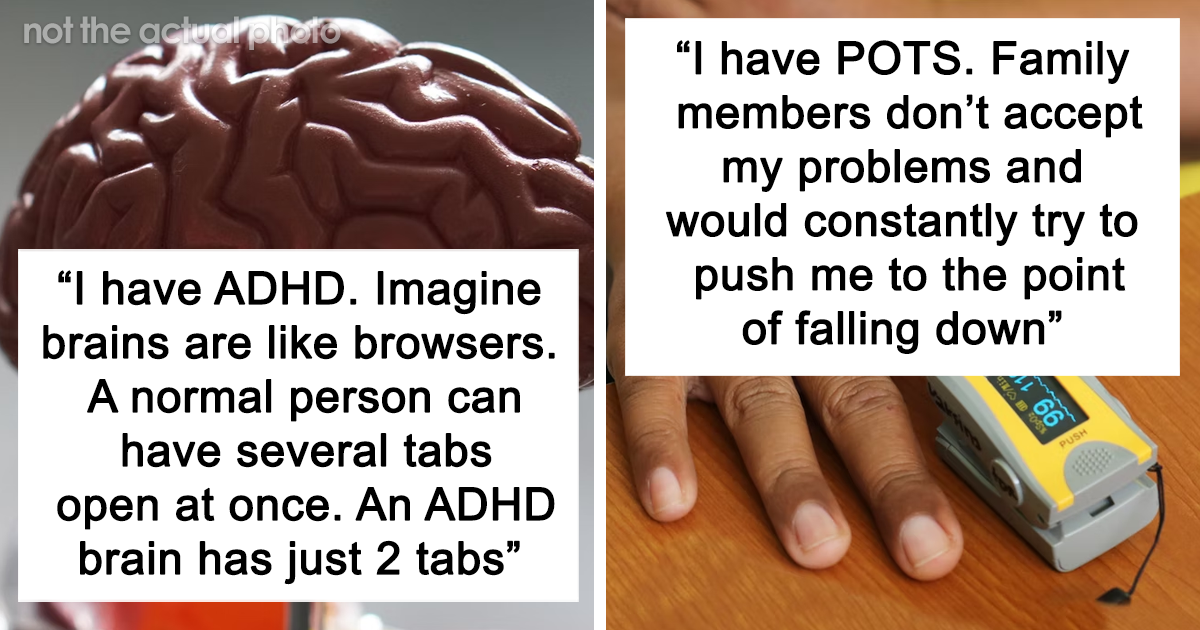
Some illnesses arrive with a cast, a cane, a hospital bracelet, or a dramatic soundtrack. Others show up like a stealthy raccoon in the attic: invisible, disruptive, and oddly good at making strangers doubt your entire life story. That is the daily problem for many people living with non-obvious illnesses, also called invisible illnesses or hidden disabilities.
A person may look “fine” while dealing with chronic pain, autoimmune disease, migraine, PTSD, ADHD, Crohn’s disease, lupus, multiple sclerosis, POTS, celiac disease, fibromyalgia, arthritis, depression, anxiety, or another condition that does not announce itself with flashing neon lights. The body can be doing a full Broadway production of chaos while the outside looks like someone merely forgot to sleep.
The frustrating part is not only the illness. It is the reaction. People get mad when someone cancels plans, asks for accommodations, uses a parking placard, avoids certain foods, sits down, leaves early, forgets things, reacts to noise, or says, “I can’t today.” Because the illness is not obvious, others may mistake symptoms for laziness, rudeness, drama, weakness, exaggeration, or personal betrayal. Charming, right?
This article explores 30 common reasons people with non-obvious illnesses say others get angry at them, why those reactions happen, and what a more compassionate response could look like.
What Are Non-Obvious Illnesses?
Non-obvious illnesses are health conditions that may seriously affect daily life without being easy to see from the outside. They can involve pain, fatigue, digestive problems, neurological symptoms, immune system issues, cognitive difficulties, mental health symptoms, dizziness, sensory sensitivity, or limited stamina.
Unlike a visible injury, these conditions often fluctuate. Someone might attend a birthday party on Saturday and spend Sunday recovering like their body tried to run a marathon while carrying a refrigerator. That unpredictability confuses people who expect illness to be consistent, visible, and politely scheduled between social obligations.
Why Do People Get Mad At Someone Who Is Sick?
Most anger comes from misunderstanding. People often judge based on what they can see. If they see a person smiling, working, driving, shopping, or posting a nice photo online, they assume that person must be healthy enough to do everything else. But illness is not a battery icon. You cannot glance at someone and know whether they have 90 percent energy or 3 percent plus stubbornness.
Another problem is inconvenience. Invisible illnesses often require changes: a quieter restaurant, a shorter visit, a different schedule, a safer meal, a break, a ride, a chair, remote work, or more patience. Some people interpret those needs as demands, when they are actually survival tools.
30 Reasons People With Non-Obvious Illnesses Say Others Get Mad At Them
1. They Cancel Plans At The Last Minute
Flare-ups do not check Google Calendar. A person with migraine, lupus, Crohn’s disease, fibromyalgia, POTS, or chronic fatigue may feel okay in the morning and completely wiped out by evening. Friends may see cancellation as disrespect. The reality is often less “I do not care” and more “my body has filed a formal complaint.”
2. They Look Healthy While Using Disability Parking
People with heart conditions, neurological disorders, chronic pain, arthritis, POTS, MS, or severe fatigue may need shorter walking distances even if they are young or appear fit. The public sometimes treats disability parking like a courtroom drama. A better response is simple: if someone has a valid placard, mind your grocery cart and your business.
3. They Sit Down On Public Transportation
Standing can be painful or dangerous for people with balance problems, joint issues, dizziness, low stamina, or blood pressure conditions. But if they do not look elderly or visibly injured, they may get death stares for sitting. Apparently, some people believe knees come with birth certificates.
4. They Avoid Certain Foods
Celiac disease, food allergies, inflammatory bowel disease, diabetes, gastroparesis, and other conditions can make eating complicated. When someone asks about gluten cross-contact, ingredients, or safe preparation, they are not trying to ruin dinner. They are trying to avoid becoming the evening’s medical side quest.
5. They Need A Specific Restaurant
For someone with celiac disease, severe allergies, or digestive disease, “anywhere is fine” is not always true. Friends may get annoyed when one person needs a safe menu. But safe eating is not picky eating wearing a fancy hat. It is health management.
6. They Forget Things
ADHD, MS, chronic pain, lupus, trauma, sleep disorders, medication side effects, and fatigue can affect memory and focus. People may assume forgetfulness means someone does not care. In reality, brain fog can make simple tasks feel like trying to find a password written on a napkin in a wind tunnel.
7. They React Strongly To Noise Or Sudden Movement
PTSD, autism, migraine, sensory processing differences, and anxiety disorders can make loud sounds, yelling, crowds, or quick movements overwhelming. Others may call the reaction dramatic. But the nervous system is not being theatrical; it is responding to perceived threat or overload.
8. They Leave Events Early
A person may show up to be supportive but leave before dessert, speeches, dancing, or Uncle Greg’s third story about his boat. Fatigue, pain, sensory overload, dizziness, or medication timing may force an early exit. That is not rude. That is energy budgeting.
9. They Do Not Drink Alcohol
Some medications interact badly with alcohol. Some conditions worsen with it. Some people avoid it for mental health reasons. Yet social pressure can be intense. “Come on, just one” is not charming; it is peer pressure in a party shirt.
10. They Need More Sleep
Chronic illness fatigue is not ordinary tiredness. It can feel heavy, physical, and non-negotiable. People may get irritated when someone sleeps late, naps, or goes to bed early. But rest is often treatment, not laziness.
11. They Cannot “Just Exercise More”
Exercise helps many people, but it can also trigger symptoms in conditions like POTS, ME/CFS, autoimmune disease, severe asthma, chronic pain, and post-viral illness. Telling everyone to simply hit the gym is like recommending swimming lessons during a thunderstorm: occasionally useful, wildly incomplete.
12. They Ask For Work Accommodations
Flexible hours, remote work, ergonomic tools, lighting changes, extra breaks, or quieter spaces can help employees with hidden disabilities perform their jobs. Coworkers may see accommodations as special treatment. In reality, accommodations are meant to create equal access, not hand someone a golden throne and a snack bar.
13. They Do Not Answer Messages Quickly
Depression, anxiety, ADHD, fatigue, migraine, pain, and overwhelm can make texting feel like a full-time job with no lunch break. Friends may assume silence means disinterest. Sometimes it means the person is conserving energy or struggling to function.
14. They Seem Fine One Day And Unwell The Next
Invisible illnesses often fluctuate. A “good day” does not erase the condition. It only means the symptoms were manageable for a while. People may say, “But you were fine yesterday.” Yes, and your phone was charged yesterday too. Things change.
15. They Use Mobility Aids Only Sometimes
Some people use canes, braces, wheelchairs, or scooters part-time. That does not mean they are faking. It means their needs change. Mobility aids are tools, not permanent personality traits.
16. They Avoid Crowds
Agoraphobia, PTSD, sensory sensitivity, panic disorder, immunocompromising conditions, migraine, and fatigue can make crowded places difficult. Others may take it personally when someone avoids concerts, malls, airports, or busy restaurants. The issue is not the people. It is the environment.
17. They Are Sensitive To Light
Migraine, lupus, concussion history, eye conditions, and neurological disorders can make bright light painful or triggering. Someone wearing sunglasses indoors may not be auditioning for a mysterious celebrity entrance. They may simply be avoiding symptoms.
18. They Cannot Stand In Long Lines
Standing still can worsen dizziness, pain, fatigue, and joint problems. People may get angry when someone asks to sit, skip a line with an accommodation, or use accessible services. But accessibility exists because equal participation sometimes requires different logistics.
19. They Have Bathroom Urgency
IBD, IBS, bladder disorders, diabetes, medication side effects, and other conditions can make bathroom access urgent. Mocking someone for needing a restroom quickly is not humor; it is a fast way to become the villain in someone else’s medical memoir.
20. They Struggle With Household Chores
Fatigue, pain, executive dysfunction, depression, dizziness, and joint problems can make dishes, laundry, cooking, and cleaning harder than they look. Family members may call it laziness. Often, the person is already ashamed and frustrated, which means criticism adds weight to an already heavy backpack.
21. They Need Medication
Some people get judged for taking medication for mental illness, ADHD, pain, autoimmune disease, or neurological conditions. Others hear advice like “just be natural” from people whose medical degree came from a comment section. Medication can be an important part of care, and nobody owes a debate about their prescription.
22. They Avoid Touch
Chronic pain, trauma, sensory sensitivity, arthritis, nerve pain, and immune conditions can make touch uncomfortable or triggering. If someone does not want a hug, handshake, or playful shoulder grab, respect it. Consent is not canceled because you are “just being friendly.”
23. They Cannot Work Full-Time
Some invisible illnesses limit stamina, focus, mobility, or immune safety. People may assume part-time work means lack of ambition. In truth, many people with chronic illness are working harder than anyone can see just to stay employed at all.
24. They Need Temperature Control
Heat sensitivity can affect MS, POTS, migraine, lupus, and other conditions. Cold can worsen pain and circulation problems. When someone asks for air conditioning, shade, a warmer room, or a break from heat, they are not being high-maintenance. Their body’s thermostat may simply be run by a confused raccoon.
25. They Talk About Their Illness “Too Much”
People with chronic illness often have to explain themselves because others keep questioning them. Then they are accused of making illness their personality. That is an unfair loop: demand proof, complain about the proof, repeat.
26. They Do Not “Look Depressed” Or “Look Anxious”
Mental health conditions do not always match stereotypes. Someone can laugh, work, dress nicely, and still struggle. A smile is not a lab test. It is a facial expression.
27. They Ask People Not To Wear Strong Scents
Perfume, smoke, cleaning products, and scented sprays can trigger migraine, asthma, allergies, chemical sensitivity, or nausea. Some people get offended when asked to reduce fragrance. But breathing comfortably should not be treated like an unreasonable luxury.
28. They Seem “Too Young” To Be Ill
Young people can have arthritis, autoimmune disease, heart conditions, neurological disorders, chronic pain, and mental health conditions. Youth is not a warranty. Bodies can malfunction at any age, even when the packaging still looks fresh.
29. They Need Time To Process Information
Brain fog, ADHD, autism, MS, migraine, trauma, and medication side effects can slow processing speed. Someone may need written instructions, reminders, or extra time. That does not make them unintelligent. It means the brain is dealing with traffic.
30. They Set Boundaries
The biggest reason people get mad is often simple: boundaries. “I cannot come.” “I need to rest.” “That food is not safe.” “Please do not yell.” “I need a chair.” “I am leaving now.” Boundaries can disappoint others, but they are not attacks. For people with non-obvious illnesses, boundaries are often the difference between functioning and crashing.
The Hidden Emotional Cost Of Being Doubted
Living with an invisible illness often means managing two conditions at once: the medical condition itself and everyone else’s opinions about it. The second one does not come with a prescription, though it could certainly use one.
Being doubted can make people feel isolated, embarrassed, defensive, or guilty for having needs. They may push themselves too hard to avoid disappointing others, then pay for it with worse symptoms later. Some stop asking for help because the emotional cost is too high. Others hide symptoms until they reach a breaking point.
This is why compassion matters. A person should not have to prove pain, fatigue, trauma, dizziness, or cognitive dysfunction with courtroom-level evidence. Trust is a powerful form of support. So is flexibility. So is not turning every accommodation into a group investigation.
How To Support Someone With A Non-Obvious Illness
The best support is usually not complicated. Believe people when they describe their limits. Ask what helps instead of assuming. Do not compare them to your cousin, coworker, gym buddy, or someone on the internet who “has the same thing and is fine.” The same diagnosis can affect people differently.
Offer practical options: “Would a quieter place work?” “Do you want to sit?” “Should we choose a restaurant with safe food for you?” “Do you need to leave early?” These questions are small, but they can make someone feel less like a burden and more like a human being invited to participate.
Most importantly, do not punish honesty. If someone tells you they are struggling, that is not an invitation to cross-examine them. It is a chance to be decent.
Additional Experiences Related To Non-Obvious Illnesses
One of the most common experiences people with non-obvious illnesses describe is the strange pressure to perform wellness. They may feel expected to look sick enough to be believed but not so sick that they make others uncomfortable. That is an impossible little circus trick. If they dress nicely, people say they must be fine. If they look exhausted, people say they are not trying hard enough. If they talk about symptoms, they are negative. If they stay quiet, others forget they need support.
Another experience is the constant math of energy. Healthy people may plan a day by asking, “What do I want to do?” A person with chronic illness may ask, “What can I do, what will it cost, and how many days will I need to recover?” A grocery trip might require a nap. A family party might mean skipping errands. A doctor appointment might use up the entire day. This does not mean life has no joy. It means joy has to be scheduled with the precision of a space launch, except the rocket is tired and has joint pain.
Many people also talk about the awkwardness of explaining symptoms that sound unbelievable until you live them. Brain fog can make familiar words disappear. Fatigue can make brushing your hair feel ambitious. Pain can move around like it is looking for better real estate. Light, heat, noise, smells, stress, food, weather, hormones, and lack of sleep can all become triggers. When people say, “That cannot be real,” what they often mean is, “I have never experienced that.” Those are not the same sentence.
Work and school can be especially difficult. People with hidden disabilities may fear being seen as unreliable if they ask for accommodations. They may use lunch breaks to recover, hide symptoms during meetings, or push through flares because they do not want to look weak. Students may be accused of making excuses when they need deadline flexibility, quiet testing spaces, bathroom access, or attendance support. Yet these adjustments can be the difference between success and burnout.
Relationships can suffer too. Friends might stop inviting someone who cancels often. Family members may become impatient with repeated limitations. Partners may struggle to understand why plans change so quickly. The person with the illness may feel guilty, even when they have done nothing wrong. This guilt can become a shadow illness of its own, following them around and whispering that they are too much trouble. That is why reassurance matters. A simple “I believe you” can be surprisingly powerful.
There is also the problem of public judgment. People stare when a young person uses an elevator. They question a normal-looking driver in an accessible parking space. They roll their eyes when someone asks about ingredients. They act offended when someone wears a mask, sits down, avoids perfume, or leaves a crowded room. These reactions may last only a moment for the observer, but they can stay with the sick person all day. Nobody wants to feel like their existence requires a press conference.
Still, many people with non-obvious illnesses develop remarkable skills. They become planners, advocates, researchers, boundary-setters, and experts in reading their own bodies. They learn which friends are truly safe, which environments are manageable, and which comments deserve an explanation versus a polite exit. They also learn humor, because sometimes laughing is the only reasonable response when your body behaves like a haunted appliance.
The biggest lesson is simple: invisible does not mean imaginary. A person can look okay and still be fighting pain, fatigue, fear, inflammation, dizziness, digestive distress, cognitive symptoms, or sensory overload. The kindest thing society can do is stop treating visibility as the price of compassion. Believe people sooner. Judge less loudly. Offer the chair. Change the restaurant. Lower the volume. Let them cancel without a guilt parade. Being understood will not cure a chronic illness, but it can make living with one far less lonely.
Conclusion
Non-obvious illnesses challenge the lazy idea that health can be judged by appearance. The truth is messier and much more human. People can look fine while managing pain, fatigue, trauma, digestive disease, immune dysfunction, neurological symptoms, mental health conditions, or sensory overload. When others get mad, it is often because they confuse invisible symptoms with bad behavior.
A more compassionate world starts with a simple shift: believe people about their own bodies. Not every struggle comes with a visible sign. Not every disability looks the way strangers expect. And not every boundary is a rejection. Sometimes it is just a person doing their best to stay upright, safe, and present in a world that keeps asking for proof.