Smoke detectors save lives, but when they start chirping like a tiny robot rooster at 3 a.m., they also become very good at testing your patience. The tricky part is that getting rid of an old smoke detector is not as simple as tossing out a cereal box. Some alarms contain a tiny radioactive source, some have sealed lithium batteries, some are hardwired into your home, and local disposal rules can vary a lot depending on where you live.
If you have ever stood in your kitchen holding a dusty detector and wondered, “Can this go in the trash, the recycling bin, or straight into the mystery drawer with dead chargers?” you are not alone. This guide breaks down how to dispose of smoke detectors safely, legally, and without turning your cleanup day into a chemistry experiment.
Why Smoke Detector Disposal Is Different From Regular Trash
Smoke alarms are small, but they are not all built the same. Some are photoelectric, some are ionization, and some are dual-sensor models that combine both technologies. On top of that, newer alarms may contain sealed 10-year batteries, while older ones may use replaceable 9-volt or AA batteries.
That matters because the correct disposal method often depends on what type of detector you have and what your city or state allows. Federal guidance may say one thing, while a local household hazardous waste program may tell you something stricter. In plain English: the answer is often “it depends,” which is annoying but true.
Step 1: Identify What Type of Smoke Detector You Have
Before you decide where the detector goes, flip it over and look at the label. Most alarms tell you the sensing type, model number, power source, and manufacture date. That little sticker on the back is doing a lot of work.
Photoelectric Smoke Detectors
These detectors use a light sensor to detect smoke. They do not contain radioactive material. That usually makes them simpler to dispose of, although you still need to deal with the battery correctly and follow local electronics or waste rules.
Ionization Smoke Detectors
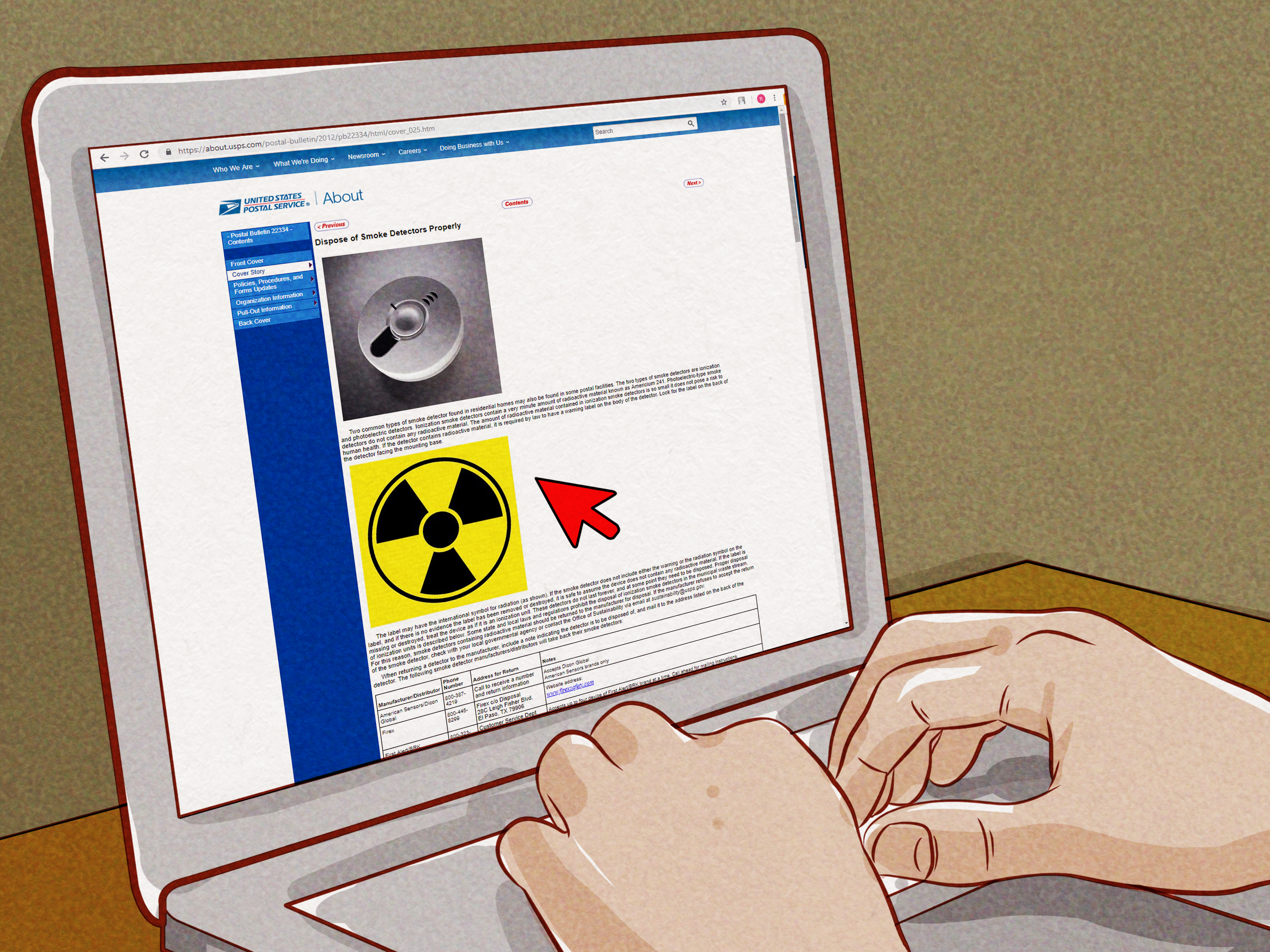
These models contain a very small amount of americium-241, a radioactive material used to help detect fast-flaming fires. The amount is tiny and the detector is considered safe when intact, but this is the reason disposal rules can get more complicated. Never break one open, crush it, or try to “remove the radioactive part” yourself. That is not a home project. That is a very bad hobby.
Dual-Sensor Smoke Detectors
These use both photoelectric and ionization technology. Since they include an ionization chamber, they should be treated like ionization alarms for disposal purposes unless the manufacturer says otherwise.
Combination Smoke and Carbon Monoxide Alarms
If your device is a combo unit, it may contain more electronics and a battery type that affects disposal. Check the label and the product manual. Combo alarms often follow similar disposal rules to smoke alarms, but battery handling is especially important.
Step 2: Check the Age Before You Toss It
Many homeowners replace a detector only when it becomes unbearably chirpy, but age matters. Most smoke alarms should be replaced after about 10 years. If the unit is older than that, it is retirement time. It had a good run. Let it rest.
You can usually find the manufacture date on the back. If it is more than 10 years old, replace it with a new alarm right away rather than leaving the spot empty. A dead detector in the trash is one thing. A missing detector on your ceiling is another.
Step 3: Remove or Deactivate the Battery the Right Way
Battery handling is one of the biggest reasons smoke detector disposal can go sideways.
Detectors With Replaceable Batteries
If your alarm uses a removable 9-volt, AA, or similar battery, remove the battery first. Then dispose of the detector body according to local rules and battery type.
- Alkaline batteries may be allowed in trash in some places, but not everywhere.
- Rechargeable or lithium batteries are often banned from regular trash and curbside recycling.
- Best move: bring batteries to an approved battery drop-off or recycling program if your area offers one.
Detectors With Sealed 10-Year Batteries
These are common in newer smoke alarms. The battery is built into the unit, so you usually cannot remove it. Some manufacturers provide instructions for permanently deactivating the alarm before disposal. Follow those instructions exactly. Do not pry the case apart with a screwdriver and sheer optimism.
In some places, a sealed-battery smoke alarm may need to go through an e-waste, HHW, or manufacturer take-back program because of the battery. In other areas, disposal rules may be more flexible. This is one of the clearest examples of why local guidance matters.
Step 4: Figure Out Whether Trash, HHW, E-Waste, or Take-Back Is Best
Here is the practical part. Once you know the type of detector and battery, choose the safest approved disposal method.
Option 1: Manufacturer Take-Back Program
This is often the cleanest answer for ionization and dual-sensor alarms. Some manufacturers offer mail-back or recycling programs. If your smoke detector label lists a support number or website, start there. You may find brand-specific instructions, a mail-in option, or recycling details for your exact model.
Manufacturer take-back is especially useful when:
- the detector contains americium-241,
- your local government has strict disposal rules,
- the alarm has a sealed battery, or
- you want the least stressful “do the right thing” option.
Option 2: Household Hazardous Waste (HHW) Program
Many local HHW collection sites accept smoke detectors, especially in stricter states or counties. This is common when the detector contains radioactive material or when the built-in battery complicates disposal.
HHW programs are a smart choice if you are already making a drop-off run for paint, chemicals, old batteries, or fluorescent bulbs. Smoke detector in one hand, mystery garage box in the other, and suddenly your Saturday becomes weirdly productive.
Option 3: E-Waste Collection
Some communities classify smoke alarms as small electronics and accept them through e-waste programs. This is more common for combo units, hardwired models, and alarms with sealed batteries. Not every e-waste program accepts them, so check first.
Option 4: Household Trash
In some areas, smoke detectors can go in household trash once the battery is removed or properly handled. Federal guidance has historically allowed many intact ionization detectors to go into household garbage, but local law may override that. Some cities say yes. Some counties say absolutely not. Some states, including parts of California, treat them much more strictly.
So while trash disposal may be legal where you live, it should be the last answer after checking local rules, not the first guess.
How to Dispose of Hardwired Smoke Detectors
Hardwired smoke detectors are connected to your home’s electrical system and may also have battery backup. These need a little extra care.
- Turn off the circuit at the breaker if needed.
- Remove the alarm from the mounting bracket.
- Disconnect the wiring harness according to the manufacturer’s instructions.
- Remove or account for the backup battery if the unit has one.
- Dispose of the alarm based on its sensor type and your local program rules.
Hardwired alarms often look more “electronic” than battery-only models, so people assume they belong in curbside recycling. Usually, they do not. Do not place them in your blue bin unless your local recycler specifically accepts them.
Can You Recycle Smoke Detectors?
Sometimes yes, but not through regular curbside recycling. That is the key distinction.
Smoke detectors contain mixed materials such as plastic, metal, circuitry, batteries, and in some cases radioactive components. Standard curbside recycling programs are usually not set up to sort or safely process them. Instead, recycling may happen through:
- manufacturer mail-back programs,
- special HHW collections,
- e-waste events, or
- municipal drop-off facilities that specifically list smoke alarms.
If your local government website has a “How do I get rid of…” tool, use it. Search terms like smoke detector disposal, smoke alarm recycling, HHW, or e-waste usually get you where you need to go.
Important State and Local Differences
This is where many articles get too vague, so let us say it clearly: smoke detector disposal rules are not uniform across the United States.
For example, some places allow smoke alarms in regular trash if batteries are removed and the unit is intact. Other jurisdictions strongly encourage HHW or manufacturer return. In California, local agencies often route residents toward HHW collection or special recycling programs instead of regular trash. In some cities like New York City, guidance may allow smoke and carbon monoxide alarms in the trash after battery removal, while still recommending that you check labels and manufacturer instructions for ionization models.
That means the most accurate answer is:
Check three things: the label, the battery type, and your local waste authority.
What Not to Do With Old Smoke Detectors
- Do not put them in curbside recycling unless your local program explicitly says yes.
- Do not crush, burn, smash, or open ionization alarms.
- Do not ignore sealed lithium battery rules.
- Do not store dead alarms in a drawer forever “just in case.” That drawer has suffered enough.
- Do not remove an old detector until you have a replacement ready to install.
A Simple Smoke Detector Disposal Checklist
- Check the manufacture date. If it is older than 10 years, replace it.
- Read the back label to identify whether it is photoelectric, ionization, or dual-sensor.
- See whether the unit has a removable battery or sealed 10-year battery.
- Remove or deactivate the battery as instructed by the manufacturer.
- Search your city, county, or solid waste district website for local disposal rules.
- Use a manufacturer take-back, HHW site, or e-waste program when available.
- If local rules allow trash disposal, place the intact detector in the trash only after proper battery handling.
- Install the new detector immediately.
Frequently Asked Questions
Can I throw away an ionization smoke detector?
Possibly, depending on local rules. Federal guidance has allowed many intact ionization alarms in household trash, but local governments may require HHW, e-waste, or manufacturer take-back instead. Always check your local rules first.
Do smoke detectors count as hazardous waste?
Sometimes they are handled through HHW programs, especially if local policy is strict or the detector contains a sealed battery or ionization chamber. Not every area labels them the same way, which is why local guidance matters.
Can smoke detectors go in curbside recycling?
Usually no. Standard curbside recycling is rarely the right place for smoke alarms.
What should I do with a chirping 10-year smoke alarm?
It is usually at end of life or needs permanent deactivation for disposal. Follow the model-specific instructions from the manufacturer, then use the proper disposal route for your area.
Should I keep an old detector as a backup?
No. An expired smoke alarm is not a reliable emergency plan. It is decor with opinions.
Real-World Experiences With Disposing of Smoke Detectors
One of the most common experiences people have is discovering that replacing a smoke detector sounds easier than it is. It starts innocently enough: one detector chirps, someone grabs a stool, twists it off the ceiling, and then realizes there is a date stamped on the back from a decade ago. Suddenly that one noisy alarm turns into “Wait, are all of these this old?” and now the whole house is getting an upgrade.
A lot of homeowners are surprised by how many different kinds of alarms they have under one roof. A hardwired alarm in the hallway, a battery model in the basement, a combo smoke and CO unit near the bedrooms, and one mystery detector that may have been installed sometime during the age of dial-up internet. The lesson here is that disposal gets easier when you sort the detectors first instead of treating them all the same.
Another common experience is battery confusion. People remove an old alarm, toss it on the counter, and only later realize it has a sealed 10-year lithium battery that cannot just be popped out. Others remove the 9-volt battery but forget to check whether their city wants that battery recycled separately. It is a small detail, but small details are where “I cleaned the garage” turns into “Why is the county website giving me homework?”
There are also plenty of people who assume that if something looks electronic, it belongs in curbside recycling. That is understandable, but smoke alarms are one of those items that often break the rule. Mixed materials, batteries, and sometimes radioactive components make them bad candidates for the regular recycling bin. A lot of local recycling centers would rather you ask first than toss one in and hope for the best.
In stricter areas, especially where HHW rules are more robust, residents often find that dropping off smoke detectors is surprisingly simple once they know where to go. The hard part is not usually the disposal itself. The hard part is figuring out which program accepts what. Once that answer is clear, it is often a quick errand with the old alarms, batteries, and maybe a half-used can of garage paint joining the trip.
Manufacturer support can also be more helpful than people expect. Some brands publish removal, deactivation, and recycling details for specific models. That is useful because a modern sealed-battery alarm and an older ionization unit may need different handling. Reading the model instructions can save a lot of guesswork and keep you from doing the one thing you should not do: taking the detector apart like you are starring in your own home-improvement crime drama.
Perhaps the biggest real-life lesson is this: the smartest disposal plan starts before the old detector comes down. Buy the replacement first, check the age and type of the old unit, read the label, and confirm the local disposal route. That way, your home is never left unprotected, your batteries go where they should, and you do not end up with three expired detectors sitting on top of the fridge for six months. We all know how that story ends. They become “temporary” clutter, which is one of the most permanent forms of clutter known to mankind.
In the end, disposing of smoke detectors is less about one universal rule and more about a short decision tree. What kind is it? What battery does it use? What does your local program say? Answer those three questions, and the whole job becomes much less mysterious.
Conclusion
Knowing how to dispose of smoke detectors is really about doing two things well: protecting your home now and handling old equipment responsibly afterward. The safest approach is to identify the detector type, check the battery, review local rules, and use a take-back, HHW, or e-waste option whenever available. In many places, trash disposal may still be allowed for certain alarms, but it should be confirmed, not assumed.
So yes, that old chirping detector is annoying. But it is also your reminder to upgrade your fire safety setup, follow proper smoke alarm disposal rules, and keep your house protected with fresh alarms where they belong: on the ceiling, not in a junk pile.