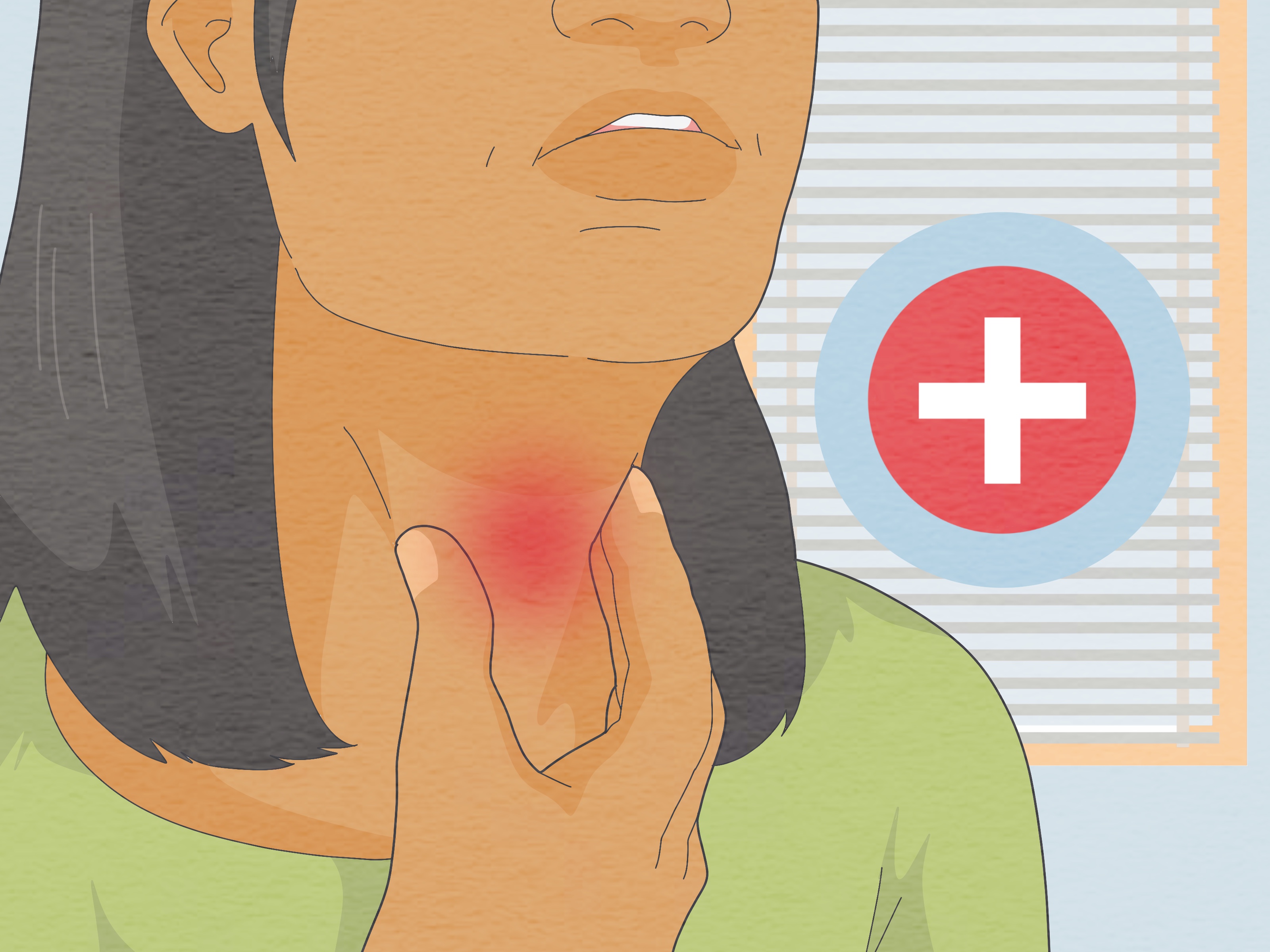
Popcorn is supposed to improve movie night, not turn it into a ll or a sharp piece of popcorn hull can occasionally feel stuck in your throat. The sensation may be mildly irritating, genuinely painful, or frightening enough to make you wonder whether you should cough, drink water, or start writing a farewell speech to your snack bowl.
Before trying any remedy, determine whether you can breathe, speak, cough, and swallow. Someone who cannot speak, breathe, or cough effectively may have a severe airway obstruction. That is a medical emergency requiring immediate choking first aid and a call to 911. A person who can speak and cough forcefully is still moving air, although the situation should be watched closely in case the blockage worsens. s=”medical-alert”>
Emergency warning: Call 911 immediately if the person cannot breathe or speak, has a weak or silent cough, develops blue or gray lips, appears confused, collapses, or becomes unresponsive. Do not delay emergency care to continue reading.
Is It Really a Popcorn Kernel?
People often use the word “kernel” when the actual culprit is a thin piece of popcorn hull. The distinction matters because these two snack-related troublemakers behave differently.
A whole unpopped kernel is firm and rounded. It may enter the airway or become lodged in the esophagus, which is the tube carrying food from the throat to the stomach. A hull is lighter and sharper. It may catch near a tonsil, stick to the back of the tongue, or scratch the throat lining before moving on.
That scratch can create a surprisingly convincing foreign-body sensation. Even after the hull has been swallowed or coughed out, mild swelling and irritation may make it feel as though something is still present. This is why repeatedly probing the throat is usually a bad idea: you may be attacking a scratch rather than an object.
Signs that air is still moving
You can speak in complete sentences.
You can produce a strong, loud cough.
You can breathe without severe difficulty or high-pitched sounds.
You can swallow your saliva without drooling.
Signs that require urgent medical attention
You cannot speak, breathe, or cough effectively.
You cannot swallow water or your own saliva.
You are drooling, repeatedly gagging, or vomiting.
You have severe throat, neck, or chest pain.
You continue coughing, wheezing, or feeling short of breath.
The stuck sensation is worsening rather than improving.
Method 1: Stop Eating and Cough Forcefully
If you can breathe and produce a strong cough, stop eating immediately. Sit or stand upright, lean slightly forward, and cough firmly several times. Spit out anything that reaches your mouth.
A strong cough creates outward airflow and is the body’s most effective first response to a partial airway obstruction. If you are coughing loudly and can still speak, another person should remain nearby and monitor you rather than immediately performing abdominal thrusts. o use an effective cough
Stop chewing and remove loose food from your mouth.
Stay upright and lean slightly forward.
Take a breath only if air moves comfortably.
Cough hard from your chest rather than repeatedly clearing your throat.
Continue while your cough remains strong and effective.
Do not tilt your head backward or take rapid, panicked breaths. A sudden inward gasp could draw a loose fragment deeper into the airway.
Most importantly, do not perform a blind finger sweep. Never push your fingers, tweezers, a toothbrush, chopsticks, or another object into the throat in search of the kernel. Blind probing can push the material deeper, injure the throat, or trigger vomiting and aspiration. Remove an object from the mouth only when it is clearly visible and easily reachable without probing.
If the cough becomes weak, you can no longer speak, or breathing becomes difficult, move immediately to Method 3.
Method 2: Try Gentle Sips or a Warm Saltwater Gargle
This method is appropriate only when breathing is normal, swallowing is comfortable, and the problem feels like a small hull near the upper throat rather than a serious blockage.
Take one or two small sips of room-temperature water and swallow slowly. If the water passes comfortably, it may rinse away a lightweight hull or soothe the irritated area. Do not chug a full glass or repeatedly force yourself to swallow.
You can also mix approximately one-half teaspoon of salt into eight ounces of warm water. Gargle gently for several seconds and spit it out. A warm saltwater gargle may loosen a superficial fragment around a tonsil while helping calm minor throat irritation.
Sips of water and soothing measures may also help when the kernel has already passed but left behind a scratch or a lump-like sensation. However, persistent or recurrent difficulty swallowing should be evaluated rather than repeatedly treated at home. drinking or gargling if:
Water will not pass normally.
You begin drooling, choking, or vomiting.
Your coughing becomes worse after drinking.
You develop chest pain or shortness of breath.
The sensation appears to be deep behind the breastbone.
Some home-remedy lists recommend swallowing bread, rice, banana, marshmallows, or another bulky food to push the kernel downward. This approach is not reliably safe. Adding more food may worsen an esophageal impaction or turn a partial obstruction into a more serious one.
When liquids are difficult to swallow, the kitchen is closed. Stop eating and obtain medical care.
Method 3: Perform Choking First Aid for a Blocked Airway
If a responsive adult or child older than one year cannot speak, breathe, or cough effectively, call 911 and begin choking first aid. Current American Heart Association and American Red Cross guidance recommends repeated cycles of five back blows followed by five abdominal thrusts. Continue until the object is expelled or the person becomes unresponsive. five back blows
Stand to the side and slightly behind the choking person.
Place one arm across the person’s chest for support.
Bend the person forward at the waist.
Using the heel of your free hand, deliver five separate, firm blows between the shoulder blades.
Give five abdominal thrusts
Stand behind the person and wrap your arms around the waist.
Make a fist and place its thumb side above the belly button and below the breastbone.
Grasp the fist with your other hand.
Pull sharply inward and upward five times.
Alternate five back blows with five abdominal thrusts until the person can cough, speak, or breathe, or until the person becomes unresponsive.
Use chest thrusts instead of abdominal thrusts for someone who is pregnant or whose body size makes abdominal thrusts impractical. Infants younger than one year require a different technique consisting of back blows and chest thrusts. Never give abdominal thrusts to an infant.
If the person becomes unresponsive
Lower the person carefully onto a firm, flat surface. Make sure 911 has been called and begin CPR according to your level of training. Before attempting rescue breaths, open the mouth and look for the object. Remove it only if you can clearly see it. Never perform a blind finger sweep.
If you are choking while alone
Call 911 on speakerphone or leave the line open if you cannot speak. Perform abdominal thrusts on yourself by placing a fist above your belly button, grasping it with the other hand, and pulling inward and upward.
Alternatively, press your upper abdomen forcefully against the back of a sturdy chair or another firm, blunt edge. Avoid sharp corners that could cause additional injury.
Method 4: Get Professional Medical Removal
A fragment that will not move may be lodged near a tonsil, in the throat, inside the airway, or in the esophagus. These areas cannot always be inspected or reached safely at home.
Seek urgent medical care if you cannot swallow liquids or saliva, have persistent drooling, experience severe throat or chest pain, repeatedly vomit, cough up blood, or develop noisy or difficult breathing. A complete esophageal blockage can prevent a person from handling normal oral secretions even when the airway remains open.
Depending on the symptoms, a healthcare professional may examine the throat with a light, use a flexible camera called a laryngoscope, order imaging, perform bronchoscopy for an airway object, or use upper endoscopy to locate and remove material from the esophagus. ge prompt evaluation if:
The sensation remains fixed or continues getting worse.
Swallowing stays painful after the episode.
You continue coughing or wheezing.
You develop fever, chest discomfort, or shortness of breath.
Food has become stuck on previous occasions.
Persistent coughing, wheezing, or fever after an apparent choking episode may indicate that material entered the airway or lungs. Aspiration can cause inflammation or infection and should not be dismissed simply because the initial choking sensation improved. ed food impactions may also reveal an underlying swallowing problem, such as esophageal inflammation, narrowing, abnormal muscle movement, or another digestive condition. In that situation, the popcorn kernel is merely the messengerand admittedly a rather rude one.
What You Should Never Do
Do not blindly sweep your fingers through the throat.
Do not insert tweezers, utensils, or other tools.
Do not induce vomiting.
Do not force large bites of food down the throat.
Do not chug water when swallowing is difficult.
Do not perform abdominal thrusts on someone who can cough strongly and speak.
Do not delay calling 911 when breathing is compromised.
Being able to breathe does not automatically mean the problem is harmless. An object in the esophagus may leave the airway open while still blocking swallowing and requiring urgent medical removal.
Why Your Throat May Still Feel Scratched
Popcorn hulls have thin, pointed edges that can scrape the delicate lining of the throat. After the hull moves on, minor swelling may continue producing a sharp or lump-like feeling for several hours.
Repeated throat clearing can irritate the same spot again, creating a cycle of scratching, clearing, and additional irritation. When swallowing and breathing are normal, gentle hydration, warm liquids, and avoiding crunchy, spicy, acidic, or extremely hot foods may help the area settle.
Symptoms that intensify, interfere with eating or drinking, or fail to improve should be evaluated by a healthcare professional.
How to Prevent Another Popcorn-Throat Incident
Eat slowly: The movie can provide the suspense.
Take smaller bites: Avoid stuffing a full handful into your mouth.
Chew thoroughly: This helps reveal hard kernels and sharp hulls.
Avoid talking or laughing with food in your mouth: Comedy and chewing deserve separate time slots.
Discard unpopped kernels: They are not bonus snacks.
Sit upright while eating: Do not eat popcorn while lying down, running, or driving.
Supervise children: Popcorn can be a serious choking hazard for young children.
Investigate recurring symptoms: Frequent coughing during meals or repeated food sticking deserves medical evaluation.
Swallowing disorders can increase the risk of choking and aspiration. People who repeatedly have difficulty moving food from the throat to the stomach may need testing or help from a gastroenterologist, ear, nose, and throat specialist, or swallowing therapist.
Frequently Asked Questions
Can a popcorn kernel dissolve in your throat?
No. A hard kernel or hull does not quickly dissolve in saliva. A small fragment may move with coughing or swallowing, but a genuinely lodged object may require medical removal.
Can a popcorn hull become stuck in a tonsil?
Yes. A lightweight hull can catch in the folds around a tonsil and create a sharp, localized feeling. Gentle gargling may help when breathing and swallowing are completely normal. Persistent pain, bleeding, swelling, or trouble swallowing requires an examination.
Should you drink soda to move a kernel?
Carbonated drinks are not a dependable treatment for an obstruction. Do not use them when swallowing is difficult, and never allow a home remedy to delay urgent medical care.
Should you see a doctor after choking?
Medical follow-up is appropriate when coughing, wheezing, chest discomfort, painful swallowing, or a stuck sensation continues. Evaluation may also be advisable after significant abdominal thrusts or CPR because these maneuvers can occasionally cause internal injuries.
Experience-Based Lessons About Popcorn Stuck in the Throat
The following examples are educational composites based on common real-world patterns. They are not descriptions of identifiable patients.
Experience 1: The hull that had already passed
A common incident begins with a sudden prick on one side of the throat. The person coughs, drinks water without difficulty, and can speak normally, but the feeling remains. Soon, they are standing in front of a mirror with a flashlight, convinced a hull is hiding behind a tonsil like a tiny snack-themed supervillain.
The important lesson is that sensation does not always prove that the hull is still present. A sharp edge can scratch the tissue and leave behind a precise foreign-body feeling. Repeated poking or aggressive throat clearing may prolong the irritation. When breathing and swallowing remain normal, gentle hydration, gargling, and observation are usually more sensible than conducting an amateur throat excavation.
Experience 2: The strong cough that worked
Another familiar scenario occurs when someone laughs while chewing popcorn. A fragment moves toward the airway and triggers loud coughing. Because the person can still cough forcefully and answer questions, a companion stays nearby rather than immediately performing abdominal thrusts.
The person leans forward, coughs several times, and spits out a piece of hull. The lesson is that an effective cough is genuine first aid supplied by the body. Calm observation is still essential because a strong cough can become weak if the obstruction shifts.
Recognizing the difference between noisy, effective coughing and silent, ineffective choking can prevent both unnecessary intervention and dangerous delay.
Experience 3: The attempt to push it down
A less successful pattern begins when someone feels food sticking and is told to swallow bread. After taking a large bite, the person discovers that both the original material and the new mouthful are difficult to swallow. Anxiety increases, saliva begins accumulating, and the situation becomes harder to assess.
The takeaway is that adding bulky food can backfire. When liquids do not pass normally, more solids are not a clever mechanical solution. They are extra traffic entering an already uncertain tunnel.
Stopping oral intake and seeking urgent medical evaluation is safer, especially when the person cannot swallow saliva or feels pressure behind the breastbone.
Experience 4: The symptoms that appeared later
Sometimes a person coughs during a popcorn snack, soon feels better, and assumes the episode is finished. Several hours later, the cough continues. By the following day, wheezing, chest discomfort, or fever may appear.
These delayed symptoms can occur when material has entered the airway rather than traveling through the esophagus. The experience highlights why the hours after a choking or aspiration scare matter. Persistent coughing, noisy breathing, shortness of breath, fever, or unusual fatigue deserves medical attention.
“It probably went down” is not a diagnosis when the lungs continue filing complaints.
Experience 5: Popcorn revealed a recurring problem
For some people, popcorn is not the only food that becomes stuck. Bread, meat, or pills may also hesitate on the way down. The popcorn incident simply becomes the event that finally prompts an examination.
Testing may reveal reflux-related inflammation, esophageal narrowing, abnormal muscle movement, eosinophilic esophagitis, or another swallowing disorder. The broader lesson is that repeated food sticking should never become a quirky personal tradition.
A clinician can investigate why swallowing is unreliable and recommend treatment that reduces future impactions. Addressing the underlying problem is much more productive than declaring permanent war on movie snacks.
Conclusion
When a popcorn kernel feels stuck in your throat, begin by checking whether you can breathe, speak, cough, and swallow normally. Use a strong cough for a mild partial obstruction. Try gentle sips or a warm saltwater gargle only when swallowing is completely comfortable. Perform established choking first aid when the airway is severely blocked, and obtain professional medical care when symptoms persist or swallowing is impaired.
The safest response is not necessarily the most dramatic one. It is the response that matches the symptoms. Respect an effective cough, recognize a silent airway emergency, and retire the tweezers before they audition for a role they were never trained to play.