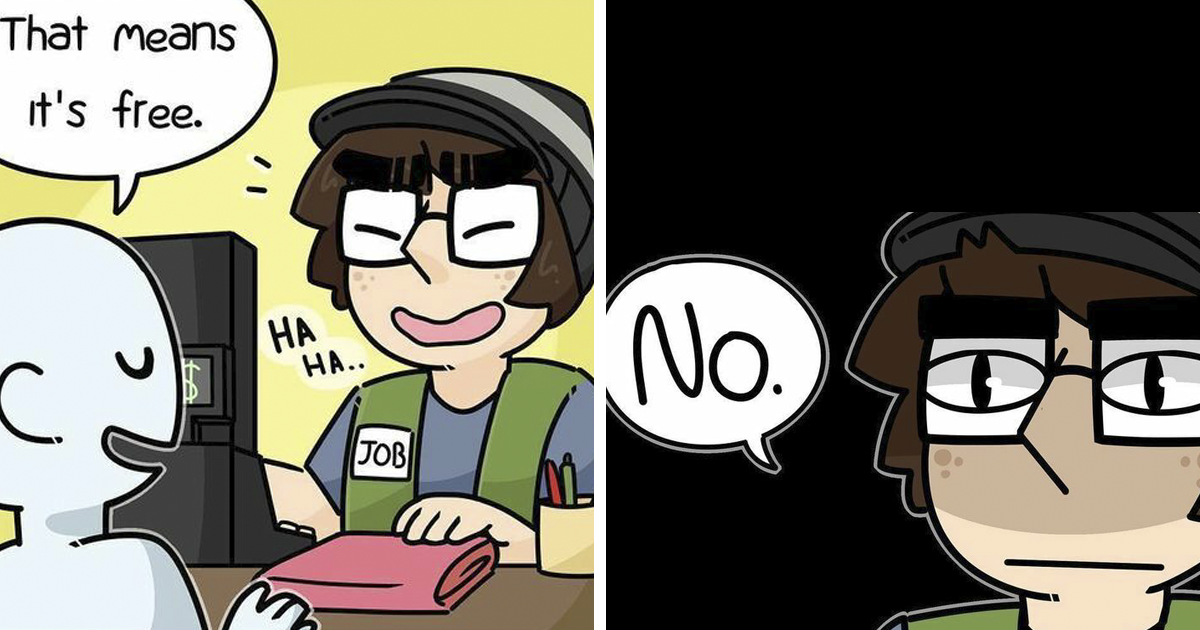
Family life is basically a sitcom with no writers’ room, no commercial breaks, and at least one character who refuses to wear pants when guests arrive. That is exactly why relatable family comics have become such a comforting corner of the internet. They take the ordinary chaos of homelost socks, toddler negotiations, snack-related diplomacy, mysterious sticky spots on the tableand turn it into something we can laugh at instead of quietly Googling, “Is it normal to be tired forever?”
“My Comics About Relatable Situations In Family Life (50 Pics)” celebrates those tiny, painfully accurate moments that happen behind closed doors in almost every household. These are not superhero comics, unless you count the parent who can carry six grocery bags, unlock the door, answer a question about dinosaurs, and stop a child from licking a railing at the same time. The real superpower here is noticing the comedy hidden inside daily routines.
Inspired by everyday parenting, apartment living, couple conversations, childhood logic, household chores, and the emotional gymnastics of raising a family, these comics work because they feel honest. They are funny, but not fake. Sweet, but not syrupy. Chaotic, but not hopeless. In other words, they understand that family life is both the reason you need coffee and the reason your heart occasionally melts into a small puddle near the laundry basket.
Why Family Life Comics Feel So Relatable
The magic of family comics is not that they show perfect homes. Actually, the opposite is true. The best comics about family life show the cereal on the floor, the unfinished chores, the child asking a huge philosophical question two minutes before bedtime, and the parent staring into the middle distance like they have briefly left their body.
Modern families are juggling more than ever: work schedules, school updates, screen-time rules, meals, emotional development, money worries, relationships, health, homework, and the legendary quest to find matching socks. Parenting experts often emphasize routines, communication, emotional connection, and positive discipline, but anyone living inside a family knows that these ideals sometimes collide with reality. For example, you may plan a calm bedtime routine, only to discover your child suddenly needs water, a hug, a different blanket, a story about a penguin, and a full explanation of why the moon follows the car.
That collision between intention and reality is where comics shine. A single panel can say what a thousand parenting manuals politely avoid: families are messy because humans are messy. Kids are developing. Parents are learning. Couples are negotiating. Everyone is hungry. And somehow, in the middle of it all, love keeps showing up wearing mismatched pajamas.
The Comedy of Everyday Parenting
Parenting humor works because the situations are instantly recognizable. You do not need a complicated setup to understand a comic about a child rejecting a carefully prepared dinner and then eating crumbs from the car seat. You do not need a dramatic backstory to laugh at a parent whispering, “Please just put on shoes,” with the intensity of a hostage negotiator.
1. Kids Have Their Own Logic
Children are tiny philosophers with jam on their sleeves. They ask questions adults cannot answer, like “Why do we have elbows?” or “Can I marry a pancake?” Their logic is creative, emotional, and occasionally alarming. A relatable family comic might show a child refusing vegetables because they are “too green,” then immediately eating a green marker. It is absurd, yet somehow familiar.
This kind of humor works because it respects children’s imagination while gently poking fun at the gap between adult expectations and kid reality. Adults like order. Kids like turning a cardboard box into a rocket ship, a grocery store, a cave, and then crying because the box is “looking at them weird.”
2. Parents Are Always Multitasking
One of the strongest themes in relatable parenting comics is the impossible multitasking of caregivers. A parent may be cooking dinner, answering work emails, checking school messages, folding laundry, and trying to remember whether the permission slip was due yesterday or in another dimension. A good comic freezes that moment and lets us laugh at the absurdity.
The humor is gentle because it is rooted in truth. Family life often means being needed from every direction. The dog wants a walk. The child wants help with homework. The sink wants attention. Your phone wants an update. Your brain wants a quiet room and possibly a snack. Comics turn that overload into a shared joke, which can feel surprisingly relieving.
3. Bedtime Is a Competitive Sport
Few family situations are more universally comic than bedtime. In theory, bedtime is peaceful: bath, pajamas, story, lights out. In reality, it can become a dramatic mini-series with multiple seasons. Suddenly, everyone is thirsty. The stuffed animals are not arranged correctly. A child who claimed to be exhausted now has the energy of a squirrel in a drumline.
A comic about bedtime does not need exaggeration. The truth is already theatrical. One panel can show a parent reading softly at 8:00 p.m., and the next can show that same parent at 9:47 p.m., lying half on the floor, whispering, “Nobody move. I think they’re asleep.” That is not just comedy. That is documentary filmmaking with doodles.
Family Comics Capture the Relationship Between Parents
Family life is not only about kids. Many of the funniest relatable situations happen between adults who love each other but are also very tired. Couples in family comics often communicate through facial expressions, snack negotiations, and silent agreements about who has to check the mysterious noise in the hallway.
Marriage and partnership after kids can be wonderfully strange. Date night might mean eating takeout on the couch while folding towels. Romance might look like one person saying, “I already packed the lunches,” and the other person falling in love all over again. A comic can capture that quiet romance better than a dramatic speech ever could.
These moments are funny because they show love in practical form. In family life, affection is not always grand. Sometimes it is washing the favorite cup. Sometimes it is letting the other person sleep in. Sometimes it is not mentioning that they used the “wrong” grocery list and came home with five kinds of crackers but no milk.
The Household Itself Becomes a Character
In relatable family comics, the home is not just a setting. It is an active participant in the chaos. The laundry pile grows like a living creature. The kitchen resets itself to messy every six minutes. The toy bin somehow becomes emptier only when the entire floor becomes fuller. The couch eats remote controls, hair ties, coins, and at least one emotional support dinosaur.
This is why the apartment, house, or living room in these comics matters. Family life happens in small spaces: around the kitchen table, in hallways, at bathroom doors, beside the washing machine, in the car, and on the couch where everyone insists there is “no room” while sitting directly on top of one another.
Household humor is especially powerful because it turns domestic frustration into something shared. Instead of feeling defeated by the mess, readers can recognize it as part of a larger human pattern. Every family has a drawer full of random batteries, mystery keys, and one instruction manual for something nobody owns anymore. That drawer is not clutter. It is heritage.
Why “50 Pics” Works as a Format
A collection of 50 family-life comics works beautifully because family humor is best enjoyed in quick, snackable moments. Each comic delivers one small truth. Together, they create a portrait of home life that feels rich, layered, and wonderfully imperfect.
One comic might focus on morning chaos: a parent trying to get everyone dressed while one child cannot find a shoe that is literally in their hand. Another might capture dinner-table drama, where a child announces they hate the meal they loved yesterday. Another might show a parent discovering that “cleaning the room” means shoving everything under the bed with the confidence of a professional organizer.
By the time readers move through all 50 pictures, they are not just laughing at isolated jokes. They are seeing a full emotional map of family life: exhaustion, affection, absurdity, conflict, forgiveness, connection, and the sacred power of five quiet minutes.
Common Themes in Relatable Family Life Comics
Morning Madness
Mornings are a gold mine for family comics. Someone is late. Someone is missing a backpack. Someone suddenly remembers they need a costume, a signed paper, or 24 cupcakes. The parent, who simply wanted coffee, is now managing a crisis involving toothpaste, lunch boxes, and one deeply offended sock.
Mealtime Negotiations
Food is never just food in a family. It is identity, preference, power, memory, and sometimes a battlefield shaped like broccoli. A child may demand noodles, reject noodles, cry because the noodles are touching sauce, then eat dry cereal from a plastic cup. Comics capture this perfectly because the visuals make the absurdity immediate.
Screen-Time Struggles
Modern family life includes phones, tablets, streaming shows, video games, and the eternal parental sentence: “After this episode.” Family comics often show the delicate balancing act between technology and connection. Parents want peace, kids want screens, and everyone pretends that “five more minutes” has a consistent meaning. It does not. It is a magical phrase that bends time.
Chores and Invisible Labor
Chores are another classic theme. A comic might show one family member asking, “What can I do to help?” while standing in front of a sink full of dishes, a laundry basket, and a trash bag glowing with obvious purpose. The joke lands because household work is often visible and invisible at the same time. Everyone sees the clean home; fewer people see the hundred tiny actions that made it happen.
Pets as Bonus Children
If the family has a pet, the comedy multiplies. Dogs, cats, and other animals bring their own chaos. They steal food, demand attention, interrupt serious conversations, and somehow become the most emotionally stable member of the household. A pet in a family comic often serves as the silent witness to human nonsense, which makes everything funnier.
The Emotional Side of Funny Family Comics
The best family comics are not only funny; they are tender. Beneath the jokes about mess, noise, and exhaustion, there is usually a deep affection for family life. The artist is not laughing at families from a distance. The artist is laughing from inside the experience, with the honesty of someone who knows that chaos and love often arrive holding hands.
That emotional honesty is what makes these comics shareable. Readers tag partners, siblings, parents, and friends because the comic says, “This is us.” It gives people a simple way to connect over ordinary experiences. A parent who feels overwhelmed may see a comic about the same situation and feel less alone. A grown child may recognize their own childhood. A couple may laugh because they have had that exact argument about dishwasher loading technique, and yes, there is apparently a wrong way.
Humor also creates distance from stress. When people can laugh at a hard moment, they often gain a little breathing room. The problem may not disappear, but it becomes less heavy for a second. That is one reason family comics can feel comforting: they turn everyday pressure into perspective.
Why Readers Love Relatable Family Comics Online
Online audiences love relatable family comics because they are fast, visual, emotional, and easy to share. A comic can communicate a full parenting saga in four panels. No long explanation required. A tired parent scrolling during a quiet moment can see a comic, laugh, and think, “Finally, someone understands.”
These comics also cross generations. Grandparents may laugh because they remember raising kids. Parents laugh because they are currently living the plot. Young adults laugh because they recognize their families. Even people without children can enjoy the humor because family life includes universal themes: love, irritation, routines, misunderstandings, snacks, and the ancient human desire to use the bathroom without an audience.
Another reason these comics work online is that they are visually simple but emotionally specific. The art does not need to be overly detailed. A raised eyebrow, a slumped shoulder, or a tiny child standing proudly beside a disaster can say everything. In family comics, expression is everything. The joke is often in the eyes.
What Makes a Great Family-Life Comic?
A great family-life comic usually has three ingredients: truth, timing, and affection. Truth makes readers recognize the situation. Timing makes the joke land. Affection keeps the humor from feeling mean.
For example, a comic about a child interrupting a parent every 12 seconds could easily become negative. But when drawn with warmth, it becomes a funny portrait of connection, curiosity, and parental exhaustion. The parent is tired, yes, but the comic also shows how much the child wants to be close. That balance matters.
The best artists understand that family humor should not shame anyone. Parents are not perfect. Kids are not villains. Partners are not enemies. Everyone is simply doing their best inside a house where someone has hidden a banana in the couch cushions.
Experiences Related to “My Comics About Relatable Situations In Family Life (50 Pics)”
One of the most interesting experiences connected to creating family-life comics is learning that the funniest ideas rarely arrive when life is calm. They usually appear in the middle of inconvenience. A child says something strange while you are carrying groceries. A partner makes a comment so perfectly timed that it deserves its own speech bubble. A normal chore turns into a full adventure because someone spilled juice, the dog stepped in it, and now the kitchen floor looks like a crime scene investigated by ants.
When drawing or writing about family life, the first challenge is noticing these moments before they vanish. Family chaos moves quickly. One minute you are annoyed because the hallway is full of toys; the next minute you realize the scene is actually funny. There is a small shoe inside a mixing bowl. There is a superhero cape on a lamp. There is a child loudly explaining that they cannot clean because their “energy is charging.” These are not interruptions to real life. They are real life.
Another experience is discovering how universal private family moments can be. You may think your household is the only one where bedtime expands into a two-hour negotiation, but once the comic is shared, people respond with, “This happens in our house too!” That response is powerful. It turns embarrassment into community. It reminds parents that they are not uniquely disorganized, impatient, emotional, or tired. They are simply part of the giant, sleep-deprived club of people trying to raise humans without losing the TV remote again.
Creating comics about family situations also changes the way you handle stress. Instead of seeing every difficult moment as a failure, you begin to see some of them as material. The tantrum in the grocery store is still hard. The laundry mountain is still real. The argument about screen time is still exhausting. But somewhere inside the frustration, there may be a comic panel waiting. That does not make parenting easy, but it can make it feel lighter.
There is also a tenderness that comes from documenting ordinary life. Big milestones matter, of course: first steps, birthdays, graduations, vacations. But family is mostly built from tiny scenes. The sleepy morning hug. The ridiculous joke at dinner. The way a child mispronounces a word and the family secretly hopes they never stop. The way partners communicate with a glance across a noisy room. Comics preserve those moments without making them too polished.
In many ways, family-life comics are little love letters to imperfection. They say, “This house is messy, but it is alive.” They say, “These people drive me crazy, but they are mine.” They say, “Today was not perfect, but it was funny enough to survive.” That is why a collection of 50 relatable pictures can feel bigger than a simple humor post. It becomes a mirror, a memory book, and a reminder that even the most chaotic family moments can become stories worth keeping.
Conclusion
“My Comics About Relatable Situations In Family Life (50 Pics)” is more than a funny collection of drawings. It is a celebration of the strange, sweet, exhausting, and hilarious rhythm of home. These comics remind us that family life does not need to be perfect to be meaningful. In fact, the imperfect parts are often the most memorable.
From bedtime battles to snack negotiations, from couple communication to household mess, relatable family comics capture what many people feel but do not always say out loud. They turn daily stress into shared laughter. They make ordinary moments visible. Most importantly, they remind readers that behind every messy room, unfinished chore, and dramatic child announcement, there is usually lovepossibly sticky, possibly loud, but definitely real.
Note: This article is original, plagiarism-free, and written in standard American English for web publishing. It is based on real family-life themes, reputable parenting knowledge, and common experiences reflected in relatable family comics.