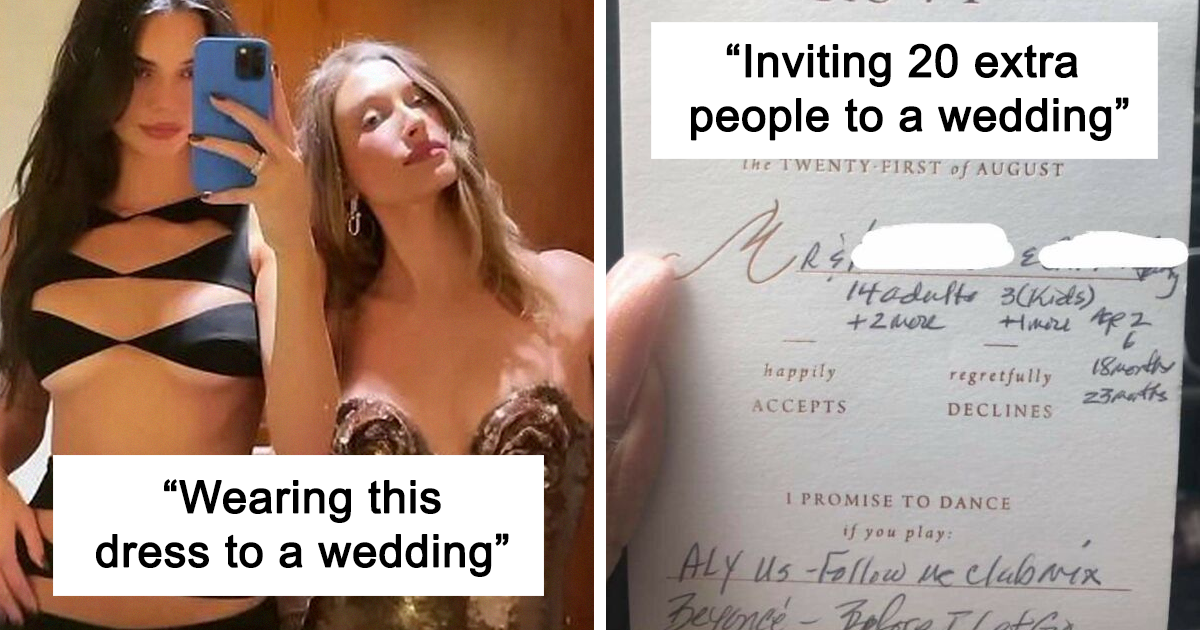
Weddings are supposed to celebrate love, commitment, and the remarkable human ability to remain cheerful while wearing uncomfortable shoes. Yet every so often, a ceremony abandons elegance, ignores basic wedding etiquette, and charges directly into the wilderness of spectacularly bad taste.
To be clear, a “tasteless wedding” is not a backyard reception, an inexpensive dress, a supermarket cake, or a tradition unfamiliar to outsiders. A limited budget is not a character flaw, and cultural customs should never become internet punchlines. The real wedding disasters are rooted in disrespect: humiliating guests, demanding money, mistreating vendors, ignoring accessibility, creating needless confusion, or turning a meaningful celebration into an exhausting vanity project.
The situations below are composite examples based on recurring wedding complaints, etiquette disputes, planning mistakes, and guest experiences documented by major American wedding and lifestyle publications. Modern etiquette experts consistently emphasize generosity, clear communication, respect for invitations, sensible dress-code guidance, responsible alcohol service, and consideration for guests’ finances.
When the Invitations Became Hostage Negotiations
1. The Invitation Included an Admission Fee
One couple informed guests that attendance required purchasing a “celebration package.” Nothing says lifelong romance like a ticketing system normally associated with music festivals and haunted corn mazes.
2. Guests Were Ranked by Gift Level
The registry reportedly divided presents into categories such as “basic,” “preferred,” and “VIP supporter.” A toaster apparently earned polite acknowledgment, while a new refrigerator unlocked emotional intimacy.
3. The Couple Requested Bank Statements
To decide who could afford premium gifts, the hosts asked relatives about salaries and savings. This transformed wedding planning into an audit conducted by people wearing matching silk robes.
4. The Plus-One Rule Changed at the Door
Several guests arrived with partners who had been approved months earlier, only to learn that seating had been “restructured.” Those partners were directed toward a nearby restaurant like excess luggage.
5. The RSVP Form Contained a Loyalty Test
Guests had to explain how they knew the couple, describe their favorite shared memory, and state why they deserved an invitation. Apparently, responding before the deadline was no longer sufficient proof of friendship.
6. Children Were BannedExcept the Influencer’s Children
The invitation announced a strict adults-only celebration. At the reception, however, a well-connected guest’s children received flower crowns, special meals, and prominent seating while other parents paid for childcare.
7. Declining the Invitation Triggered an Invoice
A guest who could not attend received a bill for the unused meal. The hosts treated catering estimates as legally binding personal debts rather than an ordinary risk of organizing an event.
8. The Website Explained Everything Except the Wedding
It featured 200 engagement photographs, seven paragraphs about the proposal, and a quiz about the couple. Unfortunately, the ceremony address, parking instructions, and start time were buried or missing. Wedding-planning guidance recommends putting essential logistics where guests can locate them quickly.
Dress Codes That Escaped From a Reality Show
9. Every Guest Had to Wear One Exact Color
Not a general paletteone specific designer shade with an assigned product number. Guests who arrived in a nearly identical color were treated as though they had sabotaged an international peace conference.
10. Attractive Guests Were Asked to Dress Down
The bride allegedly requested that certain friends avoid fitted clothing, professional makeup, and styled hair. The dress code was less “cocktail attire” and more “please arrive looking mildly inconvenienced.”
11. Bridesmaids Were Ordered to Change Their Bodies
Instead of altering dresses to fit people, the couple expected people to alter themselves to fit dresses. Mandatory weight-loss targets turned a joyful role into months of anxiety and unsolicited nutritional surveillance.
12. The Groom Wore a Joke T-Shirt
While everyone else dressed formally, the groom appeared in a novelty shirt suggesting that marriage was a prison sentence. The joke was old, the photograph was permanent, and the bride’s expression became the evening’s most honest review.
13. A Guest Arrived in a Full Bridal Gown
It was white, floor-length, embellished, and paired with a sparkling headpiece. Etiquette guidance generally warns guests against outfits likely to compete with the couple or create confusion about who is getting married.
14. The Couple Required Expensive Costumes
Guests were told to purchase custom medieval clothing from one approved vendor. Those who could not justify spending hundreds of dollars were invited to “watch the livestream instead.”
15. Bridesmaids Had to Pay for Two Dresses
One outfit was required for the ceremony and another for photographs. Neither was reusable, flattering, or affordable, but both were described as “an investment in the bride’s vision.”
16. The Dress Code Was Deliberately Vague
The invitation requested “elevated moonlit garden sophistication.” Guests spent weeks wondering whether that meant tuxedos, floral dresses, fairy wings, or arriving with a professionally trained owl.
Decorations That Made Guests Reach for Their Phones
17. The Centerpieces Featured the Couple’s Exes
Each table displayed photographs of former partners under a heading about “the wrong roads that led us home.” Several exes were attending, adding an exciting layer of live psychological experimentation.
18. The Cake Recreated a Violent Breakup
The topper depicted the bride dragging the groom away from a crying former girlfriend. The frosting work was detailed, technically impressive, and emotionally similar to reading someone else’s private messages.
19. The Bathroom Contained Sponsored Advertisements
Every mirror, soap bottle, and hand towel carried promotional codes from local businesses. Guests could freshen up, reconsider their life choices, and receive 15 percent off residential pressure washing.
20. Memorial Photos Became Party Props
A remembrance table for deceased relatives can be touching. This one added novelty sunglasses and encouraged guests to take “hilarious selfies with the ancestors,” which changed the mood considerably.
21. The Seating Chart Listed Relationship Status
Names appeared under headings such as “Happily Married,” “Still Looking,” and “It’s Complicated.” The couple saved guests the inconvenience of enjoying dinner without public romantic classification.
22. The Favors Were Campaign Merchandise
Instead of chocolates or candles, each guest received strongly partisan merchandise and instructions to pose with it. The reception became a rally where everyone happened to be holding tiny plates of chicken.
23. The Couple Printed Their Payment Handle Everywhere
It appeared on the invitation, menus, cocktail napkins, cake table, bathroom doors, and DJ screen. By dessert, guests expected the officiant to conclude the ceremony by saying, “You may now scan the code.”
24. The Photo Booth Mocked Specific Guests
Props included signs referencing relatives’ divorces, jobs, bodies, and dating histories. Humor works best when everyone is laughingnot when one person laughs and another starts researching earlier flights home.
Food and Drink Decisions Nobody Ordered
25. Guests Paid for Their Own Dinner
The invitation never mentioned that every attendee would receive a restaurant bill. Asking guests to cover unexpected event expenses is widely regarded as inconsiderate because attendance already involves gifts, transportation, clothing, and sometimes lodging.
26. The Cash Bar Accepted Cash Only
The remote venue had no ATM, weak cellular service, and drinks priced like rare minerals. Cash bars are controversial but manageable when disclosed clearly in advance; surprises are what create frustration.
27. The Couple Ate a Luxury Meal While Guests Got Snacks
The newlyweds enjoyed steak and seafood at a raised table. Everyone else received chips, vegetable trays, and half a sandwich, creating the atmosphere of a royal banquet observed by stranded airport passengers.
28. Dietary Restrictions Became a Comedy Routine
The menu labeled allergy-friendly dishes with jokes about “difficult guests.” Mocking people for trying to avoid medical emergencies is not edgy humor; it is simply poor hosting with decorative typography.
29. Dinner Arrived Five Hours Late
The ceremony ended in the afternoon, but food was withheld until late evening to protect the photography schedule. Hungry guests began treating the unattended favor table as an emergency supply depot.
30. The Cake Was Reserved for Social-Media Photos
Guests watched the couple cut an elaborate cake that was immediately removed. Sheet cake was promised but never appeared, leaving everyone with lovely photographs of a dessert they could not eat.
31. The Bar Encouraged Reckless Drinking
Signs promoted a competition between the two families, with prizes for consuming the most alcohol. Responsible hosting means offering food, nonalcoholic choices, transportation information, and no pressure to drink.
32. Vendors Were Forbidden From Eating
Photographers, musicians, coordinators, and other workers spent the day on-site but were denied meals and breaks. Mistreating the people responsible for making the event function is both rude and strategically unwise.
Speeches, Pranks, and Public Humiliation
33. The Best Man Shared Private Medical Information
He treated the toast as an opportunity to reveal personal details that had never been intended for a room full of relatives. A wedding speech should honor the couple, not violate confidentiality with a microphone.
34. The Bride Announced a Relative’s Pregnancy
The relative had not told most guests and had specifically requested privacy. The announcement earned applause, followed by the kind of silence that makes a ballroom feel suddenly enormous.
35. The Groom Staged a Fake Affair
Actors interrupted the reception and accused him of cheating. The bride had not been warned. Several minutes of genuine distress followed before someone revealed that the scene was “just content.”
36. The Bouquet Toss Targeted One Woman
Instead of inviting interested guests, the bride called out a single relative, criticized her dating life, and ordered her onto the dance floor. Tradition became public interrogation with flowers.
37. The Couple Read Guests’ Private Messages Aloud
Comments from a group chat were projected onto a screen as part of a “roast.” Context disappeared, embarrassment flourished, and several friendships quietly entered administrative review.
38. The First Dance Became a Forty-Minute Production
Fog machines, costume changes, prerecorded dialogue, and backup dancers kept hungry guests standing around the floor. By the third act, the marriage had lasted less time than the choreography.
39. The Photographer Was Ordered to Alter Guests’ Bodies
The couple requested slimmer waists, different faces, removed mobility aids, and “more flattering” skin tones in group photographs. Editing people into strangers is not elegance; it is disrespect with expensive software.
40. Thank-You Notes Became Complaint Letters
Some guests received messages criticizing the value of their gifts or asking why they had not contributed more. Gifts should reflect a guest’s budget and relationship with the couple, while genuine gratitude should never resemble a collection notice.
Why Tasteless Weddings Become Internet Legends
A strange centerpiece may be forgotten. A budget dessert may even become charming. What guests rememberand what they feel compelled to documentis the moment a celebration stops treating people like people.
Many notorious wedding fails share the same underlying problems. The hosts prioritize photographs over comfort, interpret gifts as mandatory payments, use their wedding party as unpaid staff, or expect guests to absorb costs they were never warned about. Financial pressure is especially sensitive because attending a wedding can involve transportation, hotels, childcare, clothing, gifts, and several related events. Research and financial guidance repeatedly recommend setting realistic budgets and communicating costs before friends feel trapped.
Social media adds another ingredient. Couples may feel that every moment must be dramatic enough to attract attention, while guests can publish mistakes before the first dance ends. The result is a celebration planned for an invisible online audience rather than the humans physically present.
The cure is not greater formality. It is greater consideration. A modest wedding with warm food, clear directions, comfortable seating, and gracious hosts will usually feel more luxurious than an extravagant event organized around control and humiliation.
A Composite Guest Experience: What a Tasteless Wedding Actually Feels Like
The following experience combines themes commonly reported by wedding guests rather than describing one identifiable ceremony.
The trouble begins weeks before the wedding. The invitation is beautiful but confusing. It names a rural venue without giving transportation instructions, lists a demanding dress code, and directs guests to a website where the important details are hidden beneath engagement photographs and a five-part account of the proposal.
A friend messages the couple to ask whether her long-term partner is invited. She receives a frosty response explaining that every additional person costs money. The concern is understandable, but the wording makes her feel as though she requested permission to bring a horse.
On the wedding day, guests arrive early because parking is far from the ceremony site. There is no shuttle, little shade, and nowhere for an older relative to sit. Everyone tries to remain cheerful. Weddings require patience, and most guests are happy to offer it when they feel valued.
The ceremony starts an hour late because the couple wants additional photographs. Phones emergenot from disrespect, but because people are checking on babysitters, transportation, and dinner reservations they will now miss. When the ceremony finally begins, an usher scolds the crowd for lacking enthusiasm.
At the reception, the seating chart groups single guests together under a supposedly humorous title. One guest notices that her name is followed by a joke about her divorce. She laughs because dozens of people are watching, then quietly photographs the display. That picture will later circulate onlinenot because the typography is ugly, but because the joke feels cruel.
Dinner is delayed while the newlyweds film several entrances for social media. The bar is unexpectedly cash-only, and the nearest ATM is miles away. Servers bring food to the couple and their families while everyone else waits. A diabetic guest asks when dinner will be served and receives an irritated shrug.
Then come the speeches. The best man tells a story that should have remained private. A relative is mocked for giving an inexpensive present. The couple laughs, but the room does not. Guests suddenly become fascinated by their water glasses.
By the time the dance floor opens, many people are ready to leave. They do not complain publicly. They hug the newlyweds, thank the staff, and drive home. Only afterward do the photographs appear: the offensive seating sign, the payment code on every table, the luxury meal served only to the couple, and the note demanding larger gifts.
The strongest emotion is rarely outrage. It is disappointment. Guests may have traveled far, rearranged work, bought clothing, found childcare, and spent money they could not comfortably spare. They came because they cared. Being treated as scenery, revenue, or an audience makes that effort feel invisible.
That is the practical lesson behind most tacky wedding stories. People forgive rain, wilted flowers, imperfect music, and cakes that lean like historic buildings. They are much less likely to forget contempt. A successful wedding does not need to resemble a magazine spread. It needs hosts who communicate clearly, accommodate reasonable needs, appreciate different budgets, and remember that their guests are loved onesnot accessories rented for the weekend.
Conclusion: Good Taste Is Mostly Good Manners
The funniest wedding disasters may involve ridiculous decorations, bewildering costumes, or a first dance long enough to require an intermission. The most genuinely tasteless weddings, however, are the ones that sacrifice kindness for attention.
Couples are free to reject tradition, serve breakfast for dinner, wear neon suits, marry in a bowling alley, or decorate every table with miniature dinosaurs. Personal style is not the enemy. The line is crossed when personalization becomes coercion, humiliation, financial pressure, discrimination, or disregard for other people’s comfort.
The best protection against becoming the subject of a viral wedding-fail gallery is wonderfully simple: provide clear information, respect the invitation list, be honest about costs, feed people on time, treat vendors professionally, keep private matters private, and thank guests sincerely. Love may be the reason for the wedding, but consideration is what allows everyone else to enjoy it.