Spanish style has range. It can be romantic, earthy, dramatic, sunny, moody, and just a little bit theatrical in the best possible way. Arches soften a room without making it sleepy. Terracotta and tile bring pattern without begging for attention. Stucco walls glow when the light hits them right. Wood beams add instant soul. It is a style with excellent bones and, occasionally, a flair for grand entrances. In other words, Spanish style does not need saving. It just needs thoughtful updating.
The problem is that many homeowners modernize by doing too much. They flatten the texture, paint everything a cold white, swap handcrafted details for generic finishes, and suddenly the house feels less like a Spanish Revival gem and more like an anxious rental with better lighting. The goal is not to turn a character home into a blank box. The goal is to make it feel cleaner, lighter, smarter, and more livable while keeping the warmth that made you fall for it in the first place.
If you want to modernize Spanish style without losing its charm, think in layers. Preserve the architecture. Simplify the palette. Edit the decor. Upgrade comfort quietly. And whenever possible, let original materials do the talking. Here are 13 smart ways to bring Spanish style into the present without making it lose its accent.
1. Start With the Original Architecture, Not the Shopping List
The fastest way to modernize a Spanish-style home is not by buying trendy furniture. It is by recognizing what already gives the home its identity. Arched doorways, plaster or stucco walls, clay tile roofs, thick walls, wood beams, iron details, decorative tile, and courtyards are not old-fashioned problems to solve. They are the reason the house has personality in the first place.
Before you replace anything, figure out what is truly original, what is worth repairing, and what has already been altered. A beautifully shaped arch can carry an entire room. A timeworn front door can do more for curb appeal than a dozen trendy accessories. A home that keeps its defining architectural features almost always feels richer than one that chases modernity by erasing the past.
2. Lighten the Color Palette Without Going Cold
Modern Spanish style works best when the palette feels sun-washed, not sterile. That means warm whites, creamy plaster tones, soft sand, pale taupe, muted olive, dusty terracotta, and deep brown-black accents. These colors feel fresh while still respecting the earthy, handmade quality that Spanish interiors naturally have.
If your instinct is to paint everything bright white and call it a day, pause. Spanish style likes warmth. A chalky white with a touch of cream will flatter stucco and plaster. A mushroom or putty wall color will make dark beams feel intentional rather than heavy. Even black accents should feel soft and architectural, not harsh and graphic. Think quiet sunlight, not operating room.
3. Keep the Texture; Just Edit the Noise
One reason Spanish interiors feel so inviting is that they are full of texture. Hand-troweled walls, terracotta floors, carved wood, wrought iron, linen, leather, and glazed tile all create visual depth. Modernizing the style does not mean sanding every surface into submission. It means letting a few materials shine and removing whatever feels overly busy.
If you have patterned tile on the stairs, painted tile in the kitchen, a heavily carved mantel, iron lanterns, rustic beams, and loud upholstery all competing in the same sightline, that is not charming. That is a design traffic jam. Choose two or three signature textures per room and let the rest step back. Spanish style becomes more modern when the eye gets room to breathe.
4. Modernize the Kitchen With Cleaner Lines and Honest Materials
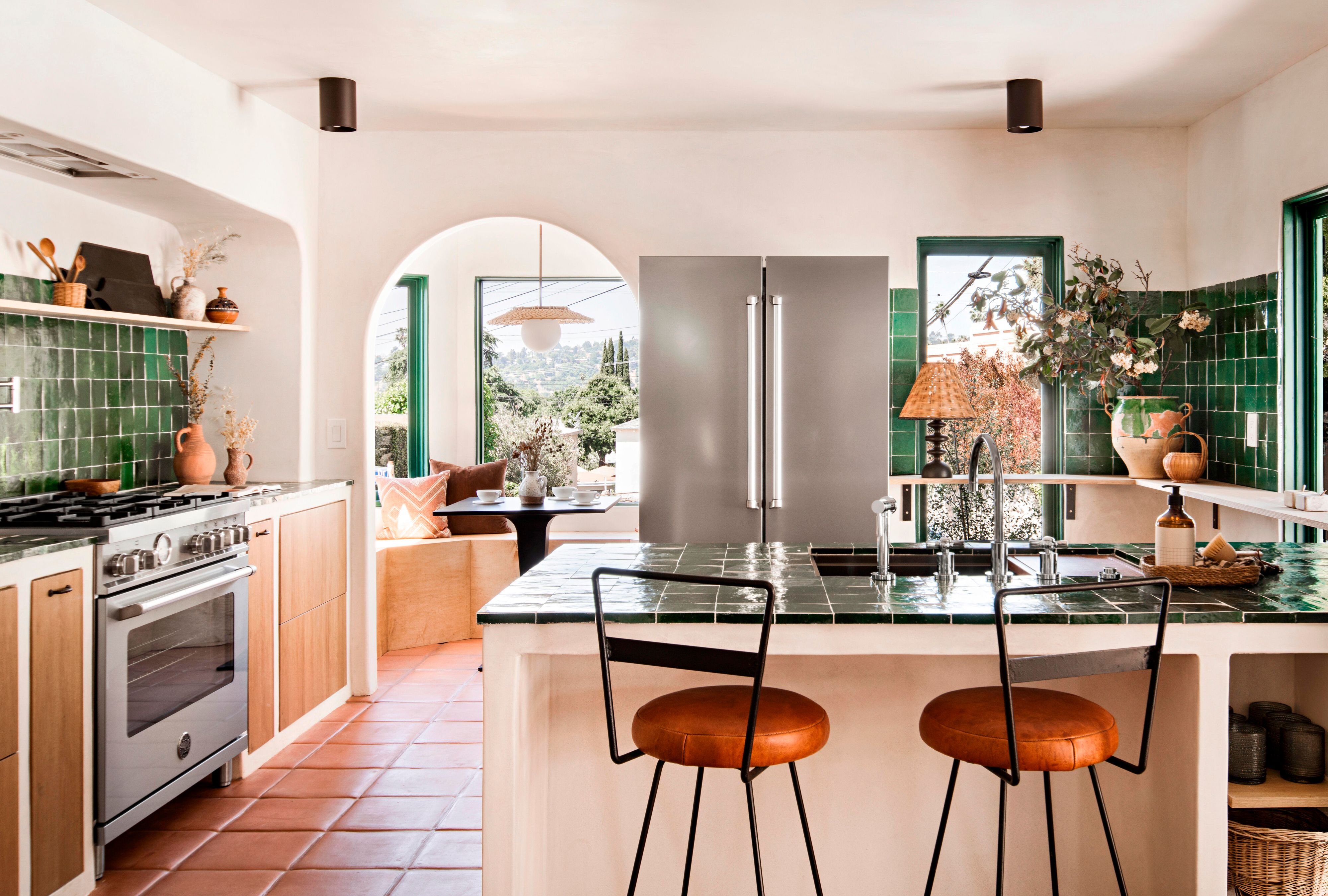
The kitchen is where many Spanish homes either become beautifully current or tragically confused. A good update respects the home’s warmth but improves function and simplifies the visual clutter. Flat or lightly detailed cabinet fronts, natural wood, painted cabinetry in warm neutral tones, stone counters, and handcrafted tile can all live happily together.
You do not need to recreate a fake hacienda movie set. Skip excessive ornament, overworked corbels, and themed decor that looks like it came free with a sangria pitcher. Instead, keep or introduce one or two classic Spanish-style elements, such as a plaster hood, an arched niche, a zippy patterned tile backsplash, or dark metal hardware. Then pair them with clean-lined cabinetry, better storage, and modern appliances that disappear into the composition rather than scream for attention.
5. Let Tile Be the Star in Small, Strategic Doses
Spanish style and tile go together like summer and iced coffee. But modern Spanish interiors use tile with more discipline. Rather than covering every possible surface in pattern, focus on the places where tile has the most impact: a stair riser, fireplace surround, kitchen backsplash, bathroom vanity wall, fountain, or porch stair.
Terracotta, handmade ceramic tile, encaustic-inspired pattern, and glossy field tile all work well. The trick is balance. If the tile is bold, keep the surrounding finishes calmer. If the room is otherwise simple, a patterned tile floor can carry the whole space. The best rooms do not feel under-decorated or over-decorated. They feel edited, which is a very modern virtue.
6. Swap Heavy Furniture for Better Silhouettes
Spanish interiors can skew visually heavy when every piece is dark, carved, oversized, and determined to have a dramatic backstory. One of the easiest updates is to keep the warmth but lighten the furniture profile. Choose pieces with slimmer legs, cleaner shapes, and more negative space. Upholstered seating can still be plush, but it does not need to look like it is preparing for a formal duel.
Mix in contemporary pieces made from natural materials such as oak, walnut, leather, boucle, linen, and iron. A sculptural coffee table, a simple bench, or a modern lounge chair can make an old room feel current without fighting the architecture. Spanish style modernizes beautifully when the furniture complements the room instead of trying to out-act the beams.
7. Update Lighting Like a Grown-Up
Lighting can modernize Spanish style faster than almost any finish. The key is choosing fixtures that echo the home’s character without becoming costume jewelry. Wrought iron still works, but it can be cleaner and more sculptural. A lantern still works, but maybe it is simpler, larger, and less fussy. A plaster sconce, forged-metal pendant, or linen-shaded chandelier can bring softness and polish to traditional rooms.
Also, add more layers of light than older homes often have. Use overhead lighting sparingly and thoughtfully. Then bring in sconces, table lamps, picture lights, and accent lighting that highlights arches, textured walls, or a tile fireplace. Spanish homes become magical at night when the light is warm and low. They become sad when a single ceiling can light the whole thing like a gymnasium.
8. Preserve Wood Beams, Doors, and Millwork Without Over-Restoring Them
Old wood is one of the great emotional anchors in a Spanish-style home. Ceiling beams, plank doors, corbels, cabinetry, and trim add age and gravity. Modernizing does not mean bleaching everything into Scandinavian submission. It means keeping the wood tones rich, repairing damage carefully, and avoiding finishes that feel plastic, orange, or fake-antique.
If the wood is dark, balance it with lighter walls, simpler furnishings, and better lighting. If the room needs brightening, refinish selectively rather than stripping every trace of age. There is a big difference between lovingly restored and suspiciously new. The second one rarely improves a house with history.
9. Treat Wrought Iron Like Jewelry, Not Wallpaper
Wrought iron is one of the defining details of Spanish style, but it should be used with restraint. Railings, stair balusters, window grilles, hardware, mirrors, and light fixtures can all benefit from iron accents. The problem starts when every room gets a heavy iron object as if the house has signed a sponsorship deal with a blacksmith.
Use iron where it feels architectural and functional. A beautifully shaped stair railing, a front gate, or a set of door pulls can say more than six random scrollwork accessories. Modern Spanish interiors keep the craftsmanship but trim the excess. The result feels elegant instead of overly themed.
10. Make the Bathrooms Simpler, Warmer, and More Tactile
Bathrooms are a great place to blend old-world texture with modern ease. A Spanish-style bathroom does not need carved cabinetry and twelve different border tiles to feel authentic. It can be quite minimal as long as the materials carry warmth. Think plaster walls, terracotta or stone-look floors, warm wood vanities, aged brass, handmade tile, and arched mirrors or niches.
Walk-in showers with simple glass panels, floating or furniture-style vanities, and restrained tile layouts help the room feel current. A single patterned tile floor paired with plain wall tile often works better than a dozen decorative moments competing for attention. The room should feel spa-like, but in a sun-drenched villa kind of way, not a tech showroom kind of way.
11. Upgrade Windows and Comfort Quietly
One of the smartest ways to modernize Spanish style is through invisible performance upgrades. Better weatherstripping, discreet insulation improvements, repaired or compatible replacement windows, and more efficient HVAC can dramatically improve how the house lives day to day. A beautiful home loses some of its romance when the living room is freezing in winter and roasting in summer.
The best updates do not advertise themselves. Keep window shapes and proportions that respect the original openings. Preserve casement character where possible. Hide modern comfort behind traditional-looking details. Smart thermostats, better ventilation, and energy upgrades are wonderful. Just let them be the backstage crew, not the lead actors.
12. Lean Into Indoor-Outdoor Living
Spanish-style homes are at their happiest when they blur the line between inside and outside. Courtyards, patios, loggias, garden paths, fountains, and shaded dining areas all feel incredibly on-brand. If your home has any connection to a yard, terrace, or even a tiny side patio, make it usable. That is not just a design move. It is a lifestyle move.
Add comfortable outdoor seating, potted citrus or olive trees, a tiled table, a simple fountain, or a dining setup under string lights or a pergola. Keep the materials consistent with the house so the transition feels natural. The more the home can flow into the outdoors, the more modern and livable it becomes without sacrificing its heritage. Spanish style was doing seamless indoor-outdoor living long before it became a hashtag.
13. Decorate With Fewer, Better Pieces
To modernize Spanish style, you often need less stuff, not more. Instead of filling every wall and tabletop, choose meaningful pieces that support the architecture: vintage pottery, framed art, woven textiles, a large mirror, a sculptural lamp, a great rug, a few old books, maybe one dramatic branch in a clay vessel that looks like it knows exactly what it is doing.
This is where modern restraint matters most. Let negative space exist. Let a plaster wall stay mostly bare. Let a vintage cabinet hold the room without piling decor on top of it like a nervous host overfeeding guests. Spanish style already has built-in charm. The decor should underline that, not interrupt it.
Final Thoughts
Modernizing Spanish style is really an exercise in respect. Respect the materials. Respect the architecture. Respect the fact that not every charming old detail needs to be “updated” into oblivion. When you simplify the palette, improve the function, edit the furnishings, and preserve the textures that make the home special, Spanish style becomes timeless in a whole new way.
The sweet spot is not ultra-traditional and it is not aggressively modern. It is warm, tailored, layered, and lived-in. It feels relaxed but thoughtful. It feels old enough to have stories and current enough to handle real life. And that is the whole point. A Spanish-style home should feel like it has aged gracefully, not like it woke up one morning and panic-bought a minimalist makeover.
Extended Experience: What It Really Feels Like to Modernize Spanish Style
In real life, modernizing a Spanish-style home is rarely one dramatic before-and-after moment. It is usually a series of small decisions that slowly change how the house feels. The first surprise for many people is that the home often does not need more personality. It needs more editing. Once the bulky furniture goes, once the too-gray paint disappears, once the lighting becomes warmer and more layered, the original architecture suddenly starts doing all the work it was trying to do the whole time.
One of the most common experiences is falling back in love with details that seemed inconvenient at first. A slightly uneven plaster wall that once looked old can start to feel luxurious when paired with a quieter palette. A dark beam that seemed too heavy can become the most beautiful part of the room once the surrounding finishes stop competing with it. Even an old tile floor that felt busy can look downright poetic after the rest of the space is simplified.
The kitchen is usually where the emotional battle happens. People want modern function, but they do not want to lose the house’s soul. The best results tend to come when homeowners stop asking, “How do I make this kitchen look new?” and start asking, “How do I make this kitchen feel like the best version of this house?” That shift changes everything. Suddenly, a plaster hood makes sense. Warm wood makes sense. A handmade tile backsplash makes sense. The room feels current, but it still belongs to the house.
There is also something deeply satisfying about modern comfort that does not announce itself. A repaired window that opens smoothly. Better insulation that keeps the bedroom comfortable. A bathroom that feels calm instead of crowded. Outdoor seating that finally makes the courtyard worth using. These upgrades may not be the flashy stars of a photo shoot, but they are often the changes people appreciate most once they start living in the space every day.
And then there is the lighting. People underestimate lighting until the first evening when the walls glow, the arches cast soft shadows, and the entire house suddenly feels cinematic in a way that no noon-time listing photo could ever capture. That is when modern Spanish style really clicks. It is not about stripping away history. It is about creating enough calm and clarity for the history to shine.
By the end of the process, the best homes do not feel “redesigned” so much as revealed. They feel lighter, easier, and more intentional. They still have warmth. They still have charm. They still have a little drama, because frankly Spanish style would be offended if it did not. But the drama feels elegant now, not cluttered. And that is the magic: the house still tells its original story, just with better flow, better function, and much better lamps.