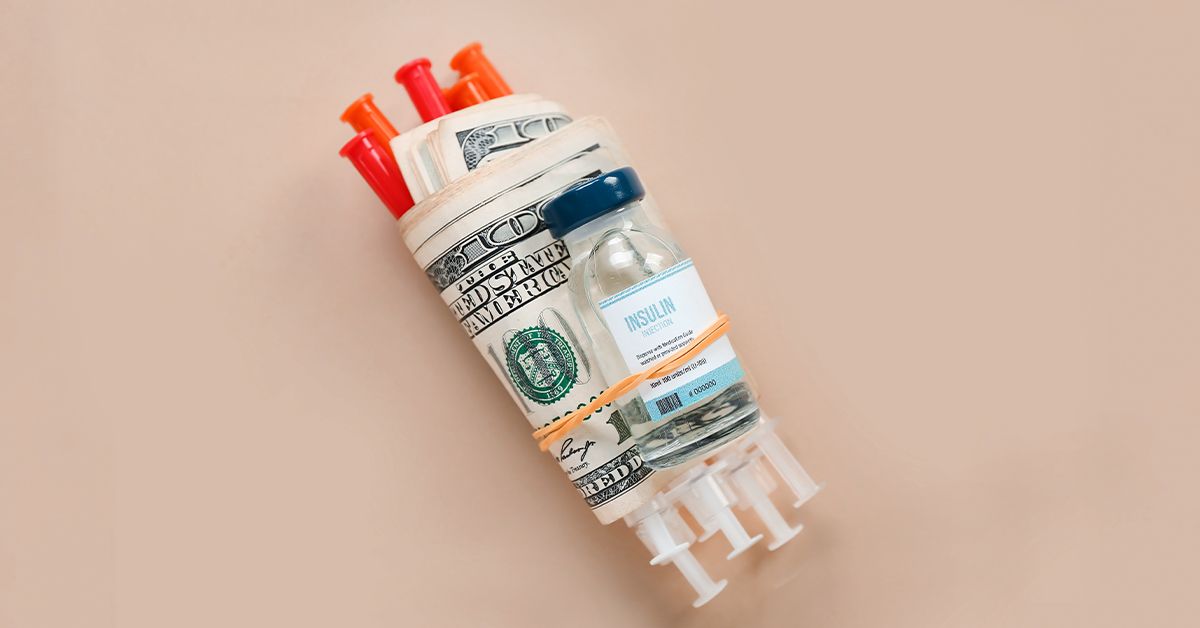
If you use insulin, you’ve probably had at least one “sticker shock at the pharmacy” moment.
It can feel surreal: a hormone discovered over 100 years ago, whose inventors sold the patent
for $1 so it would be accessible, now costs hundreds of dollars a month for many people in the
United States. Meanwhile, other countries pay a fraction of those prices for the exact same
medication.
So what’s going on? Is insulin made of liquid gold? Are the vials secretly filled with unicorn
tears? Not quite. The real story is much less magical and much more about market power,
patents, middlemen, and how the U.S. health-care system is built.
Insulin 101: From Miracle Drug to Multibillion-Dollar Business
When insulin was first used to treat diabetes in the 1920s, it turned what was essentially a
death sentence for people with type 1 diabetes into a manageable chronic condition. The
scientists who discovered insulin believed it belonged to the world, not a single company, so
they sold the patent for a symbolic price.
A century later, insulin is a massive global industry. Three pharmaceutical companies – Eli
Lilly, Novo Nordisk, and Sanofi – control the overwhelming majority of the world’s insulin
market by value. In many markets, including the U.S., they hold well over 90% of the market
share, which gives them enormous influence over pricing and which products get promoted.
At the same time, insulin in the United States has historically cost several times more than
in other countries. Studies comparing manufacturer prices show U.S. insulin prices averaging
many multiples of those in other nations, while overall brand-name drug prices in the U.S. are
also several times higher than abroad. In other words, the insulin price problem is part of a
bigger pattern – but it’s especially painful because insulin is literally life-sustaining.
Reason #1: A Near-Monopoly Market With Limited Competition
Insulin isn’t like generic blood pressure pills where dozens of manufacturers fight for
business. Instead, a handful of companies dominate the market. When only a few firms control
most of the supply, you get an “oligopoly” – a polite economic term that often translates to
“prices stay high because nobody wants a price war.”
These companies sell not just one insulin but whole product lines: rapid-acting, long-acting,
mixes, different delivery devices, and premium pen systems. Modern “analog” insulins – designed
to act more predictably in the body – tend to be the most heavily promoted, and they’re also
the most expensive. Without strong pressure from many competitors, prices can ratchet up over
time and stay there.
On paper, biosimilar insulins (similar to generics for biologic drugs) should help. In
practice, their uptake has been slower and more complicated than expected. The result:
longtime brand-name products still dominate, and their list prices remain high even when
cheaper alternatives technically exist.
Reason #2: Patent “Evergreening” Keeps New Competitors Out
You’d think a 100-year-old drug would be off-patent and cheap by now. The trick is that what’s
patented isn’t “insulin” as a concept; it’s specific formulations, delivery devices, and tweaks
to the molecule.
Over the years, insulin makers have repeatedly introduced slightly modified versions of existing
insulins – new analogs, new pens, new long-acting or ultra-rapid versions. Each tweak can be
paired with new patents, a strategy often called “evergreening.” The core idea is to extend the
period during which the product faces limited competition, so companies can keep charging high
prices for their “new and improved” versions.
Do these innovations sometimes offer real benefits – like smoother blood sugar curves or fewer
nighttime lows? Yes. But the timing of new product launches and patent filings also conveniently
stretches out how long companies can stay in a quasi-monopoly position on their flagship
insulins.
Reason #3: The Rebate Game and Pharmacy Benefit Managers (PBMs)
One of the most confusing parts of insulin pricing is the difference between the
list price and the net price.
- List price: The sticker price your pharmacy and insurance plan start from.
- Net price: What the manufacturer actually keeps after discounts and rebates.
In the U.S., middlemen known as pharmacy benefit managers (PBMs) negotiate
with drug manufacturers on behalf of insurers and employer health plans. Manufacturers offer
PBMs rebates – basically secret discounts – in exchange for better placement on the plan’s
formulary (the list of drugs the plan will preferentially cover).
Here’s the twist: the bigger the list price, the bigger the potential rebate. That creates a
perverse incentive for list prices to go up over time. PBMs and insurers get a cut of those
rebates, but people with diabetes paying out of pocket, or who haven’t met their deductible,
are often stuck paying based on the inflated list price.
So while companies argue that the net price of insulin has leveled off or even
decreased in recent years, that doesn’t help much when the copay at the pharmacy counter is
still tied to a sky-high list price.
Reason #4: The U.S. Lets Drug Companies Set Their Own Prices
In many countries, governments negotiate or regulate drug prices. National health systems can
say, “We’ll only pay this much, take it or leave it.” That doesn’t mean drugs are free, but it
does mean there’s a ceiling on how high prices can go.
In the United States, for decades there was essentially no direct government regulation of most
drug launch prices. Manufacturers could set whatever they thought the market would bear. Private
insurers and PBMs would bargain behind the scenes, but Medicare – the big public insurer for
seniors – was long restricted from fully negotiating prices for many drugs.
The result? Prescription drug prices in the U.S. are on average several times higher than those
in other wealthy countries. For brand-name drugs, the gap is even wider. Insulin is one of the
clearest, and most painful, examples of what happens when a life-essential medicine is priced
in a largely unregulated market.
Reason #5: Biosimilars and “Generics” for Insulin Are Complex
With many pills, once the patent expires, generic manufacturers can jump in, copy the drug, and
sell it for far less. Insulin is different because it’s a biologic – a large,
complex molecule produced in living cells, not a simple chemical compound you can whip up in a
standard lab.
That complexity makes it:
- More expensive and technically challenging to manufacture.
- Harder to prove “sameness” compared with the brand-name product.
- Subject to stricter regulatory pathways for approval.
Biosimilar insulins do exist, and they can save money. But even when they’re approved, barriers
like branding, prescriber habits, rebate deals, and formulary placement can all slow adoption.
If a health plan gets better rebates on a brand-name insulin, it might actually favor that
brand over a cheaper biosimilar.
Reason #6: Insurance Design Shifts High Costs to Patients
High insulin prices wouldn’t hurt as much if insurance fully shielded people from them. But
in many U.S. plans, especially high-deductible plans, people have to pay the full cost of
insulin out of pocket until they meet a deductible that can be thousands of dollars.
That means:
- At the start of each year, many people with diabetes face an “insulin cliff” when deductibles reset.
- Uninsured people often pay the full list price, which can be hundreds of dollars per vial or pen box.
- Even insured patients may pay percentage-based coinsurance tied to the list price, not the net price after rebates.
This cost-sharing structure hits people with diabetes especially hard because insulin isn’t optional.
If you need insulin, skipping doses is not some minor inconvenience – it’s dangerous, and for people
with type 1 diabetes, it can be life-threatening within days.
But Wait – Aren’t Insulin Prices Dropping Now?
The good news: there has been real movement in recent years, and average insulin prices have
started to fall. Analyses of insulin pricing show that after years of sharp increases, average
prices per unit have dropped substantially since around 2019, with some estimates suggesting
declines of over 40% by mid-2024. Legislative changes and public pressure played a major role.
A few key shifts:
-
Medicare insulin caps: The Inflation Reduction Act capped out-of-pocket costs for
insulin at $35 per month for people on Medicare prescription drug plans. That means millions of
seniors now have predictable, lower insulin costs. -
Manufacturer price cuts and caps: Major insulin makers have announced list price
reductions and programs that limit many patients’ costs to around $35 per month, at least for
certain products and under certain conditions. -
State-level caps: Many states have passed their own insulin copay caps for some
insurance plans, limiting monthly out-of-pocket costs (though these laws don’t help everyone,
especially the uninsured).
The catch? These changes don’t cover every patient or every type of insurance. People without
insurance, or those whose plans don’t fall under these caps, may still face very high prices at
the counter. And even with caps, the underlying list prices and rebate games are still there in
the background.
Who Feels the Pain the Most?
High insulin prices don’t impact everyone equally. The people most likely to struggle include:
-
People with type 1 diabetes, who rely on insulin every single day and can’t
switch to non-insulin drugs. -
People with type 2 diabetes who need insulin to keep their blood sugar in
range, especially those on multiple daily injections or insulin pumps. -
Young adults who have just aged off a parent’s insurance plan and may be
stuck in low-wage jobs with high-deductible coverage. - Uninsured or underinsured people, who see the full list price at the pharmacy.
-
People in coverage gaps – for example, those in states that haven’t expanded
Medicaid but don’t qualify for subsidies generous enough to make private plans affordable.
For these groups, high insulin costs don’t just mean tightening the budget – they can mean
rationing doses, skipping meals, running dangerously high blood sugars, or ending up in the
emergency room with diabetic ketoacidosis (DKA).
What You Can Do If Insulin Costs Are Crushing Your Budget
If you’re staring at a pharmacy bill that makes you want to lie down and scream into a pillow,
you’re not alone – and you’re not powerless. While the system absolutely needs big structural
changes, there are a few practical steps you can explore right now:
1. Talk Honestly With Your Prescriber
Tell your doctor or endocrinologist exactly what insulin is costing you and whether you’ve ever
rationed doses. They may be able to:
- Switch you to a lower-cost insulin that still meets your medical needs.
- Adjust your prescription to match what your insurance prefers (to avoid surprise denials).
- Provide samples temporarily while you work out a longer-term solution.
2. Ask About Manufacturer Savings Cards and Patient Assistance Programs
Most insulin manufacturers offer:
- Copay cards that limit out-of-pocket costs for people with commercial insurance.
- Patient assistance programs that provide free or very low-cost insulin to
people who meet income and insurance criteria.
These programs can be frustrating to navigate (hello, paperwork), but they can dramatically slash
monthly costs if you qualify.
3. Look Into State Caps, Clinics, and Nonprofit Options
Depending on where you live and what insurance you have, you may benefit from:
- State laws that cap insulin copays for certain insurance plans.
- Community health centers or safety-net clinics that offer discounted medications.
- Nonprofit pharmacies and advocacy groups that help people access insulin at a reduced price.
It’s worth asking healthcare providers, diabetes educators, and local advocacy groups what
options exist in your area.
4. Never Ration Insulin Without Medical Guidance
This part is critical: do not quietly cut your dose in half or skip injections because of cost
without talking to a medical professional. That can lead to severe complications and emergency
care that ends up costing far more – financially and physically – than the insulin itself.
Always loop in your healthcare team if you’re having trouble affording your medication. Money
stress is real, but so is the danger of uncontrolled diabetes.
What Needs to Change Systemwide?
While individual strategies can help, the root problem is systemic. To make insulin sustainably
affordable, many experts point to changes like:
- Greater price transparency across the entire supply chain, including PBMs.
- Stronger competition from biosimilar and lower-priced insulins.
- Limits on how rapidly list prices can rise each year.
- Permanent caps on monthly insulin costs across all types of insurance, not just Medicare.
- Potential reforms that let major payers negotiate directly on prices.
None of these changes are simple or politically painless. But the public pressure around insulin
pricing has already pushed lawmakers and companies to act – and that momentum can continue.
Real-World Experiences With High Insulin Costs
Numbers are important, but if you really want to understand why insulin prices matter, listen to
the people who live this reality every day. While the stories below are composite examples, they
reflect what many families actually face.
“Do I Pay Rent or Buy Insulin?” – The Young Adult With Type 1 Diabetes
Imagine a 24-year-old just out of college, working an entry-level job with a high-deductible
insurance plan. She has type 1 diabetes and uses both a long-acting basal insulin and a
rapid-acting insulin for meals. On paper, she’s insured. In practice, she has to pay the full
list price for her insulin until she hits a deductible of several thousand dollars.
In January, when the deductible resets, her insulin bill could easily run into hundreds of
dollars a month. At the same time, rent, student loans, gas, and groceries all demand a slice
of the same too-small paycheck. When something unexpected comes up – a car repair, a move, a
medical bill – insulin can start to look like the one expense she might try to “stretch.”
Maybe she takes a little less at meals. Maybe she pushes her long-acting dose later than she
should. Her blood sugars creep up, but she tells herself it’s temporary. This isn’t just an
economic decision; it’s a daily emotional tug-of-war between financial survival and physical
safety.
“We Didn’t Expect to Budget for a Chronic Illness” – The Family With a Newly Diagnosed Child
Now picture a family whose 8-year-old is suddenly diagnosed with type 1 diabetes after a scary
trip to the ER. Overnight, they’re thrown into a world of carb counting, injections, blood
sugar checks, school care plans – and a whole new monthly bill for insulin, supplies, and
doctor visits.
The parents may both work, but their insurance plan has a significant deductible and
coinsurance. Every January becomes “the expensive season,” where they have to plan for a big
spike in out-of-pocket costs. Vacations, home repairs, and college savings get delayed or
downsized because insulin isn’t negotiable.
When manufacturers or lawmakers announce new $35 caps, this family feels genuine relief. Their
stress doesn’t disappear, but the difference between a $300 refill and a $35 refill can mean
the difference between scrambling and breathing.
“Retirement Wasn’t Supposed to Look Like This” – The Senior on Fixed Income
For older adults on Medicare, the recent insulin cost caps are a game changer. Before those
caps, some retirees faced unpredictable insulin costs throughout the year, especially if they
landed in coverage gaps where their share of drug costs jumped.
One retired person with type 2 diabetes might be living mostly on Social Security and a small
pension. Each time they picked up insulin, they worried about what other bills might go unpaid.
Now, with a predictable monthly cap, it becomes easier to budget. They still see high list prices
on the receipt and may still be angry about the system, but they no longer have to choose between
groceries and their diabetes medication quite as often.
The Emotional Weight Behind the Dollar Signs
High insulin prices don’t just drain bank accounts; they drain mental energy. People with diabetes
are already managing numbers all day: carbs, units, correction factors, CGM graphs, A1C targets.
Add in the constant question of “Will I be able to afford my next refill?” and it becomes a
chronic stressor on top of a chronic condition.
That’s why advocacy is so fierce in the diabetes community. The #insulin4all movement, patient
stories shared at legislative hearings, and social media campaigns have all helped bring hidden
struggles into the spotlight. The recent price cuts, caps, and policy changes didn’t appear out
of thin air; they happened because people living with diabetes refused to quietly accept a
system that made survival dependent on what was in their wallet.
The bottom line: insulin is expensive in the United States because of how the drug market and
insurance system are structured – not because it has to be that way. And while progress is being
made, the work isn’t done until everyone who needs insulin can afford it, every single month,
without fear.
The Bottom Line
Insulin’s high price tag is the result of a perfect storm: concentrated market power, patent
strategies that extend monopolies, behind-the-scenes rebate deals, a lightly regulated pricing
environment, and insurance designs that shift big costs onto people who can’t simply “opt out”
of taking their meds.
Recent reforms – from Medicare’s $35 caps to manufacturer price cuts and state-level laws – are
meaningful steps. Average prices are trending down, and more patients are seeing relief at the
pharmacy counter. But as long as some people still have to ration the medicine that keeps them
alive, the job isn’t finished.
Insulin is a century-old miracle that turned diabetes from a fatal disease into a manageable
condition. In a just system, the miracle wouldn’t be finding a way to pay for it – it would be
that no one has to worry about the cost in the first place.