A good kitchen tool does not need a theme song, a Bluetooth connection, or an inspirational quote engraved on the handle. It needs to show up, slide under foo is the quiet appeal of a stonewashed steel spatula: it combines the durability of stainless steel with a softer, deliberately lived-in appearance that feels less like laboratory equipment and more like something you would happily leave on the counter.
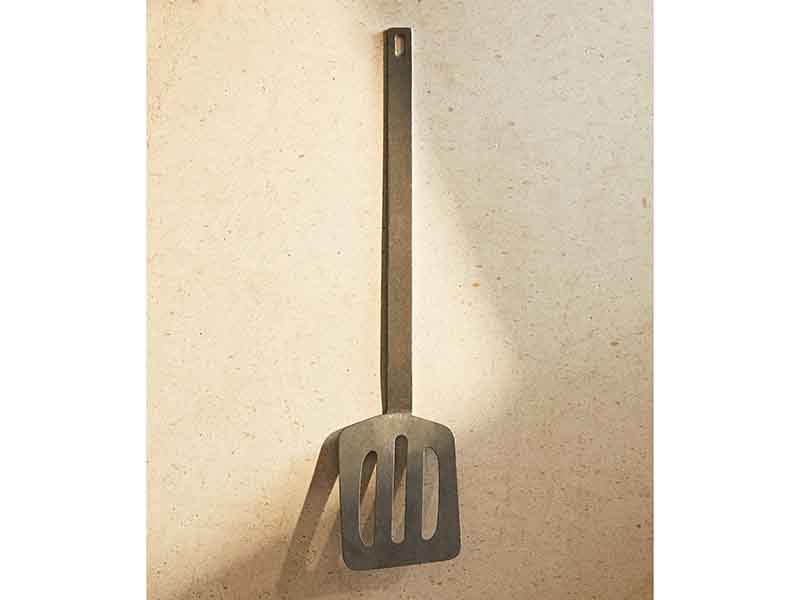
The Stonewashed Steel Spatula is a simple object with a surprisingly broad job description. It can help flip burgers, lift roasted vegetables, turn fish, move cookies from a baking sheet, and rescue a pancake before it becomes modern art. A listed version of this utensil is made from 100% stainless steel and measures about 13.6 inches long by 3 inches wide, giving it enough reach for stovetop cooking without turning it into a medieval sword.
That balance matters. A spatula should feel sturdy, but it should not feel as though you are steering a canoe paddle through a frying pan. The best steel turners tend to combine a thin working edge with enough strength to lift heavier foods. The result is a kitchen utensil that looks understated, works hard, and does not demand a drawer full of backup tools.
What Is a Stonewashed Steel Spatula?
A stonewashed steel spatula is, at its core, a stainless-steel cooking turner with a muted, softened, or weathered-looking finish. Instead of the bright mirror polish found on many stainless utensils, stonewashed steel has a more relaxed visual character. It can look slightly matte, brushed, softened, or gently worn from day one.
That does not make it old. It simply makes it look less obsessed with its own reflection.
The design works especially well in kitchens that lean toward natural wood, linen, ceramic tableware, dark stone, brushed metal, or farmhouse-inspired materials. A shiny utensil can look sterile in a warm kitchen. A stonewashed steel spatula feels more at home beside a wooden cutting board, a cast-iron skillet, or a stack of handmade plates.
Stonewashed Finish vs. Everyday Wear
It is important not to confuse a stonewashed appearance with damage. Normal signs of use may still appear over time, especially if the spatula is used with cast iron, carbon steel, grill grates, or heavy baking sheets. Minor marks are part of life in a working kitchen. A kitchen utensil that has actually cooked a few dinners should not be expected to look like it has been stored in a museum vault.
The advantage of a softer steel finish is that small fingerprints and light scratches may be less obvious than they are on highly polished stainless steel. This makes the utensil feel more forgiving. You can use it, wash it, hang it up, and move on with your life instead of inspecting it under theatrical lighting.
Why Stainless Steel Makes Sense for a Spatula
Stainless steel remains one of the most practical materials for cooking utensils because it is strong, durable, easy to clean, and capable of handling demanding tasks. A steel spatula is particularly useful when you need a thin edge that can slide under food without crushing it.
Think about a burger that has formed a crust on a hot skillet. A flimsy plastic turner may bend at the worst possible moment, leaving the burger half-flipped and emotionally confused. A steel spatula gives you leverage. It can scrape, lift, and turn with more confidence.
It is also useful for foods that are delicate but not fragile enough to require a ceremonial procession. Fish fillets, crispy-skinned salmon, fried eggs, pancakes, grilled cheese sandwiches, potato cakes, quesadillas, and tofu slabs all benefit from a thin spatula edge that can get underneath without excessive poking or prodding.
The Value of a Thin Edge
The edge of a spatula matters more than its marketing copy. A broad, thick utensil may be strong, but it can push food around instead of slipping beneath it. A thinner edge creates a cleaner entry point between food and pan.
That is why many cooks reach for metal turners when working with stainless-steel skillets, cast iron, carbon steel, sheet pans, griddles, and grill surfaces. The tool can slide beneath browned food, help release stubborn bits, and lift a portion without turning dinner into a construction project.
Strength Without Excessive Bulk
A well-designed steel spatula should not be rigid like a paint scraper, nor should it bend like a sad piece of aluminum foil. The sweet spot is controlled flexibility. You want enough give to glide under food, plus enough strength to lift a burger, transfer a roasted chicken thigh, or remove a stubborn cookie from the baking sheet.
A 3-inch-wide head is useful because it is broad enough for everyday foods while still nimble in a standard frying pan. It will not replace an oversized grill turner for a mountain of pancakes, but it can comfortably handle most single-portion cooking tasks.
Where a Stonewashed Steel Spatula Performs Best
The stonewashed finish may be about appearance, but the steel construction is all business. This type of spatula is most useful on durable, uncoated cooking surfaces.
Stainless-Steel Skillets
Stainless-steel pans and steel spatulas are natural partners. When food is properly browned, a thin metal edge can slide beneath it cleanly. The key is patience. Let proteins develop a crust before trying to move them. If a piece of fish, chicken, or tofu resists the spatula, it may simply need another minute to release naturally.
Use moderate heat, preheat the pan, add oil or butter when appropriate, and avoid rushing the flip. A spatula cannot negotiate with food that has not finished cooking on its first side.
Cast Iron and Carbon Steel
Cast iron and carbon steel are excellent homes for a stainless-steel spatula. These surfaces can handle a metal turner, and the firm edge is especially useful for lifting browned potatoes, scraping up smashed burgers, flipping cornbread, or turning vegetables that have developed a bit of char.
For smash burgers, a steel spatula is practically part of the plot. It helps loosen the crust from the skillet so that the browned surface stays attached to the burger rather than becoming a lonely meat sticker on the pan.
Sheet Pans and Baking Trays
A stonewashed steel spatula also earns its keep away from the stove. Use it to lift roasted vegetables, transfer cookies, serve brownies, loosen pizza slices, or move baked quesadillas from a sheet pan. The thin edge is particularly helpful when food has caramelized slightly against the metal.
For bakers, it can become the unexpected MVP. It is much easier to retrieve a delicate cookie with a thin spatula than with a thick plastic turner that approaches the job like a snow shovel.
When Not to Use a Steel Spatula
Every kitchen tool has a boundary. A steel spatula is not the right choice for traditional nonstick cookware, ceramic nonstick pans, or enameled surfaces that can be scratched by metal utensils.
For those pans, use silicone, nylon, rubber, or wood utensils instead. A metal edge may be strong, but strength is not a virtue when it is carving tiny scratches into your favorite nonstick skillet. That is not cooking. That is accidental renovation.
Keep a stonewashed steel spatula for stainless steel, cast iron, carbon steel, griddles, baking sheets, and grills. Keep a silicone turner nearby for nonstick cookware. The two tools can coexist peacefully, like siblings who only argue when someone is making eggs.
How to Use a Steel Spatula Like You Know What You Are Doing
Owning a quality spatula does not automatically make every flip elegant. It does, however, improve your odds.
1. Let Food Release Before You Force It
When cooking proteins in stainless steel or cast iron, resist the urge to constantly poke and flip. Food often sticks briefly before it browns and releases. Give it time. Once the surface has developed color, the spatula should slide underneath with far less resistance.
2. Slide Low and Flat
Approach food from the side, keeping the spatula as close to the cooking surface as possible. A low angle helps the edge get underneath without tearing the food. This is particularly important for eggs, fish, pancakes, and delicate potato cakes.
3. Use the Whole Blade
Do not balance a burger on the very tip of the spatula unless you enjoy suspense. Slide the blade under as much of the food as possible, then lift with a steady wrist. The wider support reduces breakage and makes the flip feel controlled instead of chaotic.
4. Scrape Gently When Needed
A steel spatula can help loosen browned residue from a sturdy pan, but do not attack the cooking surface like you are removing wallpaper. Use a controlled motion. The goal is to release food, not audition for a demolition show.
How to Care for a Stonewashed Steel Spatula
Stainless steel is low-maintenance, but low-maintenance is not the same as no-maintenance. A few simple habits will keep a stonewashed steel spatula looking good and performing well.
Wash It Soon After Cooking
Rinse away food residue after use, then wash with warm water, mild dish soap, and a soft sponge. Dried-on cheese, sugar, egg, and sauce are all far easier to remove before they decide to become permanent residents.
Dry It Thoroughly
After washing, dry the spatula with a clean towel instead of leaving it wet in the sink or draining rack for hours. Stainless steel resists corrosion, but drying promptly helps prevent water spots and keeps the finish looking more even.
Avoid Aggressive Abrasives
Skip harsh scouring pads, steel wool, and abrasive powders unless the manufacturer specifically recommends them. These can alter the appearance of the stonewashed finish and create uneven scratch patterns. A soft sponge or nonabrasive scrubber is usually enough for everyday cleanup.
Check the Handle and Edges
Every so often, inspect the utensil for sharp burrs, loose handle components, or bent edges. A spatula should feel smooth in the hand and stable at the blade. If it develops a rough edge, do not keep using it as though the kitchen is an obstacle course.
How to Choose the Right Stonewashed Steel Spatula
Not every stainless-steel spatula is built for the same job. Before buying, consider how you cook most often.
- For burgers and grilled sandwiches: Choose a wider, sturdier turner with a firm blade.
- For fish, eggs, and pancakes: Look for a thinner, more flexible edge that can slide beneath delicate food.
- For baking sheets: Pick a spatula with enough length to comfortably reach across a hot tray.
- For small kitchens: A medium-width all-purpose spatula can replace several niche tools.
- For design-focused kitchens: A stonewashed or matte steel finish pairs well with wood, ceramic, linen, and brushed-metal accents.
Also consider the handle. It should feel secure without being oversized. A beautiful spatula that feels awkward in your hand will eventually become drawer decoration, where it can spend its days judging you beside the avocado slicer.
Stonewashed Steel Spatula as a Kitchen Styling Detail
Kitchen tools do not need to be hidden. A thoughtfully designed stonewashed steel spatula can look good in an open utensil crock, on a wall rail, or beside a stove. Its finish helps bridge the gap between utilitarian equipment and tabletop style.
Pair it with olivewood spoons, matte black tongs, a stoneware utensil holder, or neutral linen towels for a relaxed and cohesive look. The metal adds a hint of structure without making the kitchen feel cold.
This is especially useful in small kitchens, where everything is visible. When your tools live on the counter, they become part of the room. A stonewashed steel spatula feels intentional rather than accidental, which is a surprisingly nice trait for something that spends much of its life flipping onions.
Why This Simple Tool Belongs in a Real Kitchen
A stonewashed steel spatula is not trying to be revolutionary. It is trying to be useful, durable, attractive, and easy to reach for. That is enough.
Its steel construction makes it capable of handling high-heat cooking on sturdy pans. Its thin profile helps with turning and lifting. Its subdued finish offers a softer alternative to ultra-polished utensils. And its everyday versatility means it can move from breakfast eggs to dinner burgers to late-night cookies without needing an instruction manual.
In a kitchen full of single-purpose gadgets, a dependable steel spatula is refreshingly honest. It does one job extremely well, then quietly discovers five more jobs while everyone else is busy searching for the right attachment.
Real-Kitchen Experiences With a Stonewashed Steel Spatula
Note: The following experience section uses composite, true-to-kitchen scenarios rather than claiming that every cook will use the tool in exactly the same way.
The first time many cooks reach for a stonewashed steel spatula, it is usually for something ordinary: a fried egg, a grilled cheese sandwich, or a burger that looks far more confident in the pan than it does on the plate. The surprise is not that the spatula works. The surprise is how quickly it becomes the utensil you grab without thinking.
Imagine a Saturday morning. The kitchen is not spotless. There is flour on the counter, a coffee mug near the sink, and someone has already asked whether pancakes count as breakfast or dessert. A thin steel spatula slides beneath the first pancake more easily than expected. It does not mash the edges. It does not fold the pancake into a regrettable taco. It lifts, turns, and lands the pancake back in the pan with the calm confidence of a tool that has seen worse.
Later, the same spatula moves to lunch duty. A grilled cheese is browning in a cast-iron skillet, and the cheese has begun its slow escape route toward the pan. The steel edge slides under the sandwich, catching the crisp crust without tearing it. The flip is not perfect, because nothing involving melted cheese is ever fully under human control, but it is good enough. The sandwich survives. The cheese remains mostly inside. Victory.
Dinner is where the spatula earns its long-term residency. A burger hits a hot skillet, presses down, and forms a dark browned crust. This is the moment for a steel turner. The blade gets underneath with a firm scrape, lifting the burger and much of its hard-won crust in one motion. A softer spatula might bend. A thicker one might shove the burger around. The steel spatula simply does the work.
On another night, it is roasted vegetables. Carrots, potatoes, and onions have caramelized against a sheet pan, creating the kind of browned edges that make dinner taste like someone tried. The spatula slides under a cluster of vegetables and transfers them to a serving platter without leaving half the good bits behind. This may not sound thrilling, but anyone who has tried to pry roasted sweet potatoes off a baking tray with a fork understands the emotional value of this moment.
Then there are the quieter experiences: lifting cookies while they are still warm, flipping a quesadilla without spilling its contents, nudging crispy tofu into a bowl, or scraping a small pile of sautéed mushrooms onto toast. The spatula becomes less of a special tool and more of an extra hand.
The stonewashed finish adds something subtle to these routines. It does not demand attention. It does not gleam loudly under kitchen lights. It simply looks comfortable being used. Over time, that may be its greatest appeal. A kitchen tool should not make you nervous about using it. It should look better because it has been part of real meals, real cleanup, and real evenings when dinner was either a masterpiece or cereal.
That is the practical charm of a stonewashed steel spatula. It does not promise to transform you into a celebrity chef. It just makes everyday cooking feel a little more capable, a little more put together, and considerably less likely to end with a pancake stuck to the ceiling.
Conclusion
A stonewashed steel spatula is a small upgrade with a large range of uses. It offers the dependable strength of stainless steel, a thin edge for controlled flipping and lifting, and a muted finish that works beautifully in modern, rustic, and design-conscious kitchens.
Use it on stainless steel, cast iron, carbon steel, baking sheets, and grill-friendly cookware. Keep it away from coated nonstick surfaces. Wash it gently, dry it promptly, and let the subtle finish collect the small signs of a kitchen that is actually used.
For cooks who want fewer gadgets and better everyday tools, this is the kind of spatula that earns its place. It flips, lifts, scrapes, serves, and looks good doing it. Not bad for a flat piece of steel with excellent career prospects.