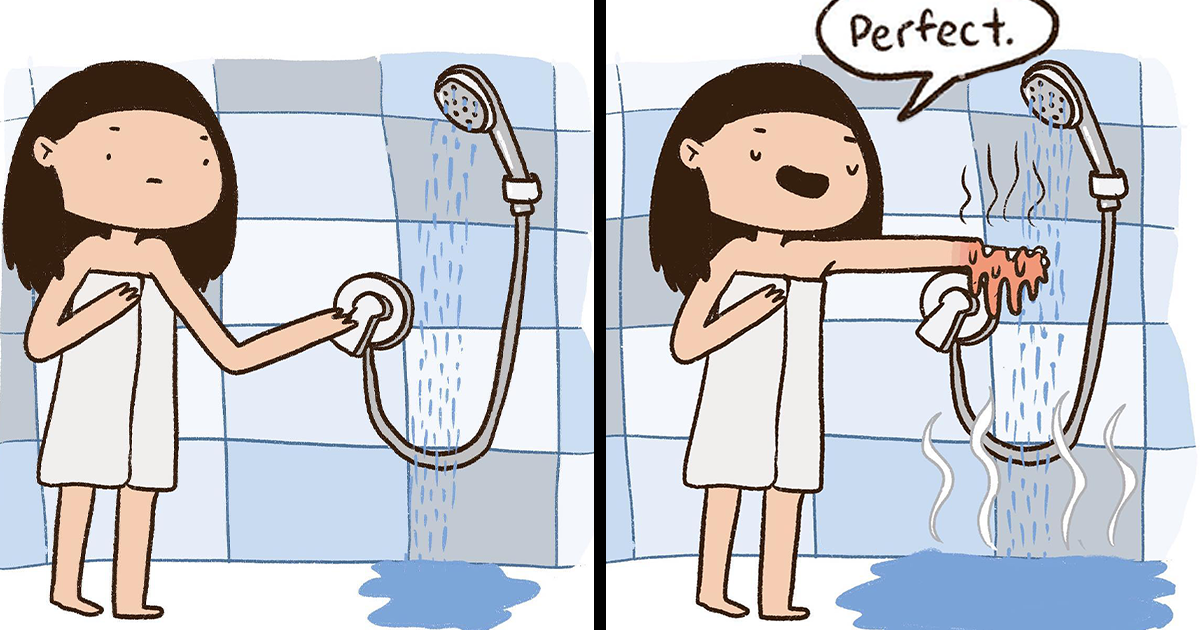
Some artists paint dramatic sunsets. Others sculpt heroic figures. Erica Cheah, the creator behind Wyncomic, looks at procrastination, social awkwardness, bad moods, mysterious food cravings, and the strange decision to check a phone five minutes after putting it down. Then she turns those ordinary disasters into colorful comedy.
That is the charm of relatable comics about everyday life: they recognize that adulthood is rarely one grand adventure. More often, it is a series of tiny negotiations with alarms, deadlines, laundry, expectations, and a brain that suddenly remembers an embarrassing moment from 2014.
Cheah’s slice-of-life illustrations do not merely produce quick laughs. They make readers feel recognized. Beneath the exaggerated expressions and punch lines is a reassuring message: your habits may be ridiculous, but they are not uniquely ridiculous.
Meet the Artist Behind Wyncomic
Wyncomic was created by Malaysian artist Erica Cheah, who was studying business when her work received wider online attention. Cheah began experimenting with digital drawing after getting her first drawing tablet at age 14. She has cited Malaysian comics, newspaper strips, and humorous artists as important creative influences. Her favorite material comes from silly stories, insecurities, boredom, and the confusing experience of simply trying to function like a responsible person.
Her approach belongs to a long tradition of artists using sequential pictures to document personal life and comment on modern culture. Comics can compress an entire emotional journey into a handful of panels: confidence, confusion, poor judgment, immediate consequences, and perhaps a snack. Independent comic creators have frequently used autobiographical storytelling to examine ordinary experiences that larger, more dramatic narratives overlook.
Wyncomic succeeds because the drawings are specific enough to feel personal but familiar enough to feel universal. A character may be dealing with college, productivity, friendship, appearance, or an unexplained emotional collapse. Readers recognize the pattern even when the details differ from their own lives.
35 Everyday Struggles Wyncomic Understands Perfectly
1. Being Asked a Question You Are Absolutely Not Prepared to Answer
Someone assumes you are knowledgeable. You nod thoughtfully while your brain searches an empty filing cabinet. The performance continues until you can escape or confidently say something that sounds approximately factual.
2. Wanting to Stay Home Forever
Going out sounds exciting when plans are made. When the day arrives, the couch becomes a luxury resort, pajamas become formalwear, and leaving the house feels like an international expedition.
3. Temporarily Rejecting Education
Studying begins with optimism, organized notes, and a fresh beverage. Ten minutes later, the textbook has become a personal enemy and dropping everything to raise goats suddenly seems like a practical career strategy.
4. Negotiating With Productivity
The productive version of you creates an ambitious schedule. The actual version completes one small task, feels heroic, and decides that recovery will require three episodes of television.
5. Waking Up in a Bad Mood for No Clear Reason
Nothing terrible has happened, yet every sound is offensive. A spoon falls. Someone breathes loudly. The universe has apparently declared war, and the only reasonable response is dramatic silence.
6. Hosting a Full Conference Inside Your Brain
One thought wants to work. Another wants food. A third is replaying an awkward conversation. The meeting has no agenda, no moderator, and no possibility of reaching a useful conclusion.
7. Preparing for a Task Instead of Doing It
You arrange the desk, select a playlist, clean a mug, adjust the lighting, and research better organizational methods. The preparation is flawless. Unfortunately, the task remains untouched.
8. Checking the Phone Without Knowing Why
The phone is unlocked automatically. No important notification appears, so you close it. Seconds later, your hand repeats the ritual, apparently hoping the device has developed a surprise plot.
9. Losing an Hour to “Just One More” Video
A short break begins with a harmless clip and ends with detailed knowledge of miniature cooking, celebrity homes, deep-sea creatures, and a controversy involving two strangers you will never meet.
10. Doomscrolling Past the Point of Enjoyment
Scrolling sometimes continues long after the content stops being entertaining. Harvard Health has noted that repeated exposure to distressing material can contribute to anxiety, sleep problems, muscle tension, and difficulty reconnecting with slower offline activities.
11. Comparing Real Life With Someone Else’s Highlight Reel
Your Tuesday contains reheated leftovers and unanswered emails. Someone online appears to be exercising beside an infinity pool while running a successful company. Conveniently, their panic, laundry, and credit-card statement remain outside the frame.
12. Taking Forty Photos to Post One
The first photo looks awkward. The next twenty look more awkward. Eventually, one image is approved after cropping, adjusting, rotating, brightening, reconsidering, and asking a friend who says they all look identical.
13. Sending a Message and Immediately Regretting It
A perfectly normal text becomes suspicious the moment it is delivered. Was the punctuation too cold? Was the joke understandable? Should there have been an emoji? A three-word reply now requires forensic analysis.
14. Reading Too Much Meaning Into a Delayed Response
Five minutes of silence means the person is busy. Fifteen minutes means they are reconsidering the friendship. An hour means you may need to leave the country and assume a new identity.
15. Opening the Refrigerator Without a Plan
You inspect the shelves, discover nothing new, close the door, and return moments later. Apparently, the refrigerator is expected to generate dessert when no one is watching.
16. Craving a Snack Immediately After Eating
The stomach may be full, but the emotional support department has submitted a separate request. Dinner satisfied hunger; it did not address the urgent need for something crunchy.
17. Attempting to Eat “Just One”
The phrase “just one” is a ceremonial statement made before opening a package. It has no legal authority and should never be interpreted as a reliable prediction of future behavior.
18. Starting a Healthy Lifestyle on Monday
Monday promises vegetables, exercise, hydration, and discipline. Sunday night, however, becomes a farewell banquet for every food that allegedly will never be eaten again.
19. Believing a New Outfit Will Create a New Personality
A stylish purchase seems capable of producing confidence, organization, and social charisma. Then it arrives, and you remain the same persononly now with a jacket that requires special cleaning.
20. Arguing With the Mirror
Some days the reflection looks excellent. On other days, the mirror is clearly using poor judgment, hostile lighting, and an unauthorized wide-angle lens.
21. Discovering That Comfort Always Wins
The fashionable outfit is impressive for approximately 30 minutes. Then the waistband becomes political, the shoes begin making threats, and loose clothing starts calling like a concerned relative.
22. Rehearsing a Conversation That Never Happens
You prepare clever answers, elegant arguments, and a devastating final sentence. The real conversation lasts eight seconds and ends with you saying, “Okay, sounds good.”
23. Remembering the Perfect Comeback Several Hours Late
The brain refuses to help during the actual exchange. Later, while brushing your teeth, it delivers a brilliant response with excellent timing to an audience of shampoo bottles.
24. Wanting Attention and Privacy at the Same Time
You would like friends to check on you, but you do not want to explain anything. Ideally, they should recognize the problem telepathically, deliver food, and avoid asking follow-up questions.
25. Canceling Plans and Then Feeling Left Out
Staying home feels wonderful until photos appear. Suddenly, the gathering you deliberately avoided looks like the defining social event of the century.
26. Trying to Act Normal Around a Crush
Basic motor skills disappear. Words arrive in the wrong order. A routine greeting becomes a confusing speech, and walking away without colliding with furniture counts as a major victory.
27. Overanalyzing a Compliment
Someone says something kind. Instead of accepting it, the brain investigates motive, wording, tone, historical context, and the possibility that the compliment was intended for someone standing behind you.
28. Needing Social Interaction and Recovery From Social Interaction
Time with friends can be joyful and exhausting. After several hours of conversation, even the most sociable person may require silence, comfortable clothes, and absolutely no additional decisions.
29. Discovering That Adulthood Is Mostly Maintenance
Laundry returns. Dishes return. Dust returns. Bills return with remarkable punctuality. Adulthood is less like reaching a destination and more like repeatedly defending a small territory from disorder.
30. Buying Organizational Tools Instead of Getting Organized
A planner, storage box, label maker, or productivity app creates a thrilling sense of progress. Soon, the new organizational system joins the previous systems in an organized collection of abandoned solutions.
31. Waiting Until Panic Becomes Motivation
A distant deadline inspires no action. An approaching deadline produces mild concern. A deadline standing directly behind you with a weapon unlocks extraordinary speed and concentration.
32. Turning One Small Mistake Into a Personal Biography
You forget an attachment or spill a drink. Instead of treating it as an ordinary error, the brain presents a documentary explaining why you have always been a disaster.
33. Trying to Sleep While the Brain Reviews Everything
Bedtime is when forgotten responsibilities, imaginary arguments, future disasters, and unusual philosophical questions request immediate attention. During the day, the same brain could barely remember a password.
34. Staying Awake Because Personal Time Feels Too Precious
You know tomorrow will be difficult without sleep, but going to bed feels like surrendering the only quiet part of the day. One more episode becomes two, and morning arrives with paperwork.
35. Pretending Everything Is Fine Through Humor
The final everyday struggle is also Wyncomic’s greatest strength: turning confusion into a joke. Humor does not erase a problem, but it can make the problem feel less isolating and slightly easier to carry.
Why These Relatable Comics Feel So Personal
Stress is not limited to dramatic emergencies. It can appear as irritability, forgetfulness, low energy, disrupted sleep, indecision, or the feeling that minor responsibilities require unreasonable effort. Health organizations describe stress as a normal response to challenges, while also warning that prolonged stress can affect physical and emotional well-being.
Wyncomic makes these invisible experiences visible. Procrastination becomes a character negotiation. Insecurity becomes a theatrical villain. Social anxiety becomes a complicated mission involving eye contact and several possible escape routes.
This exaggeration is important. It creates enough distance for readers to laugh at a behavior they may normally criticize. Research on procrastination, for example, increasingly describes it as an attempt to avoid unpleasant emotions associated with a tasknot simply laziness. Unfortunately, avoiding the task often creates additional stress later, which is why the cycle is so easy to recognize in comedy.
Social media also supplies endless material for modern slice-of-life comics. Online spaces can encourage creativity and connection, but they can also create pressure, comparison, drama, and fear of exclusion. Studies have associated upward social comparison with lower self-esteem and reduced satisfaction, particularly when people compare their ordinary lives with carefully presented versions of other people’s lives.
Then there is laughter. A comic does not provide therapy or solve chronic stress, but humor can interrupt tension and help people reinterpret an uncomfortable experience. Reviews of laughter research have reported associations with reduced cortisol and improvements in mood or perceived stress, although humor should be understood as a supportive coping tool rather than a magical medical treatment.
Personal Experiences: When Everyday Life Starts Feeling Like a Comic Strip
Anyone who has tried to become more productive has probably lived through a scene worthy of Wyncomic. You wake up determined to transform your life. The schedule is reasonable: answer emails, exercise, organize the room, finish a project, cook something healthy, and go to bed early.
Before beginning, you make coffee. While drinking it, you check one notification. The notification leads to a video, the video leads to another account, and suddenly you are learning why medieval Europeans were suspicious of forks. This information is fascinating but does not answer any emails.
You recover by creating a to-do list. Writing the list feels productive, especially when each task receives a small decorative box. You complete the easiest item, check the box with great satisfaction, and decide you have earned a break. The break develops its own schedule and refuses to leave.
Food creates another familiar comedy. A person may open the refrigerator while fully aware of its contents. Nothing appealing appears, so the door closes. Three minutes later, the person returns as though a tiny chef might have arrived and prepared cheesecake. The shelves remain unchanged. Disappointment is directed at the refrigerator rather than at the person who forgot to buy groceries.
Social situations are equally generous sources of material. Consider receiving a message that says, “Can we talk?” The sender may want to discuss lunch. Your brain, however, produces twelve possible disasters, a legal defense strategy, and a plan to disappear into the mountains. When the conversation turns out to be harmless, the body remains prepared to fight a bear.
Another classic experience occurs after meeting new people. During the event, everything appears normal. Later, the brain begins reviewing the evening like a strict television critic. Was that joke too strange? Did you interrupt someone? Why did you wave when leaving and then walk in the same direction as everyone else?
Nighttime offers the grand finale. You spend the afternoon feeling tired and promise to sleep early. At bedtime, however, energy returns. The phone becomes fascinating, the room suddenly needs reorganizing, and every unfinished ambition requests a strategy meeting. A regular wind-down routine can support better sleep, but creating that routine requires cooperation from the version of you who keeps clicking “next episode.”
These situations are funny because they combine good intentions with deeply human behavior. Most people are not trying to waste time, worry excessively, or create chaos. They are trying to manage attention, emotions, responsibilities, relationships, and fatigue with a brain that was not designed for endless notifications and twenty-seven open browser tabs.
Humor provides a gentler way to observe these habits. Instead of saying, “I am terrible at everything,” a person can say, “My brain has scheduled another unnecessary committee meeting.” The problem still exists, but the language becomes less punishing.
Creative expression can serve a similar purpose. Drawing, journaling, music, reading, and other low-stress activities can help people pause and process experience. Formal art therapy is a mental health profession practiced within a therapeutic relationship, but ordinary creative hobbies can still offer enjoyment, reflection, and a break from daily pressure.
The lesson from Wyncomic is not that every problem should become a punch line. Serious difficulties deserve real attention and support. The lesson is that many small failures are not evidence of personal ruin. Sometimes a bad day is simply a bad day. Sometimes the laundry wins. Sometimes dinner is cereal. Sometimes the most useful response is to laugh, reset, and try again tomorrow.
What Makes Erica Cheah’s Everyday-Life Humor Work?
Cheah’s work combines expressive characters, recognizable situations, quick pacing, and emotional honesty. Her illustrations do not require complicated backstories because readers bring their own experiences to every panel.
A joke about procrastination reminds one reader of college assignments and another of overdue paperwork. A comic about staying home may represent introversion, exhaustion, social anxiety, or simply a passionate commitment to sweatpants. That flexibility gives relatable webcomics unusually broad appeal.
The colorful style also creates contrast. The visual world is bright and playful even when the character is confused, insecure, or overwhelmed. Daily frustration becomes approachable rather than heavy. The drawings invite recognition without demanding confession.
Most importantly, Wyncomic understands that people contain contradictions. We want to be productive and comfortable. We want invitations and solitude. We want healthy food and fries. We want eight hours of sleep and another hour online. Those contradictions are not exceptions to everyday life. They are everyday life.