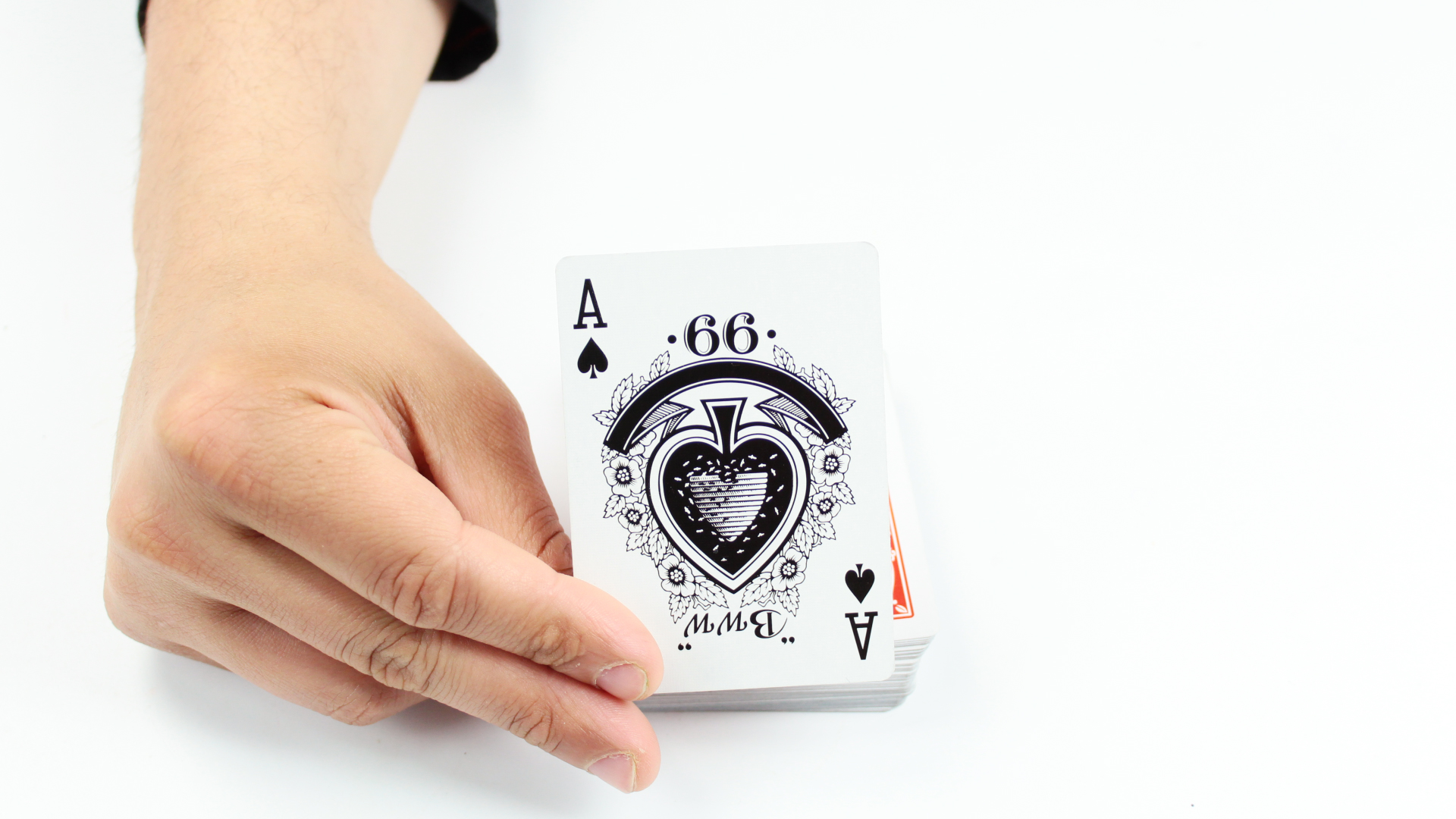
A deck of cards is basically a pocket-sized theater company. It has 52 actors, four costume departments, two dramatic colors, and at least one joker who refuses to follow directions. Better yet, you do not need lightning-fast hands or a mysterious velvet cape to put on a good show.
Many beginner card tricks are “self-working,” meaning the secret depends mainly on mathematics, card order, or a simple setup rather than difficult sleight of hand. That does not mean the performance works by itself, however. You still need to remember the procedure, speak naturally, and reveal the ending without looking as though you are waiting for a software update.
This guide explains how to do seven easy card tricks using an ordinary deck. Each illusion includes the effect your audience sees, the secret method, clear instructions, and a practical performance tip. Start with one trick, practice it until your hands can perform while your brain concentrates on entertaining people, and then add another.
What You Need Before Learning Card Magic
You need a standard 52-card deck, a table or other flat surface, and enough practice time to stop dropping cards like autumn leaves. Newer cards slide easily, while heavily worn cards may stick together. Either can work, but a moderately used deck is usually easiest for a beginner to handle.
Practice the procedure before the presentation
First, learn where every card must go. Perform the trick slowly without speaking. Once the mechanics feel comfortable, add a short story, question, or challenge. Professional magic instruction consistently emphasizes that simple methods can produce powerful reactions when the performer pays attention to timing and presentation.
Control attention without acting suspicious
Misdirection is not merely shouting, “Look, a squirrel!” while hiding a card in your sock. It is the art of directing attention toward the important-looking moment and away from the method. Eye contact, a question, a pause, or a natural hand gesture can guide an audience’s focus. Researchers studying magic have found that performers can influence what spectators notice, remember, and assume by carefully managing attention.
1. The Key Card Detective
What the audience sees
A spectator freely chooses a card, returns it to the deck, and cuts the cards. You spread through the deck and somehow identify the selection without asking suspicious questions such as, “Was it perhaps a card with a number or a person on it?”
The secret
You secretly memorize one card, called the key card. When the chosen card is returned, you position the key card directly next to it. Finding your memorized card then tells you the location of the selection.
How to perform it
- Before beginning, casually look at the bottom card of the deck and remember it.
- Spread the deck face down and ask someone to choose any card.
- Cut approximately half the deck from the top and place that packet on the table.
- Ask the spectator to put the chosen card face down on top of the tabled packet.
- Place the packet remaining in your hand on top. Your memorized bottom card now sits directly above the selected card.
- Allow the spectator to give the deck one or two complete cuts. A complete cut changes the location of the cards but normally preserves their neighboring relationship.
- Spread the cards with the faces toward you. Locate the key card. The card immediately following it is the spectator’s selection.
- Remove the chosen card dramatically or cut it secretly to the top before revealing it.
Performance tip
Do not stare desperately at every card. Pretend you are reading “energy” from the deck. Pause near two or three incorrect cards, reject them, and then confidently remove the correct one. The key-card method is a foundational principle used in both beginner and advanced card magic.
2. The Cross-Cut Prediction
What the audience sees
You write down a prediction before the trick begins. A spectator cuts the deck wherever desired and marks the cut. The card at that position matches your prediction.
The secret
The spectator believes the card represents the exact place where the deck was cut. In reality, you guide the spectator to the original top card, which you already know.
How to perform it
- Choose a memorable card, such as the queen of hearts, and place it on top of the deck.
- Write “Queen of Hearts” on a piece of paper, fold it, and leave it in view.
- Place the deck face down on the table and ask the spectator to cut off approximately half.
- Have the spectator place the cut-off top packet beside the remaining cards.
- Pick up the remaining bottom packet and place it crosswise on top of the packet the spectator cut off.
- Do not reveal the card immediately. Talk for several seconds about free choices, changing one’s mind, or the spectator’s astonishing ability to cut cardboard.
- Lift away the crosswise packet. Point to the top card of the packet underneath and call it the card at the cut.
- Turn over the queen of hearts and ask the spectator to open your prediction.
Performance tip
The time delay is essential. Without it, spectators may remember exactly which packet came from where. A short conversation makes the crossed packet feel like a harmless marker rather than part of the method.
3. The 21-Card Mind Reader
What the audience sees
A spectator thinks of one card among 21. You deal the cards into columns three times, asking only which column contains the selection. At the end, you reveal the exact card.
The secret
Placing the spectator’s column between the other two columns during each collection gradually moves the selected card to a known position. After three rounds, it becomes the 11th card from the top.
How to perform it
- Count out exactly 21 cards.
- Ask the spectator to choose and remember one card, then return it anywhere among the 21.
- Deal the cards face up into three vertical columns, moving left, center, and right repeatedly until each column contains seven cards.
- Ask which column contains the chosen card. Do not ask which specific card it is.
- Gather the three columns, making sure the column containing the selected card is placed between the other two packets.
- Deal the cards into three columns again. Ask which column contains the selection and collect that column in the middle.
- Repeat the dealing and middle-column collection one final time.
- After the third collection, the selected card is 11th from the top.
- Deal ten cards face down while counting silently. Pause before the 11th card and ask the spectator to name the selection. Turn over the card for the reveal.
Performance tip
The procedure can feel repetitive, so give it a reason. Say you are narrowing the card’s “signal” from 21 possibilities to seven, then three, then one. Deal at a steady pace and avoid announcing that you are performing a mathematical algorithm, because nothing kills mystery faster than sounding like a spreadsheet.
4. The Four-Ace Pile Surprise
What the audience sees
The spectator divides the deck into four piles and moves cards according to your instructions. After plenty of apparent mixing, the top card of every pile is revealed to be an ace.
The secret setup
Place all four aces on top of the deck before performing. The spectator’s dealing procedure distributes those aces onto the four piles.
How to perform it
- Begin with the four aces secretly positioned on top of the face-down deck.
- Ask the spectator to divide the deck into four roughly equal face-down piles. Keep track of which pile contains the original top of the deck and therefore the four aces.
- Start with a pile that does not contain the aces.
- Ask the spectator to move three cards, one at a time, from the top of that pile to its bottom.
- Next, have the spectator deal one card from the top onto each of the other three piles.
- Repeat this procedure with the second non-ace pile and then the third non-ace pile.
- Process the ace pile last. The three random cards now resting above the aces are moved to the bottom.
- The spectator then deals one ace onto each of the other three piles, leaving the fourth ace on top of the current pile.
- Ask the spectator to turn over the top card of every pile.
Performance tip
Let the spectator do nearly everything. The more the cards remain in another person’s hands, the less likely the audience is to blame sneaky finger work. This classic version requires a simple setup but no difficult sleight of hand or special deck.
5. Incredible Card Spelling
What the audience sees
You hold the 13 cards from ace through king of one suit. You spell each card’s name while moving cards through the packet. On the final letter of every word, the correct card appearsfrom ace all the way to king.
The secret setup
Remove all 13 cards of one suit. Arrange them in this order from top to bottom:
Queen, 4, Ace, 8, King, 2, 7, 5, 10, Jack, 3, 6, 9.
Keep the packet face down and do not shuffle it.
How to perform it
- Hold the prepared packet face down.
- Spell A-C-E. For A and C, move one top card to the bottom. On E, turn over the new top card. It will be the ace.
- Place the ace face up on the table.
- Spell T-W-O in the same manner, moving cards for the first two letters and revealing the top card on the final letter. It will be the two.
- Continue with THREE, FOUR, FIVE, SIX, SEVEN, EIGHT, NINE, TEN, JACK, QUEEN, and KING.
- Each named card will appear on the final letter of its name.
Performance tip
Practice the rhythm until every word feels identical. Do not rush shorter names and crawl through longer ones. A smooth, consistent tempo makes the outcome feel like a strange property of the cards rather than a memorized arrangement. Mathematical and procedural card tricks are especially useful for beginners because they leave more attention available for audience interaction.
6. The Rising Card
What the audience sees
A selected card is lost in the deck. After you locate it secretly and bring it to the top, the card appears to rise mysteriously from the pack as though answering roll call.
The secret
Your little finger pushes the selected top card upward while your other fingers hide the movement. The visible finger above the deck appears to pull the card using invisible energy, static electricity, or an extremely underqualified ghost.
How to perform it
- Use the key-card method from the first trick to identify the spectator’s selection.
- Cut the deck so the chosen card becomes the top card.
- Hold the deck in your left hand with the front edge angled toward the audience.
- Rest your right index finger lightly above or against the top of the deck.
- Secretly curl your right little finger behind the deck until its tip contacts the rear edge of the top card.
- Slowly lift your index finger while pushing the top card upward with your hidden little finger.
- Stop when enough of the card is visible for the spectator to recognize it.
- Remove the rising card with your index finger and thumb and display it fully.
Performance tip
Stand in front of a mirror and check the viewing angles. Your hidden little finger must remain behind the deck. Perform the rise slowly; a gradual movement looks mysterious, while a sudden jerk makes the card appear to have been launched by office equipment.
7. The Red-and-Black Color Split
What the audience sees
A face-down deck is dealt alternately into two piles. When the piles are turned over, one contains only red cards and the other contains only black cards.
The secret setup
Before the performance, arrange the entire deck so red and black cards alternate from top to bottom. The values and suits can otherwise be mixed. For example, the sequence might begin with a red seven, black king, red two, black nine, and so on.
How to perform it
- Place the alternating-color deck face down on the table.
- Ask a spectator to deal the top card onto a pile on the left.
- Have the spectator deal the next card onto a pile on the right.
- Continue dealing alternately left and right until the deck is exhausted.
- Turn both piles face up. Because every other card had the same color, one pile will be red and the other black.
Performance tip
Do not describe the deck as “thoroughly shuffled” unless you can perform a convincing false shuffle that preserves the alternating order. Instead, present the effect as a test of the spectator’s intuition. Ask the person to guess which pile will be red before revealing the cards.
How to Make Easy Card Tricks Look More Impressive
Use a clear beginning, middle, and ending
Every trick should answer three questions: What is about to happen? What apparently impossible conditions make it difficult? What is the final surprise? For example, in the prediction trick, establish the written prediction, emphasize the spectator’s free cut, and then reveal the matching card. Do not bury the climax under five additional explanations.
Pause before the reveal
Beginners often reveal the answer immediately because they are relieved that the procedure worked. Instead, stop for one or two seconds. Look at the spectator. Then turn over the card. That tiny pause gives the audience time to understand what is supposed to be impossible.
Avoid repeating a trick immediately
When someone says, “Do it again,” accept the compliment but perform a different effect. A second viewing allows spectators to stop enjoying the story and start auditing your fingers like suspicious tax inspectors.
Do not expose another magician’s performance
Learning classic beginner principles is part of studying magic, but using that knowledge to interrupt another performer or reveal someone else’s routine is poor etiquette. Professional magic organizations encourage ethical performance and respect for other creators and performers.
Beginner Experiences: What Usually Happens During Your First Performances
The first time a beginner performs a card trick for another person, the hands often behave as though they have received separate instructions. The left hand grips the deck too tightly, the right hand forgets where to go, and every card suddenly feels coated in cooking oil. This is normal. Private practice teaches the procedure, but performing for a real spectator introduces eye contact, conversation, interruptions, and the terrifying possibility that someone will say, “I know how you did that.”
The key-card trick is often the best first performance because the method is forgiving. A beginner may spread through the deck too slowly, but the trick can still succeed. The most common mistake is forgetting the key card while concentrating on what to say. A useful rehearsal habit is to repeat the card silently three times“nine of clubs, nine of clubs, nine of clubs”before asking the spectator to make a selection.
The 21-card trick creates a different challenge. The mathematics is dependable, but the repeated dealing can become dull. Beginners usually discover that presentation matters more than speed. When each round is described as narrowing a mental signal, spectators follow a story. When the performer silently deals cards for what feels like a small geological era, spectators begin checking their phones.
Setup tricks produce another valuable lesson: protect the arrangement without behaving as though the deck contains national security documents. With the four-ace routine, a beginner may become visibly nervous when someone reaches toward the cards. The better solution is simple audience management. Place the deck where you need it, begin the instructions promptly, and give the spectator a clear job. People are less likely to shuffle unexpectedly when they already know what to do next.
The cross-cut prediction teaches the importance of time delay. During early practice, many beginners rush from the cut directly to the selected card. The method then seems obvious. Adding a few seconds of conversation changes the audience’s memory of the sequence. The crossed packet becomes a marker, and the final card feels connected to the spectator’s decision rather than to the deck’s original position.
The rising card is usually the trick that looks least magical in the mirror and most magical after the movement becomes smooth. At first, the hidden finger may appear around the side, or the card may leap upward like burnt toast. Recording a short video from the spectator’s viewpoint quickly exposes these problems. Small adjustments to hand angle and speed can improve the illusion more than another hour of practicing blindly.
Real spectators are also unpredictable. One person may forget the selected card. Another may announce it before the reveal. Someone will eventually grab the deck, and a child may attempt to inspect every card individually while asking whether you are a wizard. These moments are not failures. They teach flexibility. Keep a second trick ready, use humor, and never make a spectator feel foolish for misunderstanding an instruction.
The biggest beginner breakthrough usually comes when the performer stops thinking only about the secret. Audiences do not experience a key card, a stack, or a mathematical position. They experience suspense, surprise, and the pleasure of briefly seeing something impossible. The method makes the trick function; the performance makes it memorable.
Conclusion
Learning how to do easy card tricks does not require years of finger exercises or a contract with supernatural forces. A normal deck, seven dependable methods, and consistent rehearsal are enough to begin entertaining friends and family.
Start with the Key Card Detective or the Cross-Cut Prediction. Once you can perform without mentally reciting every instruction, add the 21-Card Mind Reader, Four-Ace Pile Surprise, Card Spelling routine, Rising Card, and Red-and-Black Color Split. Practice the setup, rehearse your words, control the audience’s attention naturally, and pause before every major reveal.
Note: Use card magic to entertain rather than to mislead people in gambling, financial decisions, or serious situations. This article synthesizes established beginner instruction and performance principles from resources published by Vanishing Inc., theory11, the International Brotherhood of Magicians, the Society of American Magicians, The Spruce Crafts, MasterClass, Scientific American, Smithsonian Magazine, the Academy of Magical Arts, Penguin Magic, PlayingCardDecks.com, and the Library of Congress.