Scandinavian Modern design has a public-relations problemalthough, admittedly, it is a very attractive public-relations problem. Mention the style and most people picture white walls, pale wood, one disciplined houseplant, and a sofa that appears never to have encountered spilled coffee. That image is not entirely wrong, but it is about as complete as describing New York as “a place with tall buildings.”
The real story is richer, warmer, and considerably more colorful. Scandinavian Modern grew from a broad Nordic conversation about craftsmanship, industrial production, social responsibility, natural materials, and the simple idea that useful objects should also be beautiful. Its greatest designers did not merely remove decoration. They reconsidered how a chair supports the body, how daylight enters a room, how a pitcher feels in the hand, and how ordinary families might live comfortably with modern design.
That is why Scandinavian Modern remains required reading for anyone interested in interiors, furniture, architecture, or product design. It offers more than a recognizable look. It presents a practical philosophy for making daily life work betterwithout turning the living room into a cold laboratory or a beige waiting area.
What Is Scandinavian Modern Design?
Scandinavian Modern generally refers to the influential design movement that emerged across Denmark, Sweden, Norway, Finland, and Iceland during the early and middle decades of the twentieth century. Strictly speaking, “Scandinavian” traditionally points to Denmark, Norway, and Sweden, while “Nordic” includes Finland and Iceland as well. In design discussions, however, the two labels are often used more loosely.
The movement gained international momentum from the 1930s through the 1960s, when Nordic designers offered a warmer alternative to the harder edges of European machine-age modernism. Instead of relying primarily on chrome, tubular steel, and strict geometry, they explored bent plywood, solid wood, leather, wool, glass, ceramics, and softly sculpted forms. The Metropolitan Museum of Art describes this development as a shift toward natural materials, flowing lines, and furniture shaped more closely around the human body.
This was functionalism with a pulse. A table still needed to be efficient, but it could also reveal the grain of oak. A lamp needed to provide light, but ideally without interrogating everyone in the room. A chair needed to support the sitter rather than demand that the sitter develop better posture and a philosophical acceptance of discomfort.
The Ideas Behind the Style
Function Comes First, but Feeling Matters
Scandinavian Modern design is regularly summarized as “form follows function,” yet the best Nordic designers never treated function as a purely mechanical issue. Emotional comfort mattered too. Rooms were intended to be welcoming, objects pleasant to touch, and furniture comfortable enough for actual human beings rather than perfectly dressed mannequins.
Josef Frank, one of the most influential figures in Swedish modern design, openly resisted rigid functionalism. His interiors combined streamlined furniture with abundant color, botanical textiles, varied patterns, and objects gathered over time. His work is an important reminder that Scandinavian design was never required to be monochromatic. Sometimes it arrived wearing flowers and behaving delightfully badly.
Nature Is a Design Partner
Nordic designers drew heavily from local landscapes and materials. Pale birch, beech, ash, pine, oak, teak, wool, linen, leather, and handblown glass created interiors that felt connected to forests, coastlines, lakes, and long seasonal changes.
Nature influenced shapes as well as materials. Curving chair backs, leaflike glassware, rounded table edges, and asymmetrical forms softened modern interiors. Alvar Aalto’s famous glass vase, for example, has an irregular flowing outline that has been compared to Finnish lakes and natural contours. Whether the shape resembles a lake, a puddle, or a very sophisticated amoeba, it remains unmistakably organic.
Good Design Belongs in Everyday Life
A democratic design ideal runs through much of Scandinavian Modern history. Well-made objects were not supposed to exist only in palaces, museums, or the apartments of people who use the phrase “visual dialogue” while discussing a fruit bowl. Designers, manufacturers, retailers, and public institutions sought to bring thoughtful design into ordinary homes, schools, workplaces, and civic buildings.
That ambition did not always produce inexpensive goods, and many original pieces are now costly collectibles. Still, the underlying goal was significant: industrial production and traditional craft could work together to make modern living more comfortable, practical, and humane.
Essential Scandinavian Modern Designers
Alvar and Aino Aalto: Humanizing Modernism
Finnish architect Alvar Aalto is one of the central figures of Scandinavian Modernism, but his work cannot be separated from the contributions of his wife and creative partner, Aino Aalto. Together they worked across architecture, furniture, glass, exhibitions, and interior design.
Alvar Aalto’s Paimio chair, designed in the early 1930s, used a sweeping seat of bent plywood supported by a light wooden frame. The chair demonstrated that an industrially reproducible object could feel warm, sculptural, and surprisingly alive. His experiments with bent wood later influenced American designers Charles and Ray Eames as well as Finnish-American architect Eero Saarinen. In 1935, Alvar and Aino helped establish Artek to manufacture and distribute their furniture and promote a wider culture of modern art and design.
Hans J. Wegner: The Chair as a Lifetime Study
Danish designer Hans J. Wegner treated the chair almost as a species worthy of lifelong scientific observation. He designed hundreds of them, refining joints, proportions, backrests, and arm supports with the patience of someone who had accepted that humanity would never stop needing somewhere to sit.
His 1949 Wishbone Chair combines a steam-bent wooden back, a Y-shaped support, and a woven paper-cord seat. The design looks simple because the difficult decisions have been resolved. It is graceful without being precious, recognizable without shouting, and comfortable without resembling an overstuffed marshmallow.
Wegner’s work captures a defining feature of Scandinavian modern furniture: the meeting of cabinetmaking skill and repeatable production. The Metropolitan Museum of Art highlights this combination of handcraft, natural material, machinery, and bodily comfort as a hallmark of the movement.
Arne Jacobsen: Architecture Down to the Last Fork
Arne Jacobsen approached design comprehensively. As an architect, he often developed not only the building but also its furniture, lighting, fixtures, textiles, and tableware. His best-known furniture includes the Ant Chair, Series 7 Chair, Egg Chair, and Swan Chair.
The Series 7 Chair, introduced in 1955, used pressure-molded veneer to create a thin, curving seat and back. It could be stacked, moved easily, and placed in homes, schools, offices, or restaurants. The Egg Chair, designed for the SAS Royal Hotel in Copenhagen, offered a more theatrical solution: a cocoonlike form that created privacy within an open lobby. In other words, Jacobsen designed both the chair for the meeting and the chair for hiding after the meeting.
Finn Juhl: Furniture Becomes Sculpture
Finn Juhl brought an artistic, expressive quality to Danish Modern furniture. His chairs often appear to separate their upholstered seats from their wooden frames, creating a sense that the softer components are floating. He was fascinated by sculpture, art, and the relationship between solid forms and surrounding space.
Juhl’s work was less restrained than the stereotype of Scandinavian minimalism suggests. Curves sweep outward, colors are sometimes bold, and the frames frequently possess an almost animal-like energy. His own home near Copenhagen demonstrates how carefully he considered relationships among furniture, artwork, color, architecture, and views of nature.
Greta Magnusson Grossman: A Scandinavian-American Bridge
Swedish-born Greta Magnusson Grossman moved to California in 1940 and developed a career spanning architecture, furniture, interiors, and lighting. Her work connected Swedish modernism with the informal lifestyle and experimental architecture of the American West Coast.
Grossman’s Grasshopper floor lamp, with its angled tripod base and elongated shade, remains one of her most recognizable designs. Her Cobra lamp uses a flexible neck and compact form to direct light where it is needed. These pieces are practical, elegant, and slightly playfulthe design equivalent of someone who arrives on time but wears excellent shoes.
Jens Risom and Jens Quistgaard: Scandinavia Comes to America
Danish-born Jens Risom became an important figure in American midcentury furniture after moving to the United States. His early work for Knoll used simple wooden frames and woven upholstery, including surplus parachute webbing during wartime material shortages. His designs helped introduce Scandinavian values of restraint, comfort, and material honesty to a growing American market.
Jens Quistgaard influenced American dining and kitchen culture through his work for Dansk Designs. His stainless-steel-and-teak Fjord flatware and colorful Købenstyle cookware combined industrial production with warm details and casual usability. Dansk’s products encouraged less formal entertaining, including cookware that could move directly from stove to table without needing to change into its good clothes.
How Scandinavian Modern Reached American Homes
Scandinavian Modern did not simply travel west as a sealed European style. It developed through exchanges among Nordic immigrants, American manufacturers, museums, architects, retailers, and consumers.
MoMA promoted Nordic designers through exhibitions and its influential Good Design program. Companies such as Knoll collaborated with European-born designers. Retailers such as Design Research, founded in Cambridge, Massachusetts, introduced American shoppers to furniture, textiles, glassware, cookware, and decorative objects from Scandinavia and beyond.
Postwar marketing often presented Scandinavia as a unified region of social progress, natural beauty, craftsmanship, and relaxed modern living. That image was partly authentic and partly constructed for export. Recent scholarship has emphasized that Scandinavian design in the United States was shaped by migration, commercial strategy, cultural exchange, and American productionnot merely by objects arriving fully formed from Copenhagen or Helsinki.
Required Reading for Understanding Scandinavian Modern
Scandinavian Modern by Magnus Englund and Chrystina Schmidt
This visually rich book is an accessible entry point into the movement. It examines important materials, designers, furniture, decorative objects, and residential interiors. Rather than presenting Scandinavian Modern as a strict formula, it shows how wood, glass, textiles, ceramics, color, and personal collections come together in real homes.
Modern Scandinavian Design by Charlotte and Peter Fiell
For readers seeking a broad reference work, Charlotte and Peter Fiell’s survey covers design across Denmark, Sweden, Finland, Norway, and Iceland from 1925 onward. Its range makes it useful for understanding that Nordic design extends well beyond chairs. Lighting, industrial products, ceramics, glass, textiles, transportation, and graphic design all belong to the story.
Scandinavian Design and the United States, 1890–1980
This exhibition catalog is especially valuable because it challenges the idea that Scandinavian design influenced America in only one direction. It explores designers, companies, craftspeople, exhibitions, retailers, and immigrants who created a continuous exchange between Nordic countries and the United States.
Designer Monographs and Museum Collections
After a general survey, deeper reading works best one designer at a time. Monographs on Alvar and Aino Aalto, Hans Wegner, Finn Juhl, Arne Jacobsen, Greta Magnusson Grossman, Josef Frank, and Jens Quistgaard reveal how distinctive their methods were.
Digital collections from MoMA, the Metropolitan Museum of Art, and Cooper Hewitt are also invaluable. They allow readers to inspect dates, materials, manufacturing techniques, and object details. Looking closely at a chair joint or the curve of a pitcher can teach more than another hundred photographs of spotless living rooms labeled “Scandi inspiration.”
How to Use Scandinavian Modern at Home
Begin With Function, Not a Shopping List
Ask what the room needs to do. Does the dining table double as a desk? Does the living room need better reading light? Is the entryway a daily disaster involving shoes, bags, mail, and one mysterious reusable bottle?
Scandinavian Modern works best when furniture solves real problems. Choose pieces according to comfort, durability, scale, and use before worrying about whether the oak is pale enough to qualify for social media.
Mix Natural Materials
Combine wood with wool, linen, leather, ceramic, glass, or woven fibers. The goal is not to fill the room with one matching timber finish. Slight variation creates depth and keeps the space from looking as though it arrived in a single enormous flat-packed box.
Use Color With Confidence
White and warm neutrals can maximize available light, but Scandinavian Modern has a strong tradition of color. Rust, forest green, cobalt blue, mustard, brick red, soft pink, and patterned textiles can all feel appropriate. Josef Frank’s exuberant prints are proof that Nordic interiors are allowed to have a personality.
Light the Room in Layers
Long, dark winters helped make thoughtful lighting essential in Nordic interiors. Use a combination of ceiling lights, floor lamps, table lamps, wall lights, and candles rather than relying on one overhead fixture bright enough to expose everyone’s secrets.
Buy Fewer, Better Things
The most useful lesson is not that everyone needs an iconic designer chair. It is that objects should earn their place through usefulness, durability, comfort, or emotional value. Vintage pieces, local crafts, family objects, contemporary furniture, and affordable basics can coexist beautifully when selected with care.
Common Scandinavian Modern Mistakes
The first mistake is confusing simplicity with emptiness. A room without clutter may feel peaceful; a room without books, art, lamps, textiles, or evidence of life may feel like the residents were recently evacuated.
The second is choosing appearance over comfort. Scandinavian designers spent enormous effort shaping furniture around the human body. A chair that photographs beautifully but punishes the spine misses the point.
The third is treating the Nordic countries as one identical design factory. Danish cabinetmaking, Finnish organic modernism, Swedish decorative arts, Norwegian craft traditions, and Icelandic design each developed within different cultural and material contexts.
Finally, avoid filling a room exclusively with reproductions of famous pieces. The originals became important because they were inventive, not because their owners successfully assembled a design-history checklist.
The Experience of Living With Scandinavian Modern
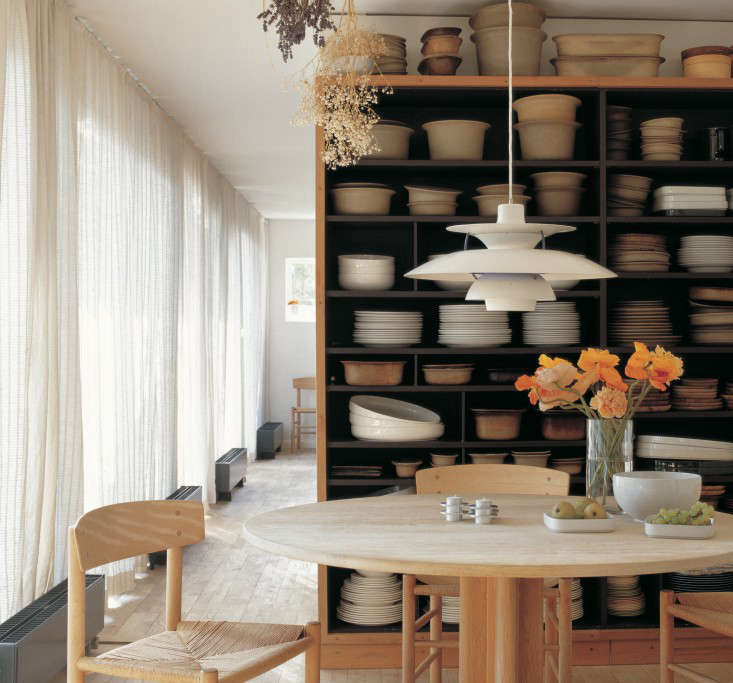
Understanding Scandinavian Modern through photographs is useful, but living with its principles reveals why the style has endured. The experience is less about admiring a completed room and more about noticing small improvements during an ordinary day.
Morning begins with light. Curtains are easy to open, windows are not blocked by oversized furniture, and pale surfaces help move daylight deeper into the room. A wooden table feels warm beneath the hand. The coffee mug is sturdy, pleasantly shaped, and free of a motivational slogan instructing anyone to become a legend before 8 a.m.
The dining chair is light enough to move but solid enough not to feel temporary. Its back curves where the body curves. The table is not reserved for formal meals; it hosts breakfast, paperwork, homework, flowers, and the occasional ambitious craft project that remains unfinished for several weeks. That flexibility is central to Scandinavian Modern living. Objects are designed to participate rather than pose.
As the day progresses, storage quietly earns its keep. Cabinets hide visual noise while open shelves display a limited number of useful or meaningful objects. The balance matters. Total concealment can make a home impersonal, while total exposure creates the visual sensation of a yard sale conducted during an earthquake.
Texture becomes more noticeable in the evening. Wool softens a chair, linen filters fading daylight, and woven rugs reduce echoes underfoot. Lamps create separate areas for reading, conversation, and dining. Instead of flooding the entire room with uniform brightness, pools of light make the space feel larger and more intimate at the same time.
The most successful rooms also become better with age. Wood gains marks and patina. Leather softens. A ceramic bowl develops a tiny chip but remains in service because it still holds fruit perfectly well. Scandinavian Modern encourages respect for materials, but not necessarily fear of using them. A home is not a museum with worse security.
Another noticeable experience is visual calm without strict perfection. A carefully designed room can accommodate a stack of books, a child’s drawing, a bright blanket, or an inherited cabinet. In fact, those personal elements prevent the style from becoming generic. The room feels coherent because shapes, materials, and functions relate to one anothernot because every object belongs to the same product collection.
Over time, the design philosophy may also change shopping habits. Instead of buying several temporary items to fill a gap, people may wait for one piece that fits properly and performs well. That piece does not need a famous label. It might be a restored vintage chair, a locally made table, or a simple lamp with replaceable parts. The guiding question becomes, “Will this improve daily life?” rather than, “Will strangers recognize it online?”
Ultimately, living with Scandinavian Modern feels comfortable, practical, and quietly optimistic. It assumes that everyday activities deserve thoughtful surroundings. Sitting, eating, reading, cooking, working, and gathering are not background events waiting for a special occasion. They are the substance of life, and good design can make them a little easier and much more enjoyable.
Conclusion: More Than a Minimalist Look
Scandinavian Modern remains influential because it offers a flexible framework rather than a frozen decorating formula. It connects beauty with usefulness, craft with industry, restraint with warmth, and modernity with nature. Its finest objects appear simple, but that simplicity is the result of careful thought about materials, construction, proportion, comfort, and human behavior.
The movement’s required reading reveals an equally important lesson: there is no single Scandinavian look. Alvar Aalto’s organic plywood, Hans Wegner’s disciplined joinery, Josef Frank’s exuberant patterns, Finn Juhl’s sculptural forms, Greta Magnusson Grossman’s California modernism, and Jens Quistgaard’s casual housewares all belong to a broad, evolving conversation.
So keep the pale wood, the cozy lamp, and the respectable houseplant. Just remember that Scandinavian Modern asks for more. It asks whether a room supports daily life, whether objects deserve to last, and whether function can be generous rather than severe. That is not merely a decorating trend. It is a very good way to think.
Research note: This article synthesizes design history and object research from museum collections, cultural institutions, architecture publications, manufacturer archives, exhibition scholarship, and established design references in the United States.