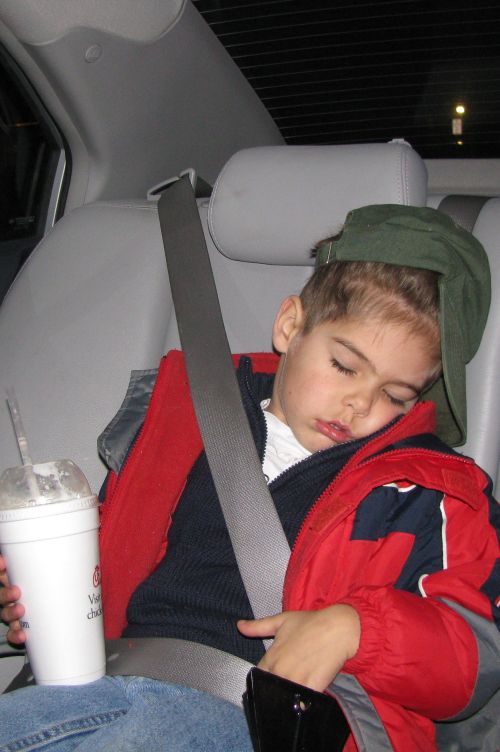
There is a special kind of sleep that happens only in the backseat of a car after a long night out. It begins with a forehead leaning against cool glass, continues through a few heroic attempts to stay awake, and ends with the discovery that your jacket has somehow become a pillow. Outside, streetlights slide across the ceiling. Inside, the engine hums, the tires whisper over pavement, and somebody up front knows the way home.
That is the quiet magic behind falling asleep in the backseat of a car late at night on the drive home. It is not merely a nap. It is a tiny surrender: the moment you stop navigating, stop talking, stop checking the clock, and let the road carry you. The original “1000 Awesome Things” entry captured this scene with a few cozy detailsmoonlight, worn seats, a softly running engine, and the universal pleasure of drifting off while someone else drives.
Why a Late-Night Backseat Nap Feels So Good
A bed is designed for sleep. A backseat is designed for groceries, backpacks, forgotten french fries, and one suspicious stain nobody wants to discuss. Yet under the right conditions, it becomes one of the most effective relaxation chambers ever assembled.
The Motion Feels Like a Giant Mechanical Lullaby
A moving car delivers a steady pattern of gentle acceleration, vibration, turns, and small changes in speed. Researchers studying rocking and sleep have found that rhythmic motion can influence how quickly sleep begins and how sleep is organized. Some experiments with rocking beds have reported faster sleep onset or changes in non-REM sleep, although results depend on the speed, direction, and design of the motion. In other words, science has not officially declared the family sedan a mattress, but it understands why the body may respond to a smooth ride like a lullaby with cup holders.
The vestibular system, which helps the brain track balance and movement, receives repeated signals during a car ride. When those signals are predictable rather than jarring, the experience can become soothing. The rocking is not dramatic enough to demand attention, but it is noticeable enough to create rhythm. Your body learns the pattern: roll, hum, turn, breathe, repeat.
The Road Creates a Steady Blanket of Sound
Late-night car rides have their own soundtrack: engine noise, tires on asphalt, warm air moving through the vents, and low voices from the front seats. That sound is not identical to white noise, but it has a similar quality when it remains consistent. Reviews of auditory-stimulation research suggest that steady broadband or white-noise-like sound may help some people fall asleep by reducing the contrast between quiet and sudden environmental noises, although the evidence is mixed and volume matters.
The important word is steady. A random horn blast, a pothole, or a sibling opening a bag of chips with the force of a controlled demolition can reset the whole process. But when the sound stays even, the brain has less new information to investigate.
Darkness and Timing Do Most of the Heavy Lifting
Most memorable backseat naps happen after dinner, a family gathering, a movie, a party, a holiday visit, or a long day on the road. By then, natural sleep pressure has been building for hours. Darkness reduces visual stimulation, conversation fades, and the passenger no longer has a task to perform. The result is a perfect storm of “I am definitely still awake” followed almost immediately by snoring.
Healthy adults generally need about seven to nine hours of sleep, and teenagers typically need even more. When someone has already had a long, stimulating day, a quiet nighttime ride may meet the body at the exact moment it has stopped accepting counteroffers.
The Hidden Ingredient: Trust
The physical conditions matter, but they are only half the story. The deeper comfort comes from knowing that someone else is responsible for the next turn.
When you are the passenger, you do not have to watch the mirrors, read the signs, calculate the exit, or worry about where to park. You can close your eyes because the person in front is handling the road. For children, that person may be a parent. For teenagers, it may be a friend’s mom who volunteered for the midnight pickup. For adults, it may be a partner, sibling, designated driver, taxi driver, or rideshare driver.
The relationship changes, but the emotional formula stays similar: I do not have to be in charge for the next little while.
That relief is rare. Daily life trains adults to remain alertanswer the message, remember the appointment, carry the bag, find the keys, check the map. The backseat removes those duties one by one. It is a temporary return to being cared for, even when nobody says a word about it.
Why the Memory Becomes So Nostalgic
Many people remember backseat sleep from childhood with unusual clarity. They may forget where the family had gone, what they ate, or why everyone came home so late, yet still remember the orange glow of passing lamps, the pattern of the upholstery, and the strange challenge of pretending to stay asleep when the car reached the driveway.
Nostalgia is not simply a fond replay of old footage. Research describes it as a self-relevant, often social emotion tied to meaningful autobiographical memories. Studies have associated nostalgic reflection with social connectedness, continuity of identity, gratitude, and a stronger sense of meaning. That helps explain why a small memory such as sleeping in a car can feel larger than the event itself: it contains evidence of family, safety, belonging, and a past version of you who did not need to know the route home.
The memory also arrives through the senses. A particular fabric smell, the click of a turn signal, rain on a windshield, or an old song played quietly can reopen the entire scene. Suddenly you are eight years old again, wearing shoes that light up, holding a half-empty paper cup, and assuming that every adult knows exactly what to do at all times. Adulthood eventually corrects that assumption, but nostalgia kindly preserves the original edition.
The Classic Stages of Falling Asleep in the Backseat
Stage 1: The Confident Declaration
You announce that you are not tired. This statement is often delivered during a yawn so large it could alter cabin pressure.
Stage 2: The Window Lean
Your head finds the glass. The glass is cold, hard, and ergonomically hostile, yet somehow acceptable. Every curve in the road causes a tiny forehead bounce.
Stage 3: The Accidental Pillow
A hoodie, tote bag, sibling, or rolled-up coat becomes bedding. No one planned this. Great backseat sleep is built from improvisation.
Stage 4: The Half-Heard Conversation
Voices from the front drift in and out. You catch fragments about gas prices, tomorrow’s schedule, or whether anyone remembered the leftovers. The words stop requiring answers and become part of the soundscape.
Stage 5: The Mysterious Time Jump
You close your eyes near a highway sign and open them in your neighborhood. Twenty-five miles have vanished. This is the closest most people get to teleportation without paperwork.
Stage 6: The Driveway Decision
You wake when the engine stops but remain perfectly still. As a child, this was a strategic attempt to be carried inside. As an adult, it is a brief protest against having to locate your shoes, phone, dignity, and front-door key.
How to Make a Backseat Ride More Comfortable
Comfort should never interfere with proper restraint. Everyone in the vehicle should use the correct seat belt, booster seat, or car safety seat for their age and size. With that rule firmly in place, a few simple choices can improve a nighttime car ride.
- Use an appropriate travel pillow. It should support the neck without pushing the seat belt away from the shoulder or chest.
- Keep the temperature comfortable. A warm cabin can feel cozy, but too much heat quickly becomes stuffy.
- Dim unnecessary screens. Bright phones and tablets compete with the darkness that makes late-night travel relaxing.
- Choose quiet audio. Soft music, an easy podcast, or simple silence beats a playlist that treats every chorus like a stadium emergency.
- Pack a light layer. A sweatshirt or thin blanket can help adult passengers feel comfortable, provided it does not interfere with restraints.
A Necessary Safety Distinction: Passengers May Doze, Drivers Must Not
The charm of this experience belongs to the passenger seat and backseat only. Drowsy driving is dangerous because fatigue slows reaction time, weakens attention, and makes lane control more difficult. The National Highway Traffic Safety Administration identifies midnight to 6 a.m. as a peak sleepiness period and advises drivers to avoid driving when drowsy. AAA Foundation research has also found that drivers who slept less than seven hours in the previous 24 hours faced an elevated crash risk.
Opening a window, turning up music, or chewing gum may make a tired driver feel busier, but those tricks do not replace sleep. A driver who is struggling to stay awake should stop in a safe place, change drivers when possible, or use evidence-supported short-term measures such as a brief nap and caffeine while recognizing that neither fixes serious sleep deprivation. The best plan is to begin the trip rested.
Infants require another important caution. Babies may fall asleep while properly secured during travel, but the American Academy of Pediatrics advises moving them to a firm, flat, approved sleep surface after arriving. A car seat is essential for transportation; it is not a substitute for a crib, bassinet, or play yard at the destination.
Why This Ordinary Moment Deserves a Place Among Awesome Things
There is no ticket to buy, no reservation to make, and no five-star rating to leave. The experience is wonderful precisely because it is ordinary. It happens between the event and the destination, in the uncelebrated middle of the night, when everyone is too tired to perform.
The late-night drive home turns a vehicle into a moving shelter. The world outside keeps changinggas stations, traffic lights, empty storefronts, dark fieldsbut the passenger remains held inside a small circle of warmth. The car moves forward while the sleeper is allowed to stop.
That is the real luxury. Not leather seats. Not climate zones. Not a premium audio package with seventeen speakers and a name that sounds like a law firm. The luxury is having nowhere else to be until the car arrives.
Final Thoughts
Falling asleep in the backseat of a car late at night on the drive home is awesome because it combines comfort, motion, trust, and nostalgia in one unplanned moment. The road hums beneath you, darkness softens the world, and responsibility moves to the front seat. For a little while, you are free to disappear into sleep while someone else brings you home.
AWESOME!
Note: This article celebrates sleeping as a properly restrained passenger. A tired driver should stop driving, switch drivers, or rest in a safe location. Infants who fall asleep during travel should be moved to an approved flat sleep surface after arrival.