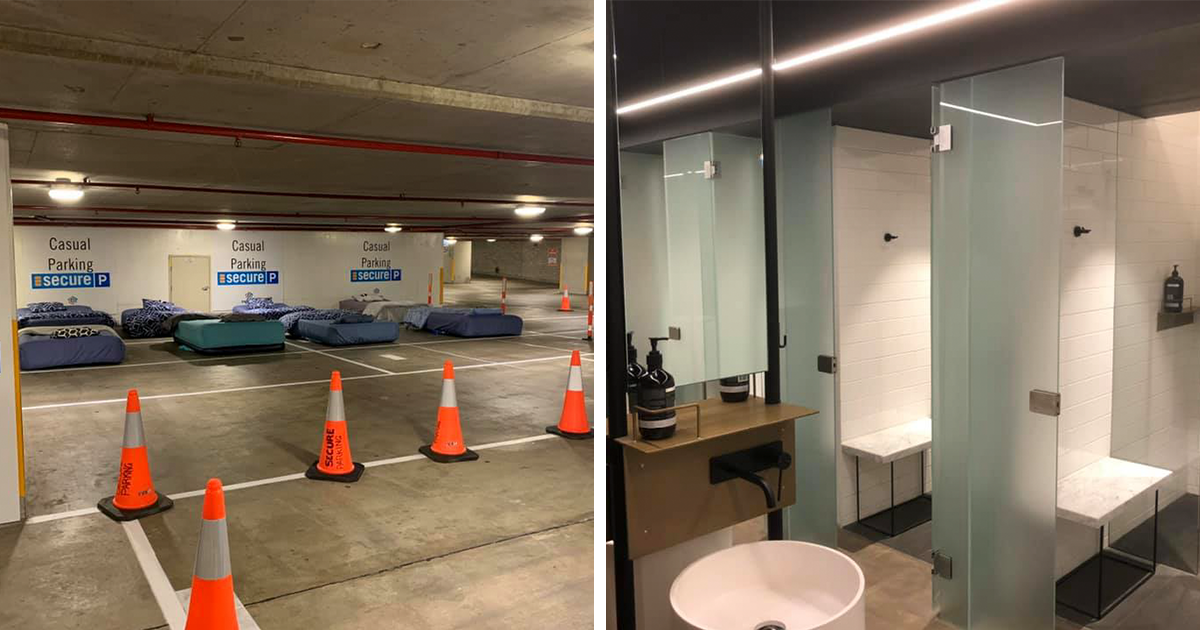
By day, a parking lot is one of the least romantic places on earth. It is a sea of painted lines, hot asphalt, and the occasional shopping cart staging a quiet rebellion. By night, though, some parking lots in the United States become something else entirely: a legal, supervised, and deeply human place where people living in cars, vans, and RVs can sleep without the usual soundtrack of fear.
That idea is known as safe parking, and it has grown into one of the more practical responses to vehicular homelessness. It is not glamorous. It is not a magic wand. It does not solve America’s housing shortage. But for families trying to avoid the street, workers keeping a job while living in a sedan, seniors holding onto the last shelter they own, and parents doing bedtime in the front seat, a safe parking lot can mean the difference between chaos and one stable night.
And sometimes, one stable night is how the climb back begins.
What Safe Parking Really Means
A safe parking program is exactly what it sounds like, but also more than that. At its simplest, it offers a legal place for people experiencing homelessness to park overnight and sleep in their vehicles without worrying about tickets, towing, harassment, or being told to move along at 2 a.m. In stronger programs, it also includes security, restrooms, handwashing stations, Wi-Fi, food access, case management, housing referrals, benefit enrollment, and help with employment or vehicle problems.
That last part matters. A car is not a home, but when it becomes your only shelter, losing access to it can be catastrophic. A citation can snowball into debt. A tow can erase a person’s remaining possessions in one miserable afternoon. A broken taillight can become a full-blown life crisis when your “address” has four tires.
Safe parking recognizes that reality. It treats a vehicle not as a lifestyle statement, but as an emergency shelter with cup holders.
Why Parking Lots Are Becoming Part of the Homelessness Conversation
Homelessness in the United States has climbed sharply, and the pressure shows up in visible, everyday places: sidewalks, transit stops, underpasses, and increasingly, in vehicles. For many people, living in a car becomes the final barrier between housing instability and sleeping completely outside. It can preserve a little privacy, protect documents and medications, allow parents to keep children closer, and make it easier to get to work in the morning. In other words, a vehicle can delay an even deeper fall.
That is one reason vehicular homelessness deserves more attention than it usually gets. Research has found that people living in vehicles are not always the same as the stereotypical “street homeless” population in the public imagination. In Los Angeles, for example, people experiencing homelessness in vehicles were more likely to be women, more likely to be older adults, and more likely to live in households with children than unhoused people sleeping in tents, makeshift shelters, or public spaces.
That alone should change the conversation. When people hear “homelessness,” they often picture a single adult man on a sidewalk. The reality in a safe parking lot may be a grandmother in a minivan, a laid-off airport worker in a hatchback, a family trying to keep the kids enrolled in school, or a couple living in an RV because rent sprinted ahead while wages were still tying their shoes.
How a Parking Lot Becomes a Safe Haven
The most effective programs do not just unlock a gate and call it compassion. They create a structure. A good safe parking lot is managed, staffed, and connected to services. Participants typically apply or are referred. There are rules, hours, and expectations. Some programs limit the lot to nighttime hours, while others operate 24/7. Some prioritize families, seniors, veterans, people with disabilities, or local residents. Many are intentionally low-profile so neighbors are not constantly peeking over fences as if dignity were a public spectacle.
In practical terms, that structure brings relief in four big ways.
1. Safety
People are not left to guess whether they will be told to move, robbed, or cited before sunrise. Security staff, lighting, monitored entry, and a known location reduce the nightly roulette that comes with sleeping on city streets.
2. Stability
Returning to the same place every evening creates routine. That may sound small, but routine is a huge deal when life is otherwise held together with phone chargers, fast-food napkins, and heroic levels of caffeine.
3. Services
Bathrooms, handwashing, showers, charging stations, food support, and case management can keep people healthier and more connected to help. Some programs even assist with vehicle repairs, registration, insurance, and deposits for future housing.
4. Pathways Back to Housing
The strongest programs frame safe parking as a bridge, not a destination. The lot is a staging ground for housing searches, document recovery, benefits enrollment, healthcare access, and rehousing plans.
Real-World Examples Across the United States
This model is not theoretical. It is already operating in multiple communities, especially along the West Coast, where housing costs and vehicle residency have collided in very visible ways.
Santa Barbara County is the elder statesman of the movement. Its safe parking model, launched in 2004, is often described as the first of its kind in the country. What started as a local response to people sleeping in vehicles has grown into a program that manages hundreds of spaces across dozens of lots in partnership with churches, businesses, nonprofits, and government agencies. The fact that it has endured for more than two decades says a lot. It suggests that when communities treat the issue seriously, safe parking can move from “controversial experiment” to “working part of the local response system.”
Los Angeles has also become a major testing ground. Safe Parking LA has used underutilized lots in places such as Hollywood, Downtown Los Angeles, the San Fernando Valley, and West L.A. to create a legal overnight option for households whose only shelter is a vehicle. That model is especially notable in a region where the gap between earnings and rent can turn a running car into a person’s final line of defense.
San Diego has one of the most developed systems in the country. Jewish Family Service of San Diego operates multiple secured lots, including spaces for oversized vehicles and RVs. Its model is broader than a single parking lot; it functions as a service network with wraparound support tied to housing goals. Evaluations of the program have shown just how varied the client population is, including many first-time experiences of homelessness and many adults over 50.
Oceanside offers another example of a structured program: legal overnight parking, case management, clear site rules, and housing navigation. That combination is important because safe parking works best when it reduces nightly instability while also pulling participants closer to income support, healthcare, and permanent housing options.
Mountain View, meanwhile, highlights how cities can tailor programs to local needs. Its safe parking system prioritizes groups such as families with students, people who live or work in the city, seniors, and people with disabilities. That is a useful reminder that safe parking is not one-size-fits-all. Communities can design it around who is most vulnerable in their own backyard.
What the Data Says About Safe Parking Programs
One of the most interesting findings from research on safe parking is that these programs are still relatively new, but no longer rare. National reviews have identified dozens of programs across the country, with the overwhelming majority concentrated on the West Coast. That regional pattern is not shocking. High housing costs, visible street enforcement, and large populations living in vehicles have pushed western communities to improvise faster.
Program designs vary a lot. Some are tiny and run by a church or local nonprofit. Others are umbrella systems with multiple lots and stronger case management. Many provide toilets. A significant share also provide showers, meals, Wi-Fi, charging stations, vehicle-related support, and housing placement help. More than half of the identified programs in one national review were open 24 hours a day.
Outcomes also vary, and that is where the conversation gets honest. Safe parking can be stabilizing, but it is not a guaranteed off-ramp to permanent housing. National reviews have found a wide range in reported positive exits to housing. In San Diego, one evaluation found confirmed positive exits for a portion of enrolled households, while also noting that many exit destinations were unknown, making the picture incomplete. Translation: some people clearly do move on to better housing, but the system still needs better data, better funding, and more housing options to show its full impact.
Still, even when a parking lot does not immediately end homelessness, it can prevent things from getting worse. And in homelessness policy, preventing a downward spiral is not some tiny side quest. It is major work.
Why Safe Parking Is Helpful, But Not Enough
This is the tension at the center of the issue: a safe parking lot can be compassionate and necessary, while also being nowhere near enough.
On one hand, these programs reduce harm. They make it easier for people to sleep, stay clean, keep jobs, protect children, avoid tickets, and connect with case managers. They offer predictability where life has become dangerously unpredictable.
On the other hand, they do not change the fact that a person is still homeless. Federal homelessness counts still classify people sleeping in vehicles, including those in safe parking programs, as unsheltered. That is the policy world’s way of saying, “Yes, this is safer, but no, this is not housing.” And it is right.
A person can be grateful for a safe parking lot and still deserve a front door.
There is also a policy contradiction here. Some communities expand safe parking while still enforcing rules that criminalize sleeping in vehicles elsewhere. In practice, that can turn a compassionate program into the one legal square on a larger board of punishment. Safe parking should be part of a humane strategy, not the friendly face pasted onto a wall of citations and towing.
What Communities Can Learn From the Best Programs
If cities want safe parking to work, they should stop treating it like a public relations prop and start treating it like real infrastructure. The best programs share a few traits.
First, they are intentional. They know who they are trying to serve and why. A family-oriented lot is different from an RV site. A student site is different from a lot for seniors.
Second, they are service-connected. A bathroom and a bright light are good. A bathroom, bright light, case manager, benefit navigator, and housing plan are much better.
Third, they are dignified. People are more likely to stay engaged when programs respect privacy, allow reasonable autonomy, and avoid treating participants like suspects who accidentally wandered into a clipboard convention.
Fourth, they are embedded in a bigger housing strategy. Safe parking should connect to rapid rehousing, vouchers, permanent supportive housing, employment help, mental health services, and healthcare. Otherwise it becomes a cleaner waiting room for a system that still cannot seat everyone.
The Human Experience Behind the Windshield
Statistics explain the scale of vehicular homelessness, but they do not capture the daily choreography. The experience is often a strange mix of mobility and entrapment. You can drive away, technically, but you do not really have anywhere to go. You may be employed and still homeless. You may look “fine” from the outside because your vehicle starts, your shirt is clean, and you learned the art of brushing your teeth in a gas-station bathroom without making eye contact with existential dread.
People living in vehicles often become experts in invisibility. They learn which store lots are patrolled, which streets are quiet, which neighborhoods complain fast, and how to make a car look occupied without looking too occupied. They ration fuel. They protect batteries. They hide important papers. They listen for footsteps at night. They worry about police knocks, but also about thieves, weather, and that one weird engine noise that sounds expensive.
For parents, the pressure doubles. Everything becomes a logistics puzzle: school clothes, food storage, privacy, medications, homework, naps, and the impossible task of making a child feel normal when your family room has a steering wheel. For seniors, the strain can be physically punishing. Climbing in and out of a vehicle, managing chronic pain, and sleeping upright are not minor inconveniences; they are health issues with an ignition key.
500 More Words on What These Experiences Feel Like
To understand why a parking lot can feel like a safe haven, imagine what the alternative usually looks like. The alternative is not a cozy backup apartment waiting just off camera. It is uncertainty. It is being jolted awake by headlights. It is trying to guess whether a knock on the window means a police officer, a security guard, or someone who noticed you are alone. It is measuring every night by the question, “Can I stay here until morning?”
That is why safe parking changes the emotional weather of a person’s life. People who use these programs often describe the relief in ordinary terms, and those ordinary terms say everything. They can sleep. They can use a restroom without panic. They can keep their documents dry. They can return to the same place tomorrow. They can meet with a case manager without first spending half the day relocating their entire life from one curb to another.
Routine matters more than outsiders sometimes realize. In a safe parking lot, someone can know where they will park, when the lights go out, where to wash their hands, and who to talk to if the check engine light starts flashing. That predictability may sound small to people with apartments and mailboxes, but it becomes enormous when your life has been reduced to improvisation. Stability is not only about walls; it is also about fewer surprises.
There is dignity in that. Not luxury. Not comfort in the traditional sense. Dignity. The kind that comes from not being chased all night. The kind that comes from being treated as a participant in a program rather than a nuisance in a windshield. Many safe parking programs also create a sense of community that people living in vehicles rarely find on their own. Even a modest lot can become a place where neighbors recognize one another, swap practical tips, share information about jobs or services, and stop feeling like they are carrying a private shame in public silence.
That sense of belonging can be especially important for people who are newly homeless. Research on safe parking users shows that many are experiencing homelessness for the first time. They have not necessarily been disconnected from work, family, or ordinary responsibilities for years. In many cases, they are one rent spike, one illness, one job loss, one breakup, or one emergency expense away from losing housing. A safe parking lot can keep that crisis from hardening into something more permanent.
There is also a psychological difference between being unsafe and feeling unsafe. Living in a vehicle creates both. Even when no one is actively threatening you, the mind rarely powers down. You listen for footsteps. You keep keys close. You wake easily. Over time, that hypervigilance erodes everything: mood, memory, patience, health, and hope. A managed overnight lot cannot erase trauma, but it can lower the temperature. People can rest a little more deeply. They can think about next steps instead of only next threats.
That said, nobody should romanticize these experiences. Safe parking is not charming urban minimalism. It is not van life with better grit. It is emergency adaptation. It is what happens when housing becomes too scarce, too expensive, or too fragile, and people are forced to turn the last machine they own into a shelter. That is exactly why these programs matter. They acknowledge reality without pretending reality is acceptable.
And that may be the most honest thing a safe parking lot can do: offer protection tonight while quietly insisting that America still owes people something far better tomorrow.
Conclusion
This parking lot is turned into a safe haven for the homeless at night not because asphalt is inspiring, but because people are. Communities, nonprofits, faith groups, and local governments have looked at an underused piece of pavement and asked a practical moral question: if people are going to sleep in vehicles anyway, can we at least make tonight safer, calmer, and more connected to help?
The answer, in many places, has been yes.
Safe parking programs do not solve homelessness. They do not replace affordable housing, rental assistance, mental health care, or living wages. But they do something essential: they reduce harm, preserve dignity, and create a bridge between crisis and stability. In a country where too many people are one emergency away from sleeping behind the wheel, that bridge matters.
A parking lot should never have to become a sanctuary. But when it does, it should be treated as proof of both compassion and unfinished work.