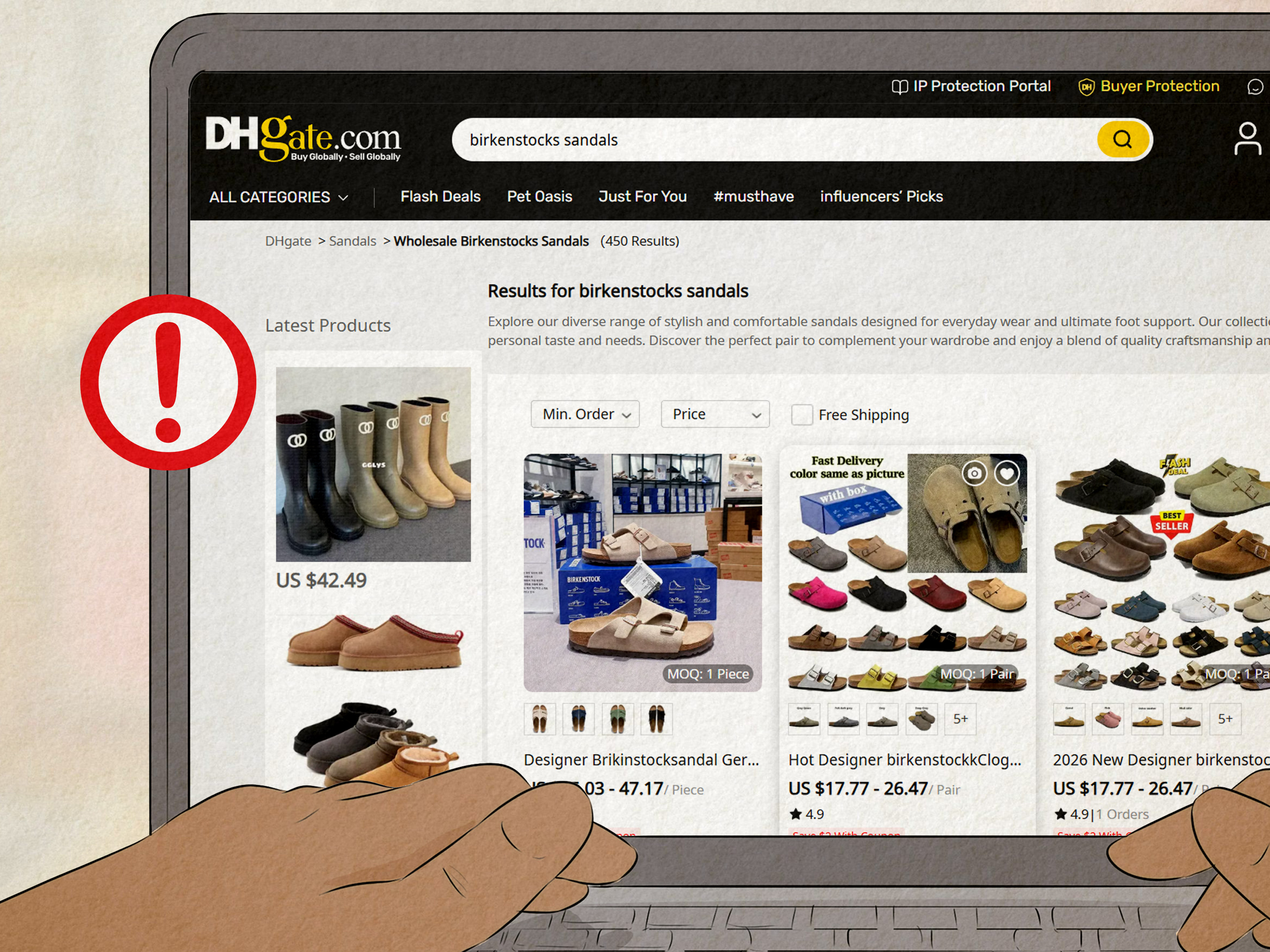
If you have been online for more than six minutes, you have probably seen them: taupe Boston clogs, classic Arizona sandals, and suspiciously cheap “Birks” being sold from websites that look like they were built during a power outage. Birkenstocks are wildly popular for a reason. They are comfortable, instantly recognizable, and somehow manage to look both relaxed and intentional, which is fashion’s favorite magic trick. The downside is obvious: popular shoes attract counterfeiters the way porch lights attract bugs.
The good news is that fake Birkenstocks are usually not that hard to spot once you know what to check. The trick is to stop focusing on one tiny detail and start reading the whole shoe like a detective reads a suspicious text message. You want to look at the seller, the price, the materials, the footbed, the buckles, the width markings, and the overall build quality. Real Birkenstocks are consistent. Fake ones usually get sloppy somewhere.
This guide breaks down how to spot fake Birkenstocks step by step, with special attention to the styles people search for most: Boston clogs, Arizona sandals, and other common Birkenstock favorites. Whether you are buying new, secondhand, or from a marketplace seller with “limited-time mega sale” energy, these checks will help you separate the real thing from the cork-shaped disappointment.
Why fake Birkenstocks are everywhere
Counterfeiters do not waste time making shoes nobody wants. They chase products that are easy to recognize, easy to photograph, and easy to pitch as a “steal.” That is exactly why Birkenstock Boston and Birkenstock Arizona pairs show up so often in suspicious listings. The silhouettes are famous, the colorways are familiar, and shoppers already know what they are supposed to look like at a glance.
That is also why the first authenticity check is not even on the shoe. It is on the buying path. If the website has strange spelling, awkward grammar, endless discounts, or offers to ship “authentic Birkenstocks” into the U.S. from another country, your red-flag parade has already started. A counterfeit pair often announces itself long before you open the box.
Think of it this way: a fake listing usually tries to win you with urgency, not credibility. Real sellers rely on product details, fit information, width options, and clean product photography. Fake sellers rely on panic, markdowns, and the digital version of “trust me, bro.”
The best way to spot fake Birkenstocks: use this 12-point checklist
1. Check where you are buying from
The safest route is simple: buy from the official Birkenstock U.S. site, a Birkenstock store, or an authorized retailer. If the seller is unknown, hard to verify, or has no clear business information, slow down. Authentic footwear brands do not need to hide behind mystery storefronts and sketchy checkout pages.
2. Be suspicious of prices that look absurdly low
A modest sale is normal. A jaw-dropping discount on multiple best-selling styles, all in popular sizes, all the time, is not. If a Boston or Arizona listing is priced like a fast-fashion impulse buy, assume you are paying for a problem. Counterfeits often use low pricing to short-circuit common sense. That is not a bargain. That is bait wearing sandals.
3. Look closely at the model details
Authentic Birkenstocks are built around consistent product descriptions. Classic Boston and Arizona styles commonly feature a contoured footbed, an EVA sole, suede footbed lining on many versions, and adjustable metal pin buckles. Soft footbed versions include an extra foam layer. If the listing mixes up those details, uses vague wording, or describes the shoe like the seller has never actually touched one, be careful.
4. Inspect the footbed shape, not just the logo
A real Birkenstock footbed is not flat. The contour is one of the brand’s defining features. The footbed should look intentionally shaped, with visible support zones rather than a generic slab pretending to be orthopedic. Many fake pairs focus on copying the name stamp while missing the actual architecture. That is like forging a passport and spelling the country wrong.
5. Check the footbed print quality
The branding inside the shoe should look crisp and deliberate, not smudged, crooked, overly thick, or oddly shiny. Authentic pairs generally have clean, readable printing. A fake pair may look as though the text was applied in a rush, with uneven spacing or a finish that looks painted on instead of properly stamped or printed.
6. Verify the width symbol
This is one of the smartest checks because counterfeiters often ignore it. Birkenstock uses a small footprint icon to indicate width. A solid footprint signals narrow, while an outlined footprint signals regular. If a pair has no width marking, a weird version of the symbol, or a symbol that does not match the listing, that is a strong warning sign.
7. Study the materials
Authentic Birkenstocks are usually clear about materials. Depending on the version, you may see suede, oiled leather, Birko-Flor, cork-latex, or molded EVA. Fake pairs often look “close enough” in photos but feel off in person. The suede may be too stiff, the faux cork may look painted, or the upper may have a plastic feel that does not match the model description.
8. Look at the buckles and hardware
Boston and Arizona styles rely on adjustable metal pin buckles. On real pairs, the hardware should look solid, proportionate, and neatly attached. On fake pairs, buckles may look thin, cheap, oddly shaped, or loosely installed. If the hardware feels like it came from a costume box instead of a shoe factory, your instincts are probably doing excellent work.
9. Inspect the outsole and edge finish
The EVA outsole should look clean and intentional, not sloppy around the edges. Pay attention to how the upper meets the footbed and how the sole is finished. Uneven cuts, rough glue marks, strange proportions, and poor alignment are all common counterfeit tells. Real Birkenstocks are not handmade-looking in a charming artisan way. They are clean-looking in a quality-control way.
10. Confirm the sizing format
Birkenstock commonly uses European sizing. If a listing skips that entirely, uses confusing size conversions, or invents a sizing scheme that does not resemble normal Birkenstock formatting, that is worth questioning. Confusing size charts are a classic counterfeit move because they give the seller room to shrug later.
11. Compare the pair to official photos
Before you buy, pull up the same model on the official Birkenstock site or a trusted retailer. Compare the shape of the toe, the strap placement, the buckle size, the profile of the footbed, and the color name. Counterfeit pairs often look “mostly right” until you compare them side by side. Then the weirdness starts glowing.
12. Judge the whole package, not one detail
One small inconsistency does not always prove a shoe is fake. Product seasons change, materials vary by style, and retailers sometimes use slightly different naming. But when the seller is strange, the price is bizarre, the width marking is wrong, the footbed is flat, and the hardware looks flimsy, you do not need a jury trial. You need to leave the page.
How to spot fake Birkenstock Boston clogs
The Boston clog is one of the most faked Birkenstock styles because it is everywhere and easy to recognize. For many authentic Boston models, the baseline details are pretty consistent: a contoured footbed, suede lining on common soft footbed versions, an EVA sole, one adjustable metal buckle, and a clean, rounded clog silhouette.
When checking a Boston, focus on three things first:
- The profile: a real Boston usually has a balanced shape, not a bulky cartoon clog or a collapsed slipper look.
- The buckle area: the strap and buckle should look centered, tidy, and sturdy rather than loosely attached.
- The footbed depth: the interior should look supportive and contoured, not flat like a house slipper pretending to have opinions about posture.
Many shoppers get distracted by colorways like taupe and mocha because those are popular and heavily copied. Color alone does not confirm authenticity. Construction does.
How to spot fake Birkenstock Arizona sandals
The Arizona sandal is the brand’s all-time heavyweight: two straps, clean lines, huge name recognition, and endless versions. On authentic pairs, the giveaway is usually not the top view. It is the combination of shape, material, and structure. The straps should sit properly, the buckles should feel substantial, and the footbed should look meaningfully contoured.
Arizona styles also come in several material versions, which matters. A suede Arizona should not feel plasticky. A Birko-Flor version should still look deliberate and well-made. An Arizona EVA is a different beast entirely: that model is made from molded EVA and is designed to be lightweight and water-friendly. If a seller claims a pair is EVA but the shoe is clearly built like a traditional cork-footbed sandal, something is off.
Also check the width mark. Arizona fakes regularly miss this detail, and it is one of the fastest ways to catch a bad pair.
What about other Birkenstock styles?
The same authenticity rules apply across the lineup. Whether you are looking at Gizeh, Mayari, Milano, Madrid, or a platform variation, the key questions stay the same:
- Does the seller appear legitimate?
- Do the materials match the model description?
- Does the footbed look truly contoured?
- Are the hardware and finish clean?
- Does the width marking make sense?
Counterfeiters count on shoppers thinking, “It looks close enough.” Authenticity usually lives in the details that close-enough sellers hope you will ignore.
How to buy secondhand without getting burned
Secondhand Birkenstocks can absolutely be worth buying, but only if you treat the purchase like a mini inspection. Ask for clear photos of the footbed print, width symbol, outsole, buckle, side profile, and both shoes together. Request the exact model name and size. Compare everything to official retailer photos.
Do not panic if a used authentic pair looks worn. Genuine Birkenstocks are designed to mold with wear, so older pairs may show signs of real use. What matters is whether the original structure and markings still make sense. A used pair can be ugly and real. A suspiciously pristine pair can still be fake.
And yes, seller behavior matters. If someone refuses basic photos, avoids direct questions, or keeps changing the story about where the shoes came from, that is not mysterious. That is information.
What to do if you think you bought a fake pair
Stop wearing them long enough to inspect them carefully. Compare them with official images. Review the seller listing, payment method, and order confirmation. Save screenshots. If you bought through a marketplace, start a dispute quickly. If you bought with a credit card or payment service, check the buyer-protection process. Keep the packaging, invoice, and all messages.
You should also report suspicious sellers to the platform and, when relevant, to Birkenstock. Counterfeits are not just annoying. They undermine buyer trust, muddy the resale market, and make it harder for shoppers to know what they are actually paying for.
The biggest lesson is simple: when in doubt, buy from a verified source next time. It is much cheaper to pay normal retail than to pay fake-shoe tuition.
Real-world experiences: what shoppers notice when comparing authentic and fake Birkenstocks
One of the most useful ways to understand how to spot fake Birkenstocks is to look at what happens in real buying situations. Not theoretical ones. Not “zoom into the fourth buckle hole and consult the moon.” Real situations: the pair arrives, you open the box, and within about thirty seconds you either feel relieved or deeply suspicious.
A common experience with authentic Birkenstocks is that the shoes feel intentional right away. The footbed does not feel random. Even before the pair is broken in, there is a sense of structure under the foot. Shoppers often notice that the contour feels supportive rather than mushy, and the shoe seems built to hold its shape instead of collapsing like a bargain slipper wearing a disguise. That first impression matters because counterfeit pairs often miss the brand’s core identity: the footbed.
Another frequent experience is visual confidence. Buyers who receive authentic Bostons or Arizonas from trusted retailers usually do not spend an hour wondering whether the buckle looks haunted. The print inside the shoe is readable, the materials match the listing, and the proportions make sense. The pair looks like the photos because it is the pair from the photos. What a concept.
By contrast, shoppers who end up with suspicious pairs often describe a creeping series of little doubts. The website looked a bit odd, but the sale was tempting. The shipping confirmation was vague. The shoes arrived in packaging that felt generic. Then the details started stacking up: a flat footbed, awkwardly finished edges, hardware that looked lighter than expected, or markings that did not match official examples. Any one of those issues might not cause instant panic. Together, they usually do.
Secondhand buyers have their own version of this learning curve. Experienced resale shoppers tend to rely less on the seller’s confidence and more on the evidence in the photos. They know to ask for the width symbol, the footbed stamp, the outsole, and the profile of the shoe from the side. They also know that wear alone is not a dealbreaker. A real pair can show age and still be authentic. In fact, a naturally worn authentic pair often looks more convincing than a too-perfect fake that copied the color but not the construction.
People also learn quickly that authentic Birkenstocks vary by model and material, which is why comparison shopping matters. A suede Boston feels different from an EVA Arizona, and a Birko-Flor Arizona will not present exactly like an oiled leather version. The smartest shoppers do not memorize one rigid rule. They compare the exact model they want against official images and trusted retailer listings. That habit saves a lot of money and an even greater amount of annoyance.
In the end, the most honest buyer experience is this: authentic Birkenstocks tend to feel coherent. The seller, the materials, the markings, the shape, and the comfort story all line up. Fake pairs feel off because something in that chain breaks. Sometimes it is the price. Sometimes it is the website. Sometimes it is the shoe itself. Usually, it is all three showing up to the same bad party.
Final takeaway
If you want to spot fake Birkenstocks, start with the seller, then move to the shoe. Verify the source, question extreme discounts, compare the pair to official photos, check the width symbol, inspect the footbed, and make sure the materials and hardware match the actual model. For Boston clogs, Arizona sandals, and nearly every other Birkenstock style, authenticity is not hidden in one magical clue. It is revealed by consistency.
Real Birkenstocks look like they know exactly what they are. Fake ones usually look like they are improvising.