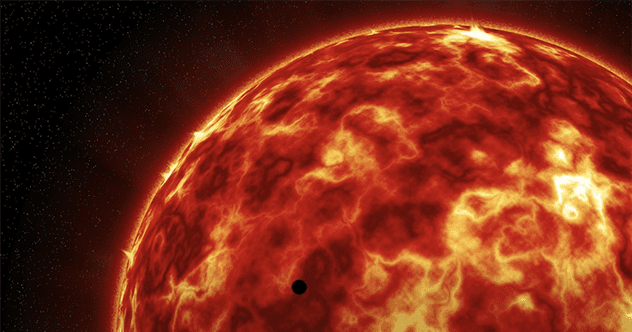
Space is not just big. Space is dramatic. It has planets where glass may rain sideways, iron can fall from the sky, oceans are made of lava, and stars slowly snack on their own worlds like cosmic popcorn. These are exoplanets: planets outside our solar system, orbiting other stars, pulsars, stellar corpses, or sometimes wandering in ways that make astronomers reach for stronger coffee.
NASA has confirmed thousands of exoplanets, and many are not gentle blue marbles waiting for beach resorts. Some are “hot Jupiters” roasted by their stars. Some are rocky super-Earths so close to their suns that one year lasts less than a day. Others orbit undead pulsars blasting radiation into space. In other words, the universe has rangeand not all of it is hospitable.
This list explores ten of the most bizarre and deadly exoplanets known today. “Deadly” here does not mean they are villains with tiny space mustaches. It means their environments would be instantly hostile to humans, spacecraft, and probably any vacation plan not involving teleportation and a very flexible refund policy.
What Makes an Exoplanet Bizarre and Deadly?
An exoplanet becomes bizarre when it breaks our comfortable solar-system expectations. In school, planets are often presented like orderly marbles: rocky ones inside, gas giants outside, everyone politely orbiting. Exoplanets laughed at that idea. Astronomers have found Jupiter-size worlds orbiting closer to their stars than Mercury orbits the Sun, super-Earths with molten surfaces, planets darker than coal, and worlds stretched by gravity into shapes no respectable planet would choose for a yearbook photo.
They become deadly because of extreme heat, crushing gravity, toxic atmospheres, intense radiation, brutal winds, or the simple inconvenience of not having a solid surface. Most are not “bad planets.” They are natural laboratories. They show scientists how planets form, migrate, lose atmospheres, survive stellar violence, or fail to become anything like Earth.
Top 10 Bizarre And Deadly Exoplanets
1. KELT-9b: The Planet Hotter Than Some Stars
KELT-9b is an ultra-hot gas giant orbiting an extremely hot star. It completes a year in about 1.5 Earth days, which makes Monday through Friday feel merciful by comparison. The planet’s dayside temperature is so intense that molecules can be ripped apart. This is not “bring sunscreen” hot. This is “your sunscreen has become plasma with ambition” hot.
What makes KELT-9b especially strange is that it behaves almost like a planet-star hybrid. It is still a planet, but its heat, radiation environment, and atmospheric escape make it a spectacular example of how close-in giant planets can be cooked, inflated, and stripped. If Earth is a cozy cottage, KELT-9b is a furnace wearing a Jupiter costume.
Why it is deadly: extreme stellar radiation, dayside heat capable of destroying molecules, and a giant gaseous environment with no survivable surface.
2. WASP-12b: The Planet Being Eaten by Its Star
WASP-12b is one of the universe’s most tragic dinner guests. This hot Jupiter orbits so close to its parent star that the star’s gravity is pulling material from the planet. Its orbit takes only about 1.1 Earth days, and tidal forces have stretched it into an egg-like shape. Imagine a planet slowly being peeled apart by gravity while racing around its sun. Space: beautiful, but rude.
The planet’s atmosphere is being stripped away, forming material around the star. Scientists estimate that WASP-12b may eventually be consumed completely. That makes it a dramatic case study in planetary death, orbital decay, and the dangerous intimacy between a giant planet and a hungry star.
Why it is deadly: extreme heat, violent tidal distortion, atmospheric loss, and eventual destruction by its star.
3. HD 189733b: The Blue Planet Where Glass May Rain Sideways
From a distance, HD 189733b looks charmingly blue. Unfortunately, that color is not a promise of oceans, beaches, or friendly dolphins. This hot Jupiter is famous for savage winds that can reach thousands of miles per hour and for clouds that may contain silicate particles. In plain English: tiny glass-like material may whip through the atmosphere sideways.
HD 189733b is a great reminder that appearances can be deeply misleading. Earth is blue because of water. This exoplanet is blue because its atmosphere is a high-speed blender of heat, particles, and chaos. If it had a tourism slogan, it might be: “Come for the color, leave as confetti.”
Why it is deadly: supersonic winds, extreme heat, hostile gas giant conditions, and possible sideways glass rain.
4. WASP-76b: The World Where It May Rain Iron
WASP-76b is a tidally locked gas giant, meaning one side constantly faces its star while the other side remains in relative darkness. The dayside can become hot enough to vaporize metals such as iron. Winds can carry that vapor toward the cooler nightside, where iron may condense and fall like metallic rain.
Yes, iron rain. Not a drizzle. Not a refreshing mist. A weather forecast that sounds like a blacksmith sneezed into a hurricane. WASP-76b is one of the best-known examples of how exotic chemistry can become weather under extreme exoplanet conditions.
Why it is deadly: vaporized metals, extreme day-night temperature contrast, powerful winds, and a gas giant environment no human could survive.
5. 55 Cancri e: The Super-Earth With Lava-Ocean Energy
55 Cancri e, also called Janssen, is a rocky super-Earth about twice Earth’s size and several times its mass. It orbits its star incredibly closely, finishing a year in less than one Earth day. Earlier studies made it famous as a possible lava world, and newer observations suggest it may have a secondary atmosphere connected to its molten surface.
This planet is especially exciting because it is rocky, nearby by cosmic standards, and bright enough for detailed study. But do not confuse “rocky” with “habitable.” The surface conditions are brutally hot. If Earth’s geology is a slow-cooked soup, 55 Cancri e is a lava fondue party nobody should attend.
Why it is deadly: scorching temperatures, possible magma oceans, intense stellar radiation, and no known conditions for liquid water or life.
6. Kepler-10b: The Dense Rocky World From a Bad Neighborhood
Kepler-10b was the first rocky planet confirmed by NASA’s Kepler mission. It is a super-Earth that orbits extremely close to its star, completing an orbit in about 0.8 Earth days. Its density suggests a rocky, iron-rich composition, but its location makes it far more infernal than Earth-like.
Being rocky is not enough to be cozy. Kepler-10b is close enough to its star that its surface may be molten or severely scorched. It helped prove that small rocky exoplanets exist, but it also taught a less comforting lesson: some rocky planets are less “second Earth” and more “cosmic pizza stone left in the oven.”
Why it is deadly: extreme orbital proximity, high surface temperatures, likely molten or scorched terrain, and no friendly atmosphere known.
7. TrES-2b: The Darkest Known Planet Orbiting a Star
TrES-2b is often described as darker than coal. This gas giant reflects very little of the light that hits it, making it one of the most visually eerie exoplanets ever discovered. It may glow faintly red from heat, like a charcoal briquette with planetary ambitions.
Why so dark? Scientists have proposed that its hot atmosphere may lack reflective clouds and may contain light-absorbing chemicals such as sodium and potassium. Whatever the exact recipe, the result is an alien world that would be almost invisible except for its heat. It is the haunted house of hot Jupiters.
Why it is deadly: high heat, a giant gaseous atmosphere, darkness, and chemical conditions very different from anything humans could tolerate.
8. TOI-849b: The Naked Core of a Giant Planet
TOI-849b may be the exposed core of a gas giant or a failed giant planet that never built a massive atmosphere. It sits in what astronomers call the “hot Neptune desert,” a region close to stars where Neptune-size planets are unusually rare. That alone makes TOI-849b scientifically delicious.
Think of it as the planetary equivalent of finding a car engine driving down the highway without the car. It may reveal what lies deep inside giant planets, a place we usually cannot inspect because thick atmospheres get in the way. TOI-849b is not just bizarre; it is a possible autopsy report for planet formation.
Why it is deadly: close stellar orbit, intense radiation, high temperatures, and an exposed or unusual planetary structure unlike any safe world.
9. PSR B1257+12 Planets: Zombie Worlds Around an Undead Star
The planets orbiting PSR B1257+12 are among the creepiest worlds in astronomy. They circle a pulsar, the rapidly spinning remnant of a dead star. Pulsars emit beams of radiation and behave like cosmic lighthouses with anger issues. These planets were also among the first confirmed exoplanets, making them historically important and dramatically spooky.
The known planets in the system include worlds nicknamed Draugr, Poltergeist, and Phobetor. Subtle? Absolutely not. But the names fit. These are planets living in the aftermath of stellar death, likely bathed in harsh radiation and existing in an environment that is profoundly hostile to life as we know it.
Why they are deadly: intense pulsar radiation, extreme space weather, and orbit around a stellar corpse rather than a gentle sun-like star.
10. WASP-121b: The Heavy-Metal, Football-Shaped Hot Jupiter
WASP-121b is an ultra-hot Jupiter orbiting so close to its star that its upper atmosphere is heated to extreme temperatures. Observations have detected metals such as magnesium and iron escaping into space. The planet is also distorted by tidal forces, giving it a stretched shape often compared to a football.
This is not a planet with weather so much as a planet undergoing atmospheric demolition. Some studies suggest that metals may move through its atmosphere and potentially contribute to exotic clouds or precipitation patterns. WASP-121b is a perfect example of how close-in gas giants can become inflated, warped, stripped, and chemically weird.
Why it is deadly: atmospheric escape, heavy-metal gases, extreme heat, tidal distortion, and powerful radiation from its star.
Why Scientists Study These Nightmare Worlds
At first, these planets sound like cosmic horror stories. But for astronomers, bizarre exoplanets are treasure chests. Extreme worlds help test theories that ordinary planets cannot. A lava world can teach scientists about rocky planet interiors and secondary atmospheres. A hot Jupiter can reveal how gas giants migrate. A pulsar planet can show whether planet formation can happen after stellar death. A planet losing its atmosphere can help explain why some worlds become bare rocks while others keep thick envelopes of gas.
These discoveries also help refine the search for habitable planets. To understand what makes Earth special, scientists need to understand what makes other worlds hostile. Habitability is not just about being the right size. A planet needs the right temperature, atmosphere, chemistry, magnetic protection, stable orbit, and probably a long list of other cosmic blessings. Earth did not just win one lottery. It won the deluxe bundle.
Lessons From the Most Dangerous Exoplanets
The first lesson is that distance matters. Many deadly exoplanets orbit extremely close to their stars. Their years last hours or days, their surfaces or atmospheres are scorched, and tidal forces can lock one side in permanent daylight. This proximity creates strange weather, atmospheric loss, and temperatures that make volcanic eruptions on Earth look like scented candles.
The second lesson is that planets are not fixed objects. They evolve. They migrate. They lose gas. They get stretched, stripped, heated, and sometimes swallowed. WASP-12b may be consumed by its star. TOI-849b may be the leftover core of something larger. WASP-121b is bleeding material into space. These worlds are not static museum exhibits; they are active cosmic processes.
The third lesson is that “Earth-like” is complicated. A rocky planet can still be a lava nightmare. A blue planet can still rain glass. A planet in a system with other worlds can still be blasted by radiation. When scientists search for life, they are not just looking for size or color. They are looking for the delicate balance that allows chemistry to become biology rather than barbecue.
Experience Section: Imagining a Journey Through Bizarre and Deadly Exoplanets
Imagine preparing for the ultimate exoplanet field trip. Your packing list would be short: one indestructible spacecraft, one impossible heat shield, one radiation-proof suit, one backup universe, and snacks. Definitely snacks. The first stop is KELT-9b, where the star dominates the sky like an overachieving blowtorch. Instruments scream warnings before you even arrive. Molecules in the upper atmosphere are being torn apart, and the planet glows with a heat that feels less like weather and more like a physics lecture yelling at you.
Next, you drift toward WASP-12b. The planet looks swollen and distorted, tugged into an egg-like shape by its star. You can almost imagine it stretching with every orbit, losing material like smoke from a candle. There is something strangely sad about it. Planets feel permanent from a human point of view, but WASP-12b proves even giant worlds can be temporary.
Then comes HD 189733b, which tricks the eye. It shines blue, inviting and familiar, like Earth seen from deep space. But the illusion collapses when you read the atmospheric data. The winds are monstrous. The heat is punishing. The possible silicate rain is not gentle rainfall but airborne shrapnel. It is the kind of planet that teaches humility very quickly.
WASP-76b offers a different kind of terror. On the dayside, metals vaporize. On the nightside, iron may fall from the sky. You picture standing under a storm cloud, then immediately remember there is no standing on a gas giant, no breathable air, and no umbrella rated for molten metal. The universe has excellent special effects and terrible customer service.
By the time you reach 55 Cancri e, the trip becomes geological. This is a world where the ground itself may glow, melt, and outgas. The idea of a lava ocean is beautiful in the way lightning is beautiful: best admired from a safe distance. Instruments mapping its atmosphere and heat patterns do not just describe a planet; they describe a boundary between rock and vapor, surface and sky, geology and weather.
Kepler-10b feels like a monument. It helped mark the era when rocky exoplanets moved from speculation to confirmed reality. Yet it is not comforting. It is too close to its star, too hot, too extreme. It reminds you that discovering rocky worlds is only the first step. Finding a kind rocky world is the hard part.
TrES-2b is the psychological thriller of the tour. It absorbs light, hides in darkness, and glows faintly from internal heat. It does not need lava waves or iron rain to be unsettling. Its weirdness is quiet. It is a planet that seems to stare back without reflecting much of anything.
TOI-849b feels like visiting the exposed bones of a planet. If it is truly a remnant core, it offers a rare look at the hidden architecture of giant worlds. It is not just deadly; it is revealing. It tells a story about what planets can lose and what remains after cosmic violence has done its work.
The pulsar planets around PSR B1257+12 are the strangest stop of all. Their star is dead, yet spinning with terrifying precision. Radiation sweeps through the system. The planets orbit like ghosts around a lighthouse built from stellar collapse. Their existence is both eerie and inspiring: even after catastrophe, planetary systems can exist.
Finally, WASP-121b closes the tour with theatrical flair. It is hot, warped, and leaking metal into space. It is a planet caught in the act of transformation. Watching it is like watching planetary evolution in fast-forward. You return home with one conclusion: the galaxy is not merely filled with worlds. It is filled with stories, and many of them are much weirder than science fiction dared to predict.
Conclusion
The top 10 bizarre and deadly exoplanets show that the universe is wildly creative. Some planets are stretched by gravity, some are darker than coal, some may rain glass or iron, and some orbit the remnants of dead stars. These worlds are hostile, but they are also valuable. They help scientists understand planet formation, atmospheric chemistry, orbital migration, stellar destruction, and the fragile recipe that makes a planet potentially livable.
Earth may seem ordinary because it is home, but compared with these extreme exoplanets, it is astonishingly calm. No sideways glass rain. No iron storms. No star eating us for breakfast. That alone is worth appreciating the next time your weather app complains about light drizzle.