Note: This is body-only HTML in standard American English, ready to paste into a webpage.
If your kitchen cabinets sound like a percussion section every time you unload the dishwasher, welcome. You are among friends. Dishes and utensils have a sneaky way of multiplying, clattering, and hiding exactly when dinner is boiling over. The good news is that kitchen organization does not have to feel like a museum installation or a reality show makeover. With the right mix of display, storage, and common sense, you can make your kitchen look better and work harder at the same time.
The smartest dish and utensil storage ideas do two things well: they keep everyday items easy to grab, and they make the space feel intentional instead of chaotic. That is why the best kitchens often use a blend of open shelving, divided drawers, hidden pullouts, baskets, hooks, and display-friendly storage that doubles as decor. Whether you have a tiny apartment kitchen, a busy family hub, or a roomy cook space that still somehow cannot find the ladle, these ideas can help.
Below, you will find 31 creative ways to display and organize dishes and utensils without turning your kitchen into a plastic-bin jungle. Some ideas are renter-friendly, some are great for remodels, and all of them are built around real-life habits. Because the goal is not just a pretty kitchen. The goal is a kitchen that stops making you mutter, “Now where did the tongs go?”
Open Storage Ideas That Make Dishes Look Good
1. Turn Upper Cabinets Into Open Shelving
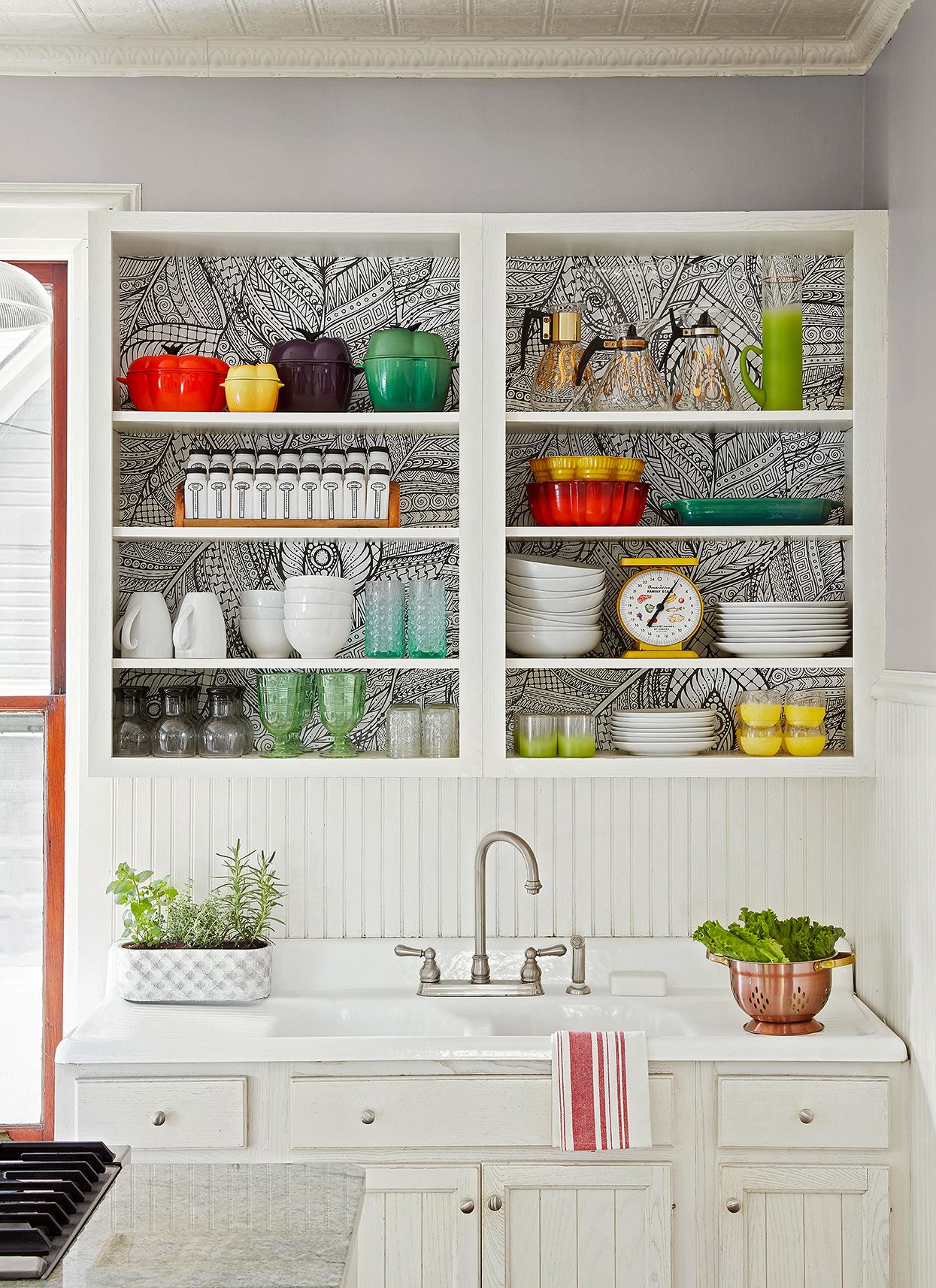
Removing a few cabinet doors instantly lightens the look of a kitchen and gives plates, bowls, and glasses a chance to earn their keep as decor. Keep the arrangement tidy by stacking similar items together and limiting the palette so it looks curated instead of caffeinated.
2. Add Wallpaper or a Contrasting Color Behind Shelves
If you are going to display dishes, give them a backdrop worthy of applause. Wallpaper or a painted cabinet back adds depth, makes white dishes pop, and turns ordinary storage into a design feature with almost suspiciously little effort.
3. Install Floating Shelves for Everyday Plates and Bowls
Floating shelves are perfect for the pieces you use constantly. Store daily dishware here, not the holiday gravy boat you bring out once every presidential term. The result is easy access and a more open, airy kitchen.
4. Build a Recessed Niche for Serving Pieces
A recessed wall niche is one of those ideas that looks custom because, well, it is. It is especially useful for platters, trays, and large bowls that deserve better than being wedged behind a cereal box. Paint the inside a different color for extra charm.
5. Use Floating Glass Shelves for Lightweight Glassware
Glass shelves can store drinkware without visually weighing down the room. They are a smart choice when you want display storage that still feels sleek. Just keep the styling simple so the glasses sparkle instead of shouting over one another.
6. Mount a Plate Rack on the Wall
A wall-mounted plate rack frees up cabinet or drawer space and gives decorative dishes a proper moment in the spotlight. This works especially well in cottage, vintage, farmhouse, or collected-over-time kitchens where personality matters just as much as function.
7. Repurpose a Wire Rack for Mugs and Tea Towels
A vintage wire rack or shop-style display rack can hold mugs on the top and tea towels below. It creates a compact beverage station, adds texture, and proves that practical storage does not have to be boring enough to put toast to sleep.
8. Use Open Island Shelves to Display Dishware
If your kitchen island has exposed shelving, do not waste it on mystery clutter. Stack pretty bowls, line up plates, and tuck the less glamorous extras into matching baskets. This turns the island into both a storage hub and a design anchor.
Wall, Rail, and Vertical Storage for Utensils
9. Hang Utensils on a Pegboard Wall
A pegboard is one of the most flexible kitchen storage ideas around. It can hold utensils, cutting boards, strainers, and baskets, and you can move the hooks around as your needs change. It is basically the Swiss Army knife of wall storage.
10. Install a Peg Rail Under Upper Cabinets
Peg rails are simple, classic, and surprisingly useful in a kitchen. Hang wooden spoons, oven mitts, shears, or small baskets. If your utensils do not have large hanging holes, add loops of twine and call it rustic on purpose.
11. Add an Under-Cabinet Rod With S-Hooks
A slim metal rod with S-hooks creates a clean, efficient place for utensils near the stove. It is especially handy in small kitchens where drawer space is tight and every inch has to audition for a role.
12. Repurpose a Magnetic Bar
Magnetic bars are not just for knives. They can also hold kitchen shears, metal measuring spoons, microplanes, and slim metal utensils. This keeps tools visible, easy to grab, and far less likely to vanish into the Bermuda Triangle known as the junk drawer.
13. Add Hooks Under Shelves for Mugs
The underside of a shelf is valuable real estate. Small hooks can hold mugs, handled cups, or even measuring cups. It is a great way to save shelf space while making everyday drinkware feel display-worthy.
14. Mount a Wall Rack Beside the Cooktop
A wall rack near the stove works beautifully for the utensils and pans you reach for all the time. It shortens your cooking path, keeps counters clearer, and adds that “someone here actually cooks” energy.
15. Use the Space Above Cabinets Thoughtfully
If there is space between your cabinets and the ceiling, use it with intention. Decorative bins, trays, or seasonal serving pieces can live there. The trick is restraint. One curated row looks stylish. A dusty avalanche of random appliances does not.
Drawer and Cabinet Ideas That Make Daily Life Easier
16. Store Everyday Dishes in Deep Drawers
Deep drawers are easier on your back and often more practical than upper cabinets, especially for plates and bowls. They let you reach from above instead of lifting stacks overhead, which is excellent news for both convenience and gravity.
17. Use an Adjustable Peg System for Plates and Bowls
Drawer peg systems keep dishes upright, stable, and less likely to chip. They are especially smart in deep drawers because they prevent stacks from sliding around every time the drawer opens or closes like it is late for work.
18. Divide Utensil Drawers by Task
Instead of throwing every tool into one overstuffed drawer, divide utensils by category: prep tools, baking tools, serving pieces, everyday flatware. This small change makes cooking smoother and saves you from conducting archaeological digs for the vegetable peeler.
19. Use a Nested Tray for Silverware
A two-level or nested tray lets you protect nicer flatware while using drawer space more efficiently. It also gives everyday forks and spoons a designated home, which sounds basic until you realize how many kitchens run on pure cutlery improvisation.
20. Hang Measuring Spoons Behind Cabinet Doors
The inside of a cabinet door is perfect for small hooks. Measuring cups and spoons become visible, organized, and easy to reach. Add labels or outlines if you want to get impressively organized without becoming annoying about it.
21. Store Trays, Lids, and Cutting Boards Vertically
Vertical storage is a lifesaver for flat, awkward items. Use dividers, file-sorter-style racks, or peg-and-dowel systems so cookie sheets, platters, pot lids, and boards can stand upright. It saves space and spares you the dreaded cabinet clang symphony.
22. Add a Slim Pullout Cabinet for Small Tools
That narrow gap beside an appliance can become a pullout home for utensils, spices, scissors, or coffee supplies. Slim pullouts are excellent because they turn “dead space” into “I am a genius” space.
23. Install a Pull-Out Pot or Pan Rack
Pull-out racks make it easier to see and grab cookware without unstacking the whole metal mountain. Even if you mainly use it for pans, the same idea works well for larger serving pieces and awkward kitchen tools.
24. Take Cabinets to the Ceiling
Ceiling-height cabinets create more storage and visually elongate the room. Keep rarely used serving platters, holiday dishes, and backup sets up high, while your everyday plates and utensils stay lower and easier to reach.
Furniture-Style Storage That Adds Character
25. Store Kitchen Extras in a Banquette Bench
A banquette or window seat can hide baskets filled with napkins, wooden utensils, and serving pieces. This is a clever way to keep dining-related items near the table while freeing up prime cabinet space for everyday essentials.
26. Add Pullout Drawers Under Banquette Seating
Pullout drawers under a breakfast nook are especially useful for stacks of plates and bowls. They are easy to reach, easy to unload into after dishwashing, and a smart option if upper cabinets are scarce or inconvenient.
27. Use an Open Island as a Working Storage Unit
An island with shelves and baskets can hold cutting boards, serving trays, oversized bowls, and backup dishware. Think of it as the kitchen equivalent of a multitool: prep surface on top, hard-working storage underneath.
28. Use a Portable Crate or Caddy
A handled crate or caddy is ideal for transporting plates, napkins, and utensils between the kitchen and dining area. It also works for outdoor meals, buffet nights, or any occasion where you want to look organized even if dinner is frozen pizza.
29. Build Toe-Kick Drawers
The shallow space beneath lower cabinets can become storage for cutting boards, linens, and baking sheets. Toe-kick drawers are sneaky in the best possible way, like a secret compartment that actually earns its keep.
30. Add a Sink-Front Drop-Down for Dish Tools
The false drawer panel in front of a sink can become a pull-down compartment for sponges, scrub brushes, and gloves. This keeps dishwashing tools close at hand without cluttering the counter or turning the sink zone into a soap opera.
31. Create a Rolling Breakfast or Coffee Station
A pullout shelf, bar cart, or rolling tray can gather mugs, spoons, sugar, coffee, and tea in one place. Grouping related items into a station is one of the easiest ways to make a kitchen feel calmer, faster, and far more competent before 8 a.m.
How to Make These Kitchen Organization Ideas Actually Work
The best kitchen storage ideas are not about owning more organizers than kitchen tools. They are about building a system around the way you really live. Start by grouping dishes and utensils by task. Everyday plates, bowls, glasses, and flatware should stay close to the dishwasher or sink for easier unloading. Cooking utensils should live near the stove. Coffee mugs should be close to the coffee maker. Serving pieces can be tucked farther away because they are not part of the daily scramble.
Next, edit before you organize. There is no elegant way to store six chipped mugs, three lonely chopsticks, and a spatula that lost its dignity in 2019. Decluttering first gives every remaining item a better chance of fitting beautifully into drawers, shelves, and display zones.
Finally, combine hidden storage with visible storage. Open shelving is lovely, but not every kitchen item deserves a public life. Use display storage for dishes, glassware, mugs, or a favorite utensil crock. Hide the visual noise in drawers, baskets, and cabinets. That balance is what makes a kitchen feel warm and lived in rather than staged for a catalog nobody is allowed to touch.
Real-Life Experiences With Displaying and Organizing Dishes and Utensils
I learned the hard way that kitchen organization looks very different in real life than it does in a beautifully styled photo. In pictures, open shelves always seem serene, as if no one in that household has ever panic-made pasta at 9:14 p.m. In reality, the first time I tried open shelving, I put every plate, bowl, mug, and random souvenir cup on display. It looked less “intentional kitchen design” and more “gift shop after a minor earthquake.” The fix was simple: I edited ruthlessly. Once I kept only the everyday pieces and stacked them by shape and color, the shelves finally felt calm.
The biggest surprise was how much easier unloading the dishwasher became once I moved daily dishes closer to it. It sounds obvious now, but for years I had plates in one corner of the kitchen, bowls in another, and mugs apparently living a life of mystery and adventure. Reorganizing by zone changed everything. Suddenly, cleanup took minutes instead of a dramatic interpretive dance across the room.
Utensils were another adventure. I used to keep them all in one oversized crock on the counter because it looked charming. And it did, until I needed one whisk and had to yank out twelve wooden spoons, a ladle, and something metal that always clanged like a cymbal crash. Splitting utensils by purpose helped more than I expected. The everyday cooking tools stayed near the stove, the baking tools moved into a drawer, and the serving pieces went closer to the dining area. Same kitchen, less chaos.
I also discovered that hidden storage feels magical when it solves a real annoyance. A slim pullout for coffee supplies may not sound life-changing, but when your mugs, tea bags, sugar, and spoons are all in one place, mornings become noticeably less grumpy. The same goes for vertical lid storage. Once pot lids stopped collapsing like dominoes every time I opened a cabinet, I felt like I had achieved some small domestic Nobel Prize.
There were a few lessons I would absolutely repeat. First, baskets are heroes. They hide visual clutter, keep categories together, and make open storage look polished. Second, labels are helpful when they are subtle and sensible. Third, not every pretty idea fits every household. Open shelves can be wonderful, but only if you are willing to keep them tidy. A magnetic bar is brilliant, but only if it is placed where elbows and small children will not fight it daily.
Most of all, I learned that a good kitchen organization system should feel boring in the best way. You should not have to think too hard about where plates go, where the tongs live, or why the measuring spoons are somehow in three different drawers again. When the system works, the kitchen starts helping you instead of challenging you. And honestly, that may be the most creative trick of all.
Final Thoughts
Displaying and organizing dishes and utensils is not just about saving space. It is about improving the way your kitchen functions every day. The right setup can make cooking smoother, cleanup faster, and the room itself more inviting. A few shelves, hooks, dividers, or hidden drawers can completely change how the space feels. Better still, many of these kitchen organization ideas work whether you are renovating, renting, or simply trying to stop your spatulas from staging a rebellion.
Start with one zone, one drawer, or one shelf. Build a system around how you actually cook, eat, unload, and live. Once your dishes and utensils have a home that makes sense, the whole kitchen begins to feel lighter. And when your kitchen feels lighter, somehow dinner does too.