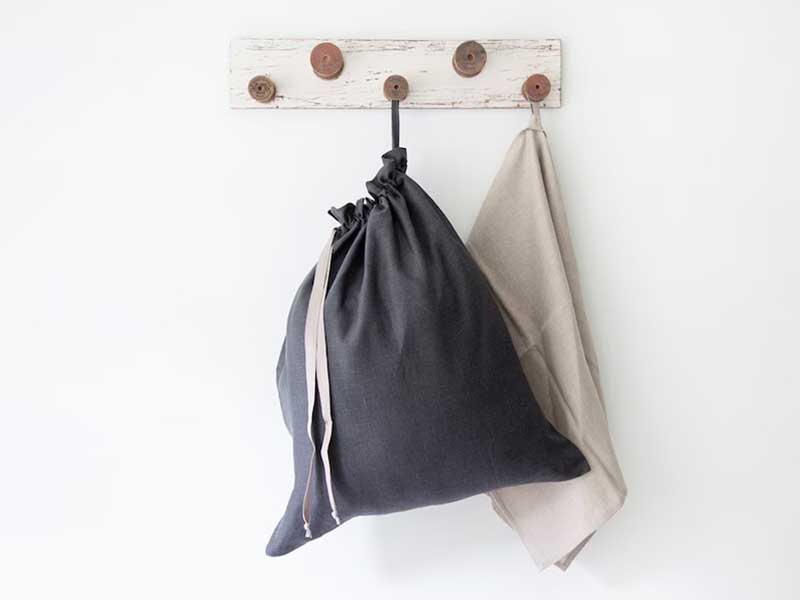
A large linen laundry bag is proof that even dirty socks can live somewhere attractive. Instead of letting worn shirts form a suspicious new piece of bedroom furniture, this soft-sided container gathers clothing, towels, and bedding in one tidy place while adding natural texture to the room.
Unlike a rigid plastic basket, a linen laundry bag can be folded, carried, tucked into a closet, or placed beside a dresser without making the room feel like a commercial wash station. Its generous capacity is especially useful for families, apartment dwellers, college students, and anyone whose laundry schedule occasionally becomes more of a laundry suggestion.
Yet size and appearance are only part of the story. The best large linen laundry bag should also provide airflow, strong handles, reinforced seams, practical care instructions, and a shape that suits the space. This guide explains what linen laundry bags offer, how to choose one, and how to keep it clean enough to deserve its stylish reputation.
What Is a Large Linen Laundry Bag?
A large linen laundry bag is a flexible textile container designed to collect or transport clothing and household linens. It may be made from pure linen, a linen-cotton blend, or a synthetic material woven to resemble linen. Common designs include drawstring sacks, freestanding hampers, removable hamper liners, hanging bags, and collapsible baskets with internal supports.
True linen is made from flax fibers and is valued for its strength, breathability, and naturally textured appearance. However, shoppers should not assume that every product described as “linen-style” or “linen-look” contains flax. The Federal Trade Commission requires many textile products sold in the United States to disclose their fiber content, so the sewn-in label or product specification is the most reliable place to confirm what the bag is actually made from.
A bag labeled “100% linen” may feel crisp at first and soften with use. A linen-cotton blend often feels smoother and may be easier to wash. Polyester linen-look fabric can offer better stain resistance and shape retention, although it will not have exactly the same natural texture or moisture behavior as flax linen.
Why Choose Linen for Laundry Storage?
Breathable Fabric Helps Air Circulate
Dirty laundry should not be sealed in an airtight container for days, especially when it includes workout clothes, socks, or towels. Breathable fabrics allow more air movement around the contents, helping reduce the trapped, stale environment that encourages unpleasant odors.
Laundry experts commonly recommend ventilation when evaluating hampers. Loose-weave constructions and breathable materials such as linen, cotton, canvas, and bamboo can help air circulate, although no fabric can rescue a pile of soaking-wet towels abandoned over a long weekend. Damp items should always be allowed to dry before entering the bag.
It Looks Better Than the Average Hamper
Linen has a relaxed, slightly rumpled texture that fits naturally into modern, coastal, farmhouse, Scandinavian, rustic, and minimalist interiors. Neutral colors such as flax, oatmeal, cream, gray, and charcoal blend easily with bedroom furniture and laundry-room cabinetry.
This matters when a hamper must remain visible. A large linen bag can look like an intentional storage accessory rather than a plastic object that escaped from the utility closet. It will not transform laundry into an exciting hobby, but it can make the evidence less visually alarming.
Soft Sides Are Flexible
A soft laundry bag can adapt to awkward corners and narrow closet openings. When partially filled, it occupies less space than a rigid basket of comparable maximum capacity. Many models collapse nearly flat when empty, making them useful in dorm rooms, guest rooms, recreational vehicles, and apartments where every square foot has already been assigned three jobs.
Soft construction also reduces the risk of a hard edge scraping a wall, cabinet, or doorframe. This is especially convenient when carrying laundry through a hallway or down a staircase.
A Removable Bag Simplifies Transport
Some linen laundry bags are designed to sit inside a structured hamper frame. On wash day, the inner bag can be lifted out and carried directly to the machine. Tested hamper designs frequently emphasize removable liners, comfortable handles, and bottom helper straps because these details make heavy loads easier to empty.
How to Choose the Best Large Linen Laundry Bag
Match the Capacity to Your Routine
“Large” is not a standardized capacity, so compare actual dimensions or liters rather than trusting the product title. Consider how many people will use the bag, how often laundry is washed, and what kinds of items it must hold.
A tall, narrow bag may work well for clothing in a small bedroom. A wider model is usually more convenient for bulky towels, blankets, and sheets. For a household that sorts laundry in advance, two or three medium bags may work better than one enormous sack containing every fabric known to civilization.
Also measure the intended storage area. Check the height beneath shelves, the width of a closet opening, and the clearance needed to remove a filled bag. A hamper that fits perfectly when empty can become surprisingly uncooperative once stuffed with jeans.
Inspect the Handles
Handles are among the most important features because a large bag becomes heavy quickly. Look for wide straps that distribute pressure across the hand or shoulder. Reinforced stitching should extend beyond the point where each handle meets the body of the bag.
Long shoulder straps are helpful when walking to a shared laundry room or laundromat. Short side handles provide better control on stairs. Some designs offer both, while backpack-style bags are useful for anyone who needs both hands free.
Look for Reinforced Seams and a Strong Base
Closely spaced stitching, bound interior seams, and bar-tacking around handles can improve durability. A double-layer or reinforced base is valuable because the bottom carries most of the weight and may contact damp floors.
A removable base panel can help a freestanding bag hold its shape, but check whether the panel must be removed before washing. Cardboard inserts should never go into the washing machine, no matter how confidently they appear to be supervising the laundry.
Choose the Right Opening and Closure
An open-top bag makes it easy to toss in clothes and encourages airflow. A drawstring closure keeps contents contained during transport. A fabric lid hides laundry while preserving a softer appearance than a rigid hamper top.
For daily bedroom use, a wide opening is usually the most convenient. For trips to a laundromat, a secure drawstring or zipper helps prevent small items from escaping in the car, elevator, or parking lot.
Confirm That the Bag Can Be Cleaned
A washable laundry bag is far easier to maintain than one that can only be spot-cleaned. Still, “washable” can mean different things. Some products tolerate a normal machine cycle, while others require cold water, gentle agitation, hand washing, or air-drying.
Read the care label before cleaning. Pure linen may shrink or become heavily creased when exposed to high heat. Blended or coated fabric may require different treatment, and removable structural pieces must usually be taken out first.
Consider Dividers or Multiple Bags
A divided bag can separate lights, darks, towels, delicates, or different family members’ clothes as items are discarded. Sorting at the beginning of the process can save time later, and the American Cleaning Institute recommends separating laundry by color, fabric type, and washing instructions.
One large compartment remains useful when laundry is already separated elsewhere or when the bag is primarily used for bedding. The best arrangement is the one household members will actually follow. An elaborate six-bin system is not efficient when everyone continues aiming for the floor.
Useful Features Worth Considering
A Freestanding Frame
Soft bags often slump when empty. A wire rim, fiberglass rods, or internal frame can keep the opening accessible and help the bag maintain a neat silhouette. This is useful in a bedroom or bathroom where the bag remains on display.
A Waterproof or Moisture-Resistant Lining
A coated lining can protect the exterior fabric from minor moisture and make the interior easier to wipe. However, waterproof linings reduce breathability. They are best treated as spill protection rather than permission to store wet washcloths indefinitely.
Labels and Color Coding
Printed labels such as “lights,” “darks,” and “towels” make a sorting system easier to follow. Alternatively, use different colored bags or attach washable tags. Labels are particularly helpful in large households and shared apartments.
Pockets for Small Items
An exterior pocket can hold a mesh bag for delicates, stain-removal notes, clothespins, or the mysterious collection of coins retrieved from pockets. Avoid storing detergent pods in an accessible fabric pocket, especially in homes with children or pets.
How to Use a Large Linen Laundry Bag Efficiently
Place the bag where clothes are normally removed rather than where you wish they were removed. A beautiful hamper across the house will not improve anyone’s habits through moral authority alone. Bedrooms, bathrooms, closets, and mudrooms are common locations.
Empty pockets before garments enter the bag. Pens, lip balm, receipts, earbuds, and chewing gum have all demonstrated an impressive ability to survive unnoticed until the worst possible moment.
Use a small mesh wash bag inside the main hamper for socks, lingerie, fabric belts, and other small or delicate pieces. This keeps them separated before washing and reduces the chance of losing them during the cycle.
Do not force the laundry bag beyond its comfortable capacity. An overflowing bag is harder to lift, places excess strain on handles, and encourages overloading the washing machine. Clothes need room to move during washing, so a bag that contains more than one appropriate machine load should be divided before loading the washer.
Finally, create a consistent trigger for wash day. The bag might be emptied when it reaches three-quarters full, every Saturday morning, or whenever clean socks approach endangered-species status.
How to Clean and Maintain a Linen Laundry Bag
Shake out loose lint and debris regularly. Turn the bag inside out when possible and inspect the base, corners, seams, and handles for residue or developing wear.
If the care label permits machine washing, remove all rods, frames, boards, and hardware first. Close zippers, loosen drawstrings, and use a gentle cycle with a mild detergent. Cold or lukewarm water is generally the cautious choice when shrinkage or color loss is a concern, but the manufacturer’s directions should take priority.
Air-drying helps protect the shape of many fabric bags and avoids unnecessary heat exposure. Reshape the bag while damp and open it fully so the interior can dry. Do not return it to a hamper frame while moisture remains trapped in the seams or base.
Cleaning frequency depends on use. A bag holding lightly worn office clothes may need less attention than one collecting sports uniforms, kitchen towels, or children’s clothing. Household-care specialists often recommend cleaning washable fabric hampers or liners every month or two, with more frequent treatment when stains, moisture, or odors appear.
Where a Large Linen Laundry Bag Works Best
Bedrooms and Walk-In Closets
A neutral linen bag blends with soft furnishings and can be tucked beside a dresser or beneath hanging clothes. A lidded or drawstring model keeps the contents visually contained.
College Dorms and Shared Apartments
Collapsible construction and shoulder straps are valuable when floor space is limited and laundry machines are located elsewhere. Choose a closure that prevents clothing from spilling during transport.
Family Laundry Rooms
Several matching bags can create an intuitive sorting station. Assign one to lights, one to darks, and one to towels or bedding. Sorting hampers and labeled baskets are widely recommended for streamlining household laundry routines.
Guest Rooms
A foldable bag provides visitors with a clear place for used towels and clothing, then stores flat when the room is vacant. It can also serve as temporary storage for extra pillows or blankets between visits.
Blankets, Bedding, and Seasonal Textiles
A clean linen bag can hold washable throws, pillowcases, or sheets awaiting laundry day. For long-term storage, use a dedicated clean bag and make sure every item is completely dry. A laundry bag used for dirty clothes should not double as clean textile storage unless it has been washed first.
Potential Drawbacks
A soft linen bag may not stand upright without a frame. Pure linen can wrinkle, shrink, and cost more than synthetic fabric. Light colors show stains easily, while an unlined bag may absorb spills or moisture.
Breathable fabric also does not contain odors as completely as a sealed plastic container, although sealing damp laundry introduces a different set of problems. A drawstring model offers a practical compromise by allowing the opening to remain loose at home and close securely during transport.
There is also considerable variation in product descriptions. “Linen laundry bag” may refer to genuine flax linen, a linen blend, or simply a fabric with a woven linen appearance. Check the listed fiber percentages instead of paying a natural-material premium for polyester wearing a convincing costume.
Experience-Based Lessons From Using a Large Fabric Laundry Bag
The first thing people commonly notice after switching from a rigid basket to a large fabric laundry bag is how much easier the empty container is to manage. A plastic basket occupies the same amount of space whether it holds twenty shirts or one lonely sock. A linen bag relaxes as it empties, allowing it to slide beside a cabinet, hang from a hook, or fold onto a shelf.
The difference becomes more obvious in an apartment with shared laundry machines. Carrying a hard basket through doors requires one hand for the basket and another hand that does not exist for opening doors. A linen bag with shoulder straps leaves at least one hand available for keys, detergent, and the inevitable item dropped three feet from the machine.
Capacity can be both a benefit and a trap. A large bag can swallow several days of clothes without looking chaotic, but that does not mean it should be filled until it develops its own gravitational field. Once packed with jeans, bath towels, and bedding, even a beautifully reinforced bag becomes difficult to lift. Dividing a very full bag into washer-sized loads before carrying it is easier on the handles, the user, and the washing machine.
A wide opening also changes behavior. When the bag stays open and accessible, clothing is more likely to land inside it. Narrow drawstring sacks can be excellent for transportation, but they may become less convenient for daily use if the opening collapses after every deposit. A stiffened rim or lightweight frame solves this problem without sacrificing the flexible exterior.
Another practical lesson involves damp items. Breathable linen is more forgiving than an airtight bin, but it is not a drying rack. A wet towel buried under clothing can remain damp long enough to make the whole bag smell unpleasant. Hanging towels and workout clothes until dry before placing them in the bag produces a noticeably fresher result.
Washability matters more than expected. A laundry container spends its life touching worn clothing, dusty floors, and the occasional damp sock. Removable liners are convenient because they can be cleaned without dismantling the entire hamper. When the whole bag is washable, care is even simpler, provided that support boards and frames can be removed easily.
Light natural linen looks beautiful in a calm bedroom, but charcoal, olive, navy, or patterned fabric may be more forgiving in a busy household. The ideal color depends on whether the bag is primarily a decorative bedroom accessory or a hardworking transport sack that regularly visits a communal laundry room.
Finally, a good laundry bag improves the process because it reduces small points of friction. Comfortable handles make carrying easier. A wide mouth makes sorting faster. A washable liner prevents lingering odors. A collapsible body saves space. None of these features will make folding fitted sheets logical, but together they can make laundry day feel much less cumbersome.
Conclusion
A large linen laundry bag combines useful capacity with a relaxed, home-friendly appearance. Its breathable textile construction, flexible shape, and portability make it a practical alternative to rigid hampers, particularly in bedrooms, dorms, apartments, and shared laundry spaces.
Choose a size that matches your actual washing routine, not your most optimistic estimate of how often laundry will be done. Prioritize reinforced handles, durable seams, a washable interior, and a closure suited to the distance between the hamper and the machine. With sensible careand a strict ban on storing wet towels at the bottoma quality linen laundry bag can keep clothing organized while making the room look pleasantly put together.