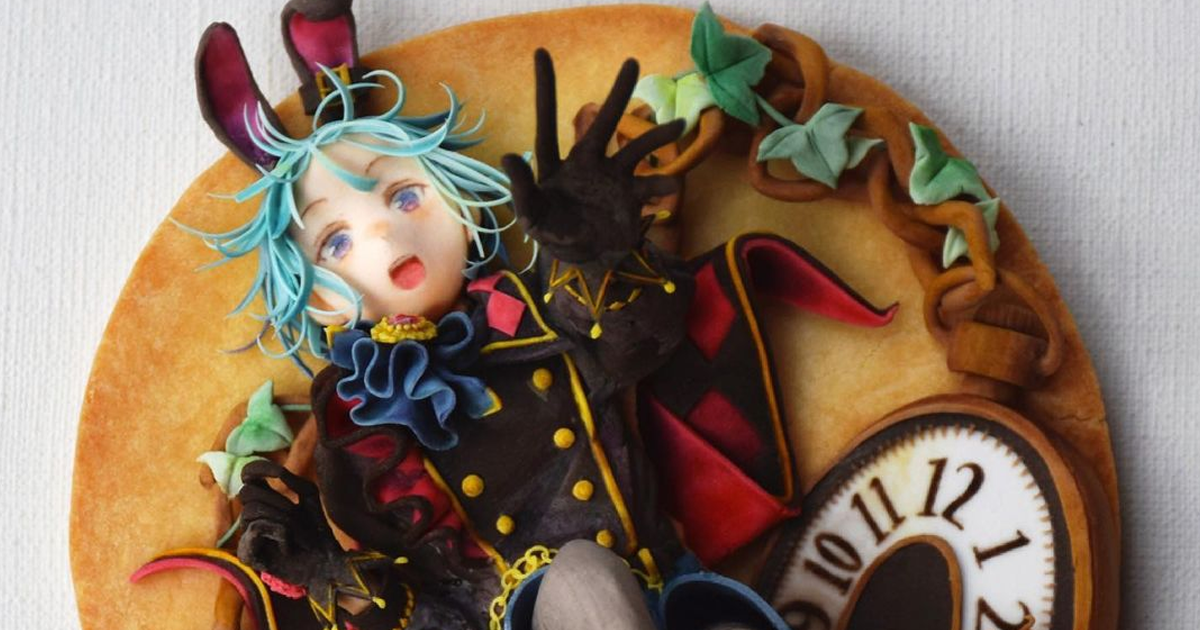
Some cookies are made to be eaten. Some are made to be photographed. And then there are Kiri0izm’s 3D anime cookies, which appear to have escaped from a manga panel, landed on dessert plates, and politely demanded a standing ovation before anyone reaches for milk.
The viral collection known as “Japanese Artist’s 103 3D Anime Cookies” celebrates the work of Japanese cookie artist Kiri0izm, also known online as いずむ. The artist specializes in 3D sugar icing art cookies, creating edible anime characters that do not simply sit flat on the cookie surface. They rise, twist, pose, sparkle, and practically shout, “Please admire me for at least ten minutes before you consider biting my hair.”
At first glance, these cookies look like tiny sculptures. Look closer and the magic becomes even more impressive: carefully piped icing, sharp character lines, layered colors, expressive faces, dramatic anime hair, and costume details that would make a cosplay judge squint respectfully. This is not casual cookie decorating. This is fan art, dessert design, and miniature sculpture rolled into one deliciously unreasonable skill set.
In a world where many desserts compete by being taller, sweeter, or covered in enough sprinkles to signal satellites, Kiri0izm’s cookies stand out through patience and precision. They are charming, technical, nostalgic, and slightly dangerous to productivity. One cookie becomes “just one more photo,” and suddenly it is midnight and you have developed strong opinions about icing viscosity.
Who Is Kiri0izm, the Artist Behind the 3D Anime Cookies?
Kiri0izm is a Japanese artist known for transforming cookies, sugar paste, and icing into detailed three-dimensional anime-inspired artworks. The artist’s social profiles describe the work as 3D Sugar Icing Art Cookie, a phrase that sounds simple until you remember that most of us struggle to write a name on a birthday cake without creating a frosting crime scene.
What makes Kiri0izm’s cookies special is the balance between accuracy and personality. The characters are not vague “anime-style” faces with large eyes and colorful hair. Many pieces are recognizable tributes to beloved anime and manga characters, complete with costumes, gestures, hairstyles, and expressions that fans immediately identify. In other words, these cookies do not merely say, “I like anime.” They say, “I studied the reference image, respected the silhouette, matched the color palette, built dimensional structure, and still somehow made it adorable.”
The famous “103 3D Anime Cookies” collection attracted attention because each piece feels alive. Characters seem to leap from the surface of the cookie. Some appear mid-action. Others pose with dramatic flair. Many have an almost toy-like quality, as if they belong in a display case rather than a cookie jar. The result is edible pop art with the soul of a fan convention and the patience of a master baker.
Why These 3D Anime Cookies Went Viral
The internet loves three things: cute food, anime fandom, and objects that make people say, “Wait, that is edible?” Kiri0izm’s cookies deliver all three at once. They are visually surprising, emotionally familiar, and technically impressive. That combination is perfect for social media, where a dessert needs to stop the scroll in less than a second.
Flat decorated cookies are already popular because they turn a simple baked base into a canvas. But 3D anime cookies add another level of drama. Instead of icing being used only as color, it becomes structure. Hair rises. Arms extend. Faces gain depth. Clothing folds and accessories are layered. The cookie becomes a stage, and the character becomes the performance.
Anime fans are especially responsive to detail. A small error in a character’s hairstyle, outfit, or expression can be spotted faster than a plot hole in a filler episode. Kiri0izm’s strength lies in capturing those recognizable details with icing, which is not exactly the easiest medium. Icing is soft, sticky, temperature-sensitive, and very committed to reminding artists that gravity exists.
That is part of the appeal. Viewers are not just seeing a cute cookie; they are seeing a difficult problem solved beautifully. It is the same reason people watch cake sculpting, latte art, bento design, or realistic food replica videos. The process feels soothing, but the result feels impossible. The brain says, “That cannot be frosting,” while the eyes reply, “And yet, here we are.”
The Art Technique: How 3D Sugar Icing Cookies Work
While Kiri0izm’s exact process may vary from piece to piece, 3D cookie art generally depends on a few essential elements: a sturdy cookie base, carefully prepared icing or sugar paste, controlled drying time, layering, and a strong understanding of shape. The cookie is not just dessert; it is the foundation of a tiny edible sculpture.
1. A Strong Cookie Base
For detailed decorated cookies, the base must be firm enough to support icing without bending, crumbling, or absorbing too much moisture. Sugar cookies, shortbread-style cookies, and other low-spread doughs are commonly used because they hold their shape after baking. A cookie that spreads unpredictably in the oven is cute in a rustic way, but less helpful when the goal is to build a tiny anime hero with hair spikes sharp enough to challenge physics.
2. Royal Icing and Sugar Paste
Royal icing is one of the classic materials for cookie decorating because it can be piped, colored, layered, and dried hard. Cookie artists often adjust icing consistency depending on the task. Thicker icing can hold lines and raised details. Thinner icing can flood larger areas smoothly. For 3D work, the artist needs even more control because the icing must form stable shapes without slumping into abstract pudding.
Sugar paste can also help create dimensional elements. It behaves more like edible modeling material, allowing artists to build shapes before attaching them to the cookie. Combining piped icing and sugar paste gives the artist more flexibility: fine facial lines here, sculptural hair there, costume accents on top, and suddenly a flat snack has main-character energy.
3. Layering and Drying
The secret ingredient in 3D cookie art is patience. Not vanilla. Not butter. Patience. Layers often need time to dry before more details can be added. If an artist rushes, colors can bleed, shapes can collapse, and a dramatic anime expression can become a haunted frosting puddle. Kiri0izm’s cookies look polished because the structure appears carefully planned, not improvised in a sugar panic.
4. Character Design Knowledge
Anime characters are built from instantly recognizable design choices: silhouettes, eye shapes, costumes, colors, props, and poses. Translating those details into edible form requires more than baking skill. It requires visual analysis. The artist must decide which features matter most and how to simplify them without losing identity.
That is why Kiri0izm’s work feels so satisfying. The cookies are not overloaded with random detail. They emphasize the right details. A hairstyle, a jacket, a facial expression, a tiny accessory, or a dramatic pose can carry the whole character. Great cookie art is partly about what to include and partly about what to leave out.
Anime, Kawaii Culture, and the Joy of Edible Characters
Japanese visual culture has long embraced the idea that food can be beautiful, playful, and emotionally expressive. Bento culture, character bento, kawaii desserts, wagashi, and even Japan’s realistic food replica tradition all show a deep appreciation for visual presentation. Kiri0izm’s 3D anime cookies fit naturally into that larger creative world.
The Japanese concept of kawaii is often translated as “cute,” but in practice it can mean much more. Kawaii design can be charming, comforting, nostalgic, humorous, delicate, or emotionally disarming. A tiny dessert shaped like a beloved character does not merely look nice; it creates a moment of affection. It makes the viewer pause. It turns food into a tiny relationship.
Anime adds another layer. Fans do not simply recognize characters; they remember scenes, emotions, friendships, battles, jokes, songs, and entire phases of life. A cookie shaped like an anime character is not just decoration. It is a memory with sugar eyebrows.
This is why anime cookie art travels so well online. Even viewers who do not know every character can appreciate the craft. Fans who do know the characters experience an extra spark of recognition. The cookie becomes a meeting point between fandom and food art, and everyone is invited to admire the icing hair.
Why 3D Anime Cookies Are So Hard to Make
From a distance, cookie decorating can look relaxing. There is a piping bag, a neat table, tiny tools, and calm hands. Then you try it yourself and discover that icing has the emotional stability of a soap opera villain. It dries too fast, flows too slowly, breaks at the wrong moment, or clings to the piping tip like it has abandonment issues.
3D anime cookies are especially demanding because they require several skills at once. The artist must bake clean shapes, mix reliable icing, choose colors accurately, pipe fine lines, sculpt raised parts, assemble fragile details, and preserve the character’s expression. A mistake in proportion can change the mood completely. One misplaced eyebrow and a heroic character may suddenly look like they heard someone insult their Wi-Fi speed.
The scale is also challenging. Working small means every dot matters. Eyes must be expressive. Mouths must be tiny but readable. Hair must feel dynamic without becoming messy. Clothing details must suggest texture without overwhelming the cookie. This is miniature art, and miniature art is unforgiving. There is no room to hide a shaky line behind a giant fondant flower.
Then there is the question every viewer asks: Are these cookies meant to be eaten? Technically, yes. Emotionally, absolutely not. They are edible, but they also look like collectible figures. Eating one would feel like destroying a tiny museum exhibit, except the museum is made of sugar and smells delicious. That tension is part of their charm.
What Bakers Can Learn from Kiri0izm’s 3D Anime Cookies
Even if most home bakers are not ready to create a full 3D anime cast, Kiri0izm’s work offers useful lessons for anyone interested in creative baking.
Start with a Clear Reference
Great character cookies begin with strong references. Choose images that show the character’s most recognizable features. Look for front-facing expressions, signature poses, clear costume colors, and defining accessories. The goal is not to copy every detail but to preserve the visual identity.
Think in Layers
Instead of trying to finish a cookie in one session, divide the design into layers: base color, outline, facial details, hair, clothing, accessories, highlights, and final touches. This makes the process less chaotic and helps prevent wet icing from mixing where it should not. In cookie decorating, “just one more quick detail” is often where disaster puts on tap shoes.
Control Your Icing Consistency
Cookie artists often talk about icing consistency because it changes everything. Stiff icing can hold structure. Medium icing can pipe borders. Flood icing can fill smooth areas. For 3D work, experimenting with consistency is essential. Too thin and the shape collapses. Too thick and the lines look rough. The sweet spot is where control meets flow.
Use Color Strategically
Anime design often relies on bold, memorable colors. However, cookie art requires restraint. Too many colors can make a small piece look crowded. Kiri0izm’s cookies show how effective it is to focus on the character’s key palette: hair color, eye color, outfit accents, and shadows. A few accurate colors can do more than a rainbow explosion.
Accept That Practice Is Part of the Recipe
No one pipes perfect 3D character icing on the first try. Beginners should expect shaky lines, uneven surfaces, and at least one cookie that looks like it knows too much. That is normal. The best artists build skill through repetition, observation, and a willingness to turn mistakes into snacks.
Specific Examples of Anime Cookie Details That Impress Fans
One reason Kiri0izm’s 3D anime cookies feel so impressive is the way they capture character-specific details. In anime-inspired cookie art, the following elements often separate a cute dessert from a true fan-favorite piece:
Expressive Eyes
Anime eyes carry emotion. A cookie artist must work with tiny spaces while still suggesting shine, iris color, eyelashes, and mood. A confident stare, shy smile, angry glare, or surprised look can completely change the personality of the cookie.
Iconic Hair
Anime hair is practically architecture. Spikes, curls, long flowing sections, dramatic bangs, unusual colors, and impossible volume all matter. In 3D cookie form, hair becomes one of the most sculptural parts of the design. It can create motion and instantly identify a character.
Costume Silhouettes
Uniforms, jackets, collars, belts, capes, and accessories help fans recognize characters even at a small scale. A well-placed collar or color-blocked outfit can make the difference between “cute anime cookie” and “I know exactly who that is.”
Pose and Movement
Many of Kiri0izm’s cookies seem active rather than static. A tilted head, raised hand, dramatic stance, or angled body gives the cookie life. This sense of movement is especially important in anime art, where dynamic poses are part of the visual language.
The Rise of Cookie Artists Online
Cookie artists have become a beloved part of online food culture. Platforms like Instagram, YouTube, Pinterest, and TikTok reward visual transformation, and decorated cookies are perfect for that format. A plain cookie becomes a character. A piping bag becomes a drawing tool. A few minutes of time-lapse footage can show hours of careful work in a satisfying burst.
There is also something calming about watching cookie decorating. The lines appear slowly. Colors fill spaces. Details emerge. The final reveal feels earned. It is part craft tutorial, part performance, part visual meditation. Kiri0izm’s 3D anime cookies add fandom excitement to that already satisfying format.
The popularity of this kind of work also reflects a larger trend: people love handmade objects in a digital world. Anime itself may be consumed on screens, but a cookie version brings the character into the physical world. It has texture, shadow, depth, and fragility. It is digital fandom translated into edible craft.
Experience Notes: What It Feels Like to Explore 3D Anime Cookie Art
Looking at Kiri0izm’s 3D anime cookies is a little like walking into a tiny dessert convention where every booth is run by sugar. The first experience is surprise. The mind expects cookies to be flat, round, and cooperative. Instead, these pieces have height, shape, expression, and attitude. They make regular cookies look like they forgot to dress up for the party.
The second experience is curiosity. You start wondering how each part was made. Was the hair piped separately? Did the face dry before the eyes were added? How many colors were mixed? How long did the icing need to set? Could the cookie survive being moved? Would one sneeze destroy three hours of work? The more you look, the more the cookies shift from “cute dessert” to “technical puzzle.”
For anime fans, the experience becomes even more personal. Recognizing a character in cookie form creates a strange little thrill. It is the same joy as seeing fan art, cosplay, or a handmade figure, except this version might theoretically pair well with tea. The cookie carries the emotional memory of the show or manga. A familiar hairstyle or expression can instantly bring back scenes, jokes, battles, or favorite episodes.
For bakers, the experience can be both inspiring and humbling. Inspiring because the work proves that cookies can be more than party favors. They can be sculptural art, storytelling objects, and fandom tributes. Humbling because the level of control is clearly advanced. Anyone who has tried to pipe a straight line knows that creating a clean anime face in icing is not casual weekend magic. It is the result of practice, discipline, and probably a very serious relationship with toothpicks.
For beginners who want to try something similar, the best experience starts small. Choose one character face instead of a full-body 3D design. Use a simple cookie shape. Limit the palette. Practice eyes and hair on parchment paper before touching the cookie. Let layers dry. Keep snacks nearby so you do not panic-eat the project. Most importantly, treat the first attempt as practice, not proof of destiny.
Another helpful experience is studying the cookies as design lessons rather than only as desserts. Notice how the artist simplifies complex characters. Notice which features are exaggerated and which are reduced. Notice how shadows and highlights create depth. Notice how a small pose can suggest personality. These observations can improve not only cookie decorating but also drawing, cake design, polymer clay work, fondant modeling, and other character-based crafts.
There is also an emotional lesson in this kind of art. Kiri0izm’s cookies remind viewers that joy often lives in unnecessary effort. Nobody needs a 3D anime cookie to survive the day. A regular cookie would do the job. But the extra care turns a snack into wonder. It says that fandom is worth celebrating, small things can be beautiful, and dessert is allowed to be completely dramatic.
That may be the real reason these cookies are so memorable. They are not just technically impressive. They are generous. They give fans a new way to see characters they love. They give bakers a new standard to chase. They give casual viewers a reason to smile. And they give the humble cookie a promotion from “after-dinner treat” to “tiny edible main character.” Honestly, it deserves the raise.
Final Thoughts: Tiny Cookies, Giant Creativity
Japanese Artist’s 103 3D Anime Cookies is more than a viral food-art collection. It is a showcase of how far cookie decorating can go when patience, fandom, and sculptural skill meet. Kiri0izm’s work proves that cookies can become portraits, figures, scenes, and emotional souvenirs. They can capture the energy of anime while preserving the warmth of handmade craft.
These cookies also show why edible art is so powerful online. It combines the impossible-looking with the familiar. Everyone understands a cookie. Not everyone expects a cookie to have perfect anime hair, layered clothing, and the facial expression of a dramatic season finale. That contrast makes the work unforgettable.
For fans, the cookies are a sweet tribute to beloved characters. For bakers, they are a masterclass in control and creativity. For the rest of us, they are a reminder that art can appear anywhere, even on something that might technically be served with coffee.
Would it be difficult to eat one? Absolutely. Would we still consider it after taking 47 photos and whispering an apology? Also absolutely. That is the delicious dilemma of Kiri0izm’s 3D anime cookies: they are made from sugar, but they feel made from dedication.
SEO Tags
Note: This article is written in original American English for web publication and synthesizes publicly available information about Kiri0izm’s 3D sugar icing anime cookie art, cookie decorating methods, kawaii food culture, and edible art trends.